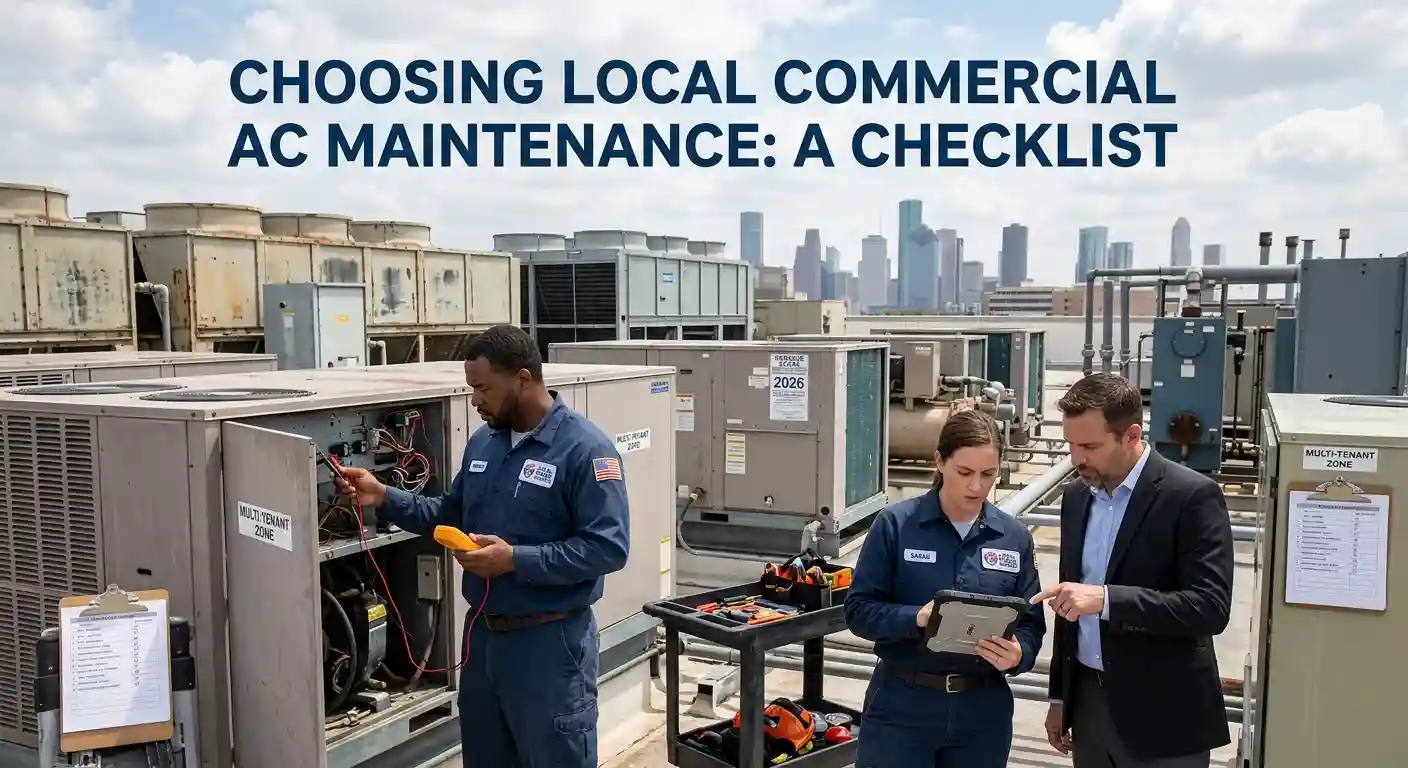
Commercial HVAC systems in South Florida require scheduled professional maintenance to prevent equipment failure, maintain regulatory compliance, and protect facility operating budgets. In a climate defined by year-round heat, sustained humidity above 90%, and 180+ annual cooling days, Palm Beach and Broward County facility managers who defer maintenance face compressor failures that land at the top of the commercial repair range — $2,500 and up — at emergency timing — plus the operational downtime that follows.
Since 1983, Aspen AC has delivered commercial HVAC maintenance programmes across Boca Raton, Fort Lauderdale, West Palm Beach, Coral Springs, and surrounding Southeast Florida markets. This guide outlines exactly why systematic HVAC oversight is a non-negotiable operational requirement — and what it protects.
Commercial HVAC Maintenance in South Florida: Why the Climate Changes Everything
South Florida’s subtropical climate operates in ASHRAE Climate Zone 1A — classified as very hot and humid — placing commercial HVAC systems under greater mechanical stress than virtually any other region in the continental United States. Facility managers in Boca Raton, Fort Lauderdale, and across Palm Beach and Broward counties are not managing seasonal HVAC cycles. They are managing continuous, year-round thermal loads with no meaningful recovery period.
Three climate-specific stress factors accelerate system degradation in this market:
Coil Corrosion from Coastal Salt Air — Properties within 10–15 miles of the Atlantic coastline — encompassing the majority of Aspen AC’s service territory from Boca Raton through Fort Lauderdale — are exposed to salt-laden air that accelerates condenser coil corrosion. Corroded coils reduce heat transfer efficiency, forcing compressors to work harder and shortening their operational lifespan.
Mold and Microbial Growth in Drain Pans — Sustained indoor humidity above 60% — routine in inadequately maintained commercial systems — creates optimal conditions for mold colonisation in condensate drain pans and air handlers. For healthcare facilities, assisted living centres, and food service environments across Palm Beach and Broward County, this is not only an equipment issue but a regulatory liability.
Condenser Efficiency Loss at Peak Ambient Temperatures — South Florida records 90°F+ ambient temperatures for five or more consecutive months annually. At these temperatures, un-serviced condensers operate at significantly reduced efficiency, and the U.S. Department of Energy estimates that organisations following operations and maintenance best practices save 5–20% annually on energy bills compared to properties that skip it.
Scheduled commercial HVAC maintenance in Fort Lauderdale, Boca Raton, and the wider Southeast Florida market is not a best practice — it is an operational necessity dictated by the local climate.
How Often Should Commercial HVAC Systems Be Serviced in Florida?
Florida’s year-round cooling demand requires more frequent commercial HVAC service intervals than the national standard. The following reflects industry-recommended maintenance frequency for Southeast Florida commercial facilities:
Light Commercial (retail, office) — bi-annual (April & October); focus on filter replacement, coil cleaning, and refrigerant check.
Heavy Commercial (warehouse, industrial) — quarterly; focus on belt and bearing inspection, full coil cleaning, and drain pan treatment.
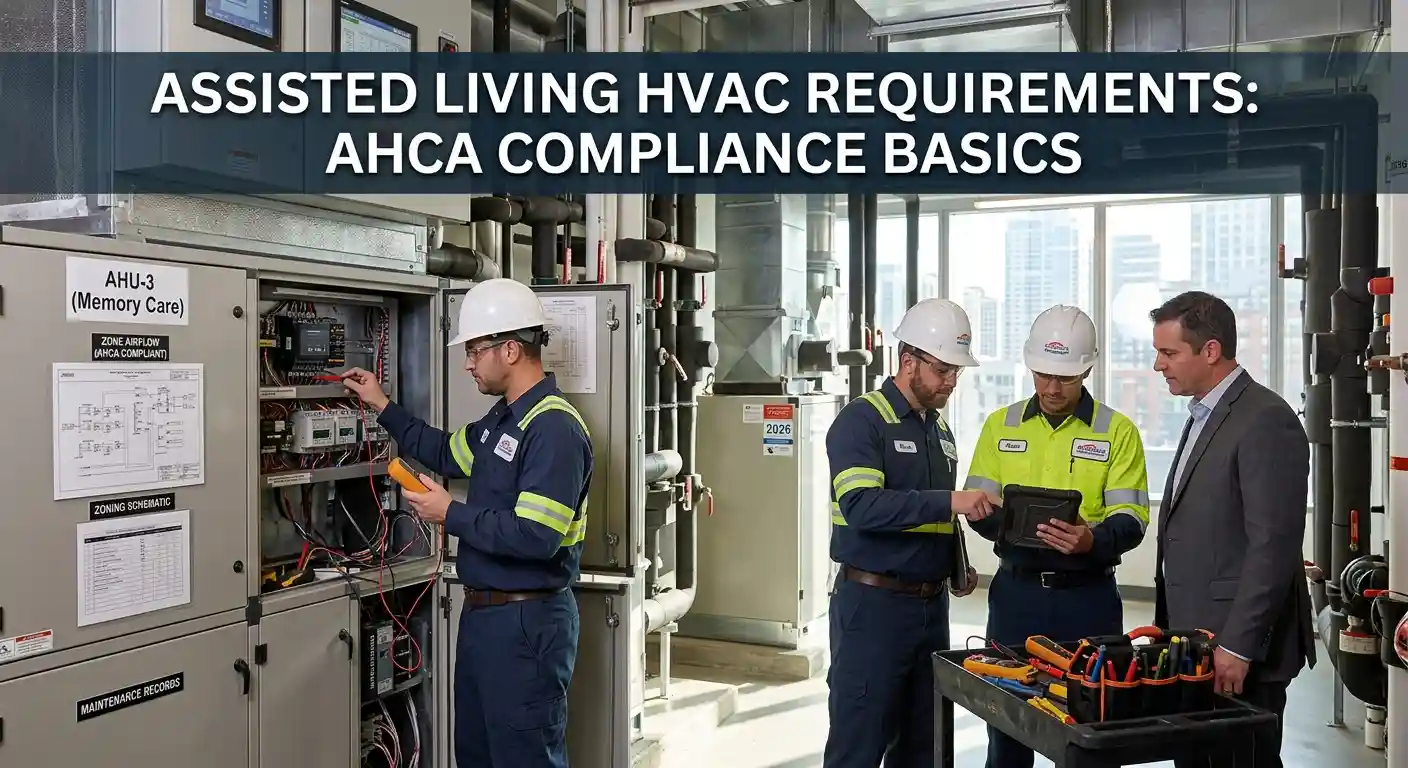
Healthcare & Assisted Living — quarterly minimum; focus on IAQ compliance, HEPA filter service, and microbial inspection.
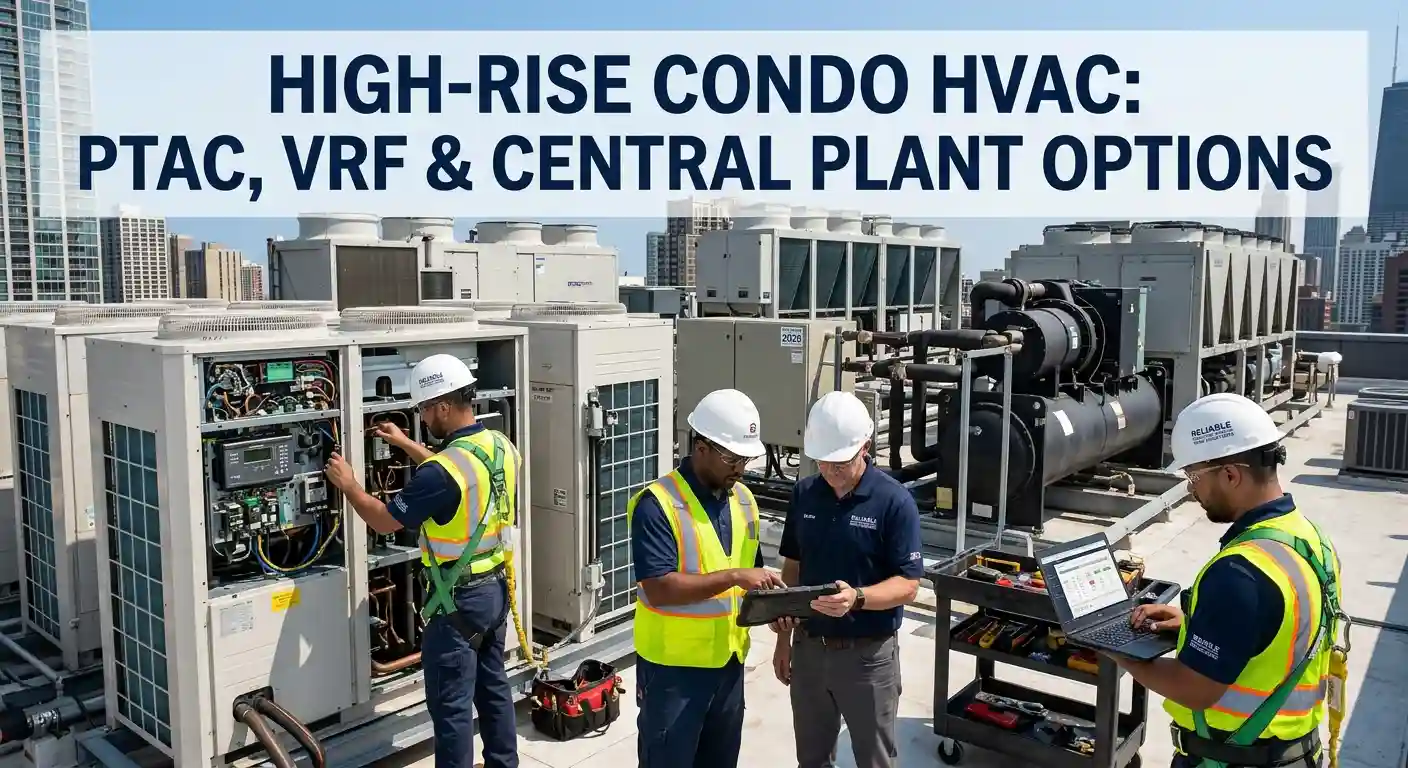
High-Rise Condominiums — bi-annual plus emergency readiness; focus on chiller service, cooling tower treatment, and common area AHUs.
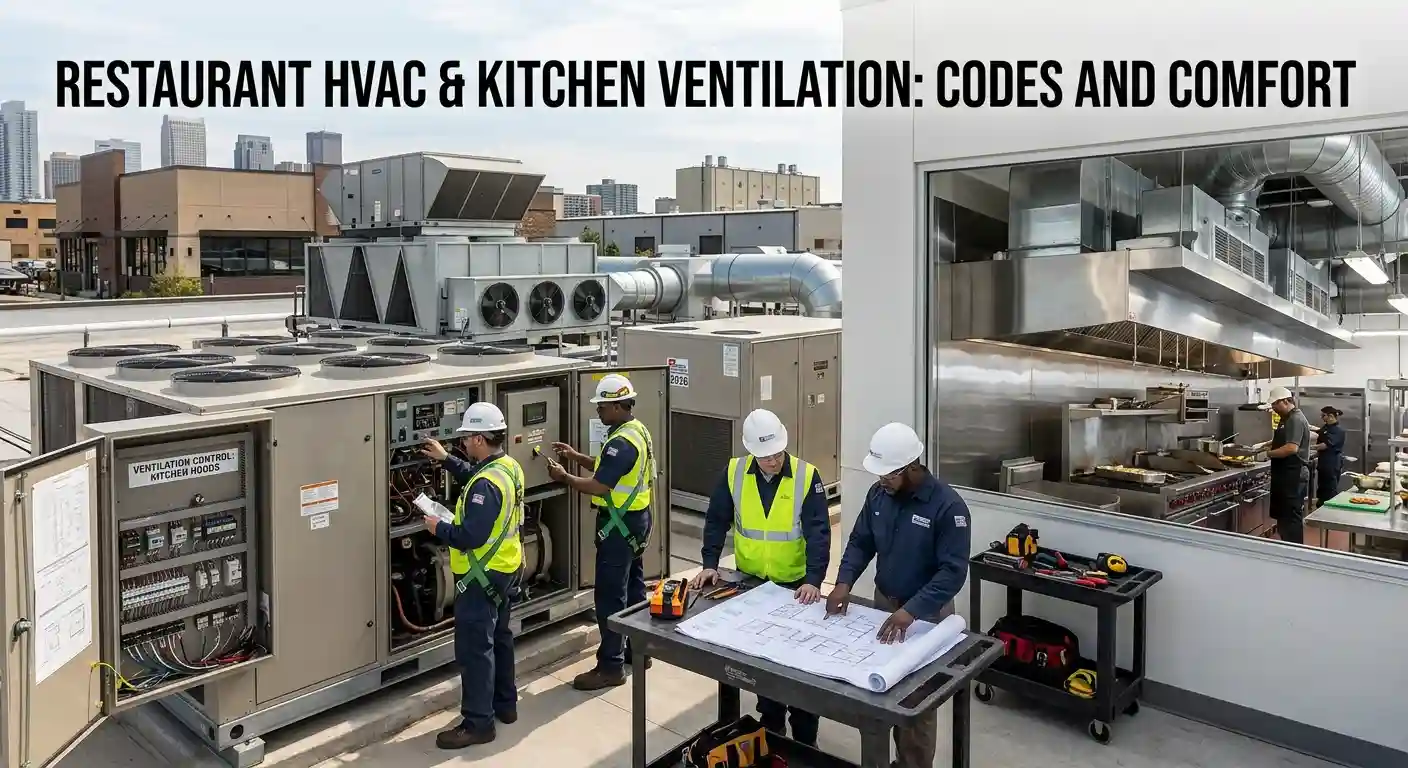
Restaurants & Hospitality — quarterly; focus on grease filtration, makeup air unit service, and exhaust balancing.
Florida-Specific Frequency Factors
National HVAC maintenance guidelines typically recommend bi-annual service. For South Florida commercial properties, quarterly service is strongly advisable for any facility operating in high-occupancy, high-humidity, or coastal environments. The combination of salt air exposure, continuous cooling cycles, and biological growth risk in humid climates compresses standard service intervals well below what temperate U.S. markets can get away with.
Facility managers in Boca Raton, Palm Beach Gardens, Coral Springs, and Fort Lauderdale operating on annual service contracts are under-servicing their systems relative to local climate demands.
The Real Cost of Skipping Commercial HVAC Maintenance in South Florida
The financial case for preventive commercial HVAC maintenance is not theoretical. It is measurable against documented failure costs that facility managers in Palm Beach and Broward County encounter when reactive repair replaces systematic oversight.
Preventive vs. Emergency Cost Comparison
Annual service contract — preventive cost is customized to equipment type, tonnage and visit frequency; the reactive alternative has no upfront cost but no protection either.
Compressor replacement (3–10 ton unit) — prevented under a maintenance contract; costs $2,500 and up when reactive.
Emergency after-hours call-out fee — avoided under a maintenance contract; bills at 1.5x the regular labour rate with a $395 minimum when reactive.
Energy overconsumption from an un-serviced system — minimised under a maintenance contract; runs meaningfully above baseline when reactive.
Tenant or business interruption loss — minimal under a maintenance contract; significant, from hours to days, when reactive.
Energy Efficiency Degradation — Poorly maintained commercial HVAC systems lose measurable efficiency the longer they run without service, and the DOE’s 5–20% annual savings estimate for proper O&M practices applies directly here. For a mid-size commercial building in Fort Lauderdale operating a 20-ton system, that gap can easily translate into over a thousand dollars in unnecessary energy expenditure per year — expenditure that a scheduled maintenance programme with Aspen AC eliminates.
The South Florida Emergency Premium — Emergency HVAC service calls in South Florida carry a regional premium driven by demand density during peak summer months. Facility managers in Boca Raton and Fort Lauderdale who have not established a maintenance relationship with a qualified contractor face extended wait times and premium call-out rates during June through September — precisely when system failures are most probable.
A preventive maintenance contract with Aspen AC guarantees priority service response — under four hours — for all contracted commercial facilities across Palm Beach and Broward counties.
Recommended Commercial HVAC Service Frequency
Most commercial HVAC systems in South Florida need professional service at least twice per year, with high-load equipment on quarterly or monthly schedules. Year-round cooling demand and coastal humidity accelerate wear, so service intervals here run shorter than national norms.
| System type | Recommended frequency | Core tasks |
|---|---|---|
| Rooftop units (RTUs) | Quarterly | Coils, filters, belts, drains, electrical |
| Split DX systems | Quarterly | Refrigerant charge, coils, condensate lines |
| Chillers & central plant | Monthly to quarterly | Water treatment, logs, controls, bearings |
| Commercial refrigeration | Monthly | Door seals, defrost, temperature verification |
| Building controls / BAS | Semi-annually | Sensor calibration, schedules, setpoints |
Commercial HVAC Maintenance Schedule Template
A working maintenance schedule assigns every task a frequency and an owner. Use this template as a starting point and adjust for equipment age, run hours, and manufacturer requirements.
- Monthly: replace or inspect filters, check condensate drains, review BAS alarms and run-hour logs
- Quarterly: clean coils, test capacitors and contactors, verify refrigerant charge, tighten electrical connections
- Twice a year: full system inspection before summer peak and after hurricane season
- Annually: duct and airflow assessment, controls recalibration, and a capital-planning review of aging units
Schedule a commercial HVAC maintenance assessment
Regulatory Compliance and Liability Mitigation
Commercial property owners and facility managers in Florida operate under statutory obligations regarding indoor air quality and workplace safety. Florida Building Code Chapter 13 (Energy Efficiency), OSHA 29 CFR 1910.94 ventilation standards, and ASHRAE Standard 62.1 (Ventilation for Acceptable Indoor Air Quality) collectively mandate that commercial ventilation and HVAC systems be maintained to defined performance standards.
Scheduled commercial HVAC maintenance creates documented service records that demonstrate due diligence in maintaining safe environmental conditions — records that prove critical during insurance audits, lease renewal inspections, and liability proceedings. Failure to maintain systems to code-compliant standards exposes South Florida commercial property owners to regulatory violations, elevated insurance premiums, and potential litigation from tenants or employees citing inadequate environmental controls.
Aspen AC’s technicians are NATE-certified and provide comprehensive service documentation on every maintenance visit — records structured to satisfy compliance requirements across Palm Beach and Broward County commercial properties.
Operational Continuity and System Reliability
Commercial facilities across Southeast Florida — from retail centres in Boca Raton to medical offices in Fort Lauderdale — require uninterrupted climate control to protect inventory, maintain tenant agreements, and preserve occupant productivity. A single unplanned HVAC failure during South Florida’s peak summer period can generate losses that dwarf the annual cost of a maintenance contract.
Aspen AC’s preventive maintenance programmes are designed around one operational objective: eliminating unplanned downtime. Systematic service intervals identify component wear — capacitors, contactors, belts, refrigerant levels — before they progress to catastrophic failures. Facility managers who implement scheduled maintenance cycles with Aspen AC across their Palm Beach and Broward County portfolios establish a measurable buffer against the system reliability risks that South Florida’s climate conditions continuously generate.
Professional Expertise and Technical Documentation
Complex commercial HVAC infrastructure — VRF systems, chilled water plants, cooling towers, PTAC arrays in high-rise condominiums — demands technical expertise that general maintenance staff cannot reliably provide. Aspen AC’s NATE-certified technicians bring manufacturer-level diagnostic capability to commercial facilities across Boca Raton, Fort Lauderdale, West Palm Beach, and the broader Southeast Florida market.
Every maintenance visit generates structured technical documentation: system performance baselines, component condition assessments, refrigerant charge records, and capital improvement recommendations. These records serve facility managers in three operational capacities:
- Asset Management: Documented system histories support capital budget planning and equipment lifecycle forecasting
- Property Valuation: Maintained service records demonstrate proper asset stewardship to property owners, lenders, and prospective tenants
- Regulatory Compliance: Service documentation satisfies inspection requirements under Florida Building Code and OSHA ventilation standards
Specialized facilities carry additional obligations: assisted living and healthcare properties fall under AHCA facility standards that include environmental and temperature-control requirements, and many commercial property insurers now request documented HVAC service records at renewal or after a claim. A dated maintenance log from a professional service program satisfies both.
Frequently Asked Questions
What does a commercial HVAC maintenance plan include?
A commercial HVAC maintenance plan from Aspen AC includes filter replacement, coil cleaning, condensate drain treatment, refrigerant level verification, electrical connection inspection, belt and bearing assessment, and a written performance report. Service frequency is calibrated to facility type and South Florida climate exposure — typically bi-annual for light commercial and quarterly for healthcare, industrial, and high-rise applications.
How often should commercial HVAC systems be serviced in Florida?
Commercial HVAC systems in South Florida should be serviced a minimum of twice per year for light commercial applications and quarterly for high-demand facilities including healthcare, restaurants, warehouses, and high-rise condominiums. Florida’s year-round cooling load, coastal salt air, and sustained humidity compress standard national service intervals by 30–40%.
What are the signs a commercial HVAC system needs immediate servicing?
Key indicators include: rising energy bills without increased occupancy, reduced airflow from supply registers, ice formation on refrigerant lines, unusual mechanical noise from air handlers or condensers, persistent humidity above 60% indoors, and recurring thermostat inconsistencies across zones. Any one of these signals warrants an immediate diagnostic inspection.
Does Florida law require commercial HVAC maintenance?
Florida Building Code and ASHRAE Standard 62.1 mandate that commercial ventilation systems be maintained to defined performance standards. While no statute prescribes exact service intervals, failure to maintain systems to code-compliant operation creates regulatory exposure and invalidates certain commercial property insurance provisions. Documented maintenance programmes are the standard of care across South Florida commercial real estate.
How much does commercial HVAC maintenance cost in Boca Raton and Fort Lauderdale?
Commercial HVAC maintenance contracts in the Boca Raton and Fort Lauderdale market are custom-quoted based on equipment type, system tonnage, number of units, facility type, and service frequency. This cost is consistently offset by energy efficiency gains, avoided emergency repair expenditures, and extended equipment operational lifespan. Contact Aspen AC for a customised maintenance programme quote for your facility.
Does Aspen AC service commercial buildings across both Palm Beach and Broward County?
Yes. Aspen AC provides commercial HVAC maintenance services throughout Southeast Florida, covering Palm Beach County hubs including Boca Raton, West Palm Beach, Delray Beach, Boynton Beach, Palm Beach Gardens, and Jupiter, and Broward County markets including Fort Lauderdale, Coral Springs, Pompano Beach, Plantation, Hollywood, Pembroke Pines, and Deerfield Beach.
How does preventive HVAC maintenance save money for South Florida businesses?
Preventive maintenance keeps systems running efficiently, reduces energy use by up to around 20%, and avoids expensive emergency repairs by catching problems early.
What are the main risks of ignoring commercial HVAC maintenance in Miami‑area buildings?
Ignoring maintenance increases the risk of breakdowns during peak heat, poor indoor air quality, higher utility bills, moisture damage from clogged drains, and shortened equipment life.
Do South Florida commercial HVAC maintenance contracts include emergency service?
Many commercial maintenance contracts include priority or 24/7 emergency response so that facilities get faster service when systems fail, minimizing downtime and tenant disruption.
How can facility managers tell if their South Florida commercial HVAC system needs more frequent service?
Signs include frequent repairs, spiking energy bills, uneven temperatures, noticeable humidity issues, or a system that’s more than 10–15 years old, which may justify extra maintenance visits.
Does HVAC maintenance help with South Florida indoor air quality and mold prevention?
Yes. Cleaning coils, filters, and drain lines regularly reduces mold‑promoting moisture and removes airborne debris, which helps protect indoor air quality and occupant health.
A commercial HVAC maintenance plan from Aspen AC includes filter replacement, coil cleaning, condensate drain treatment, refrigerant level verification, electrical connection inspection, belt and bearing assessment, and a written performance report. Service frequency is calibrated to facility type and South Florida climate exposure — typically bi-annual for light commercial and quarterly for healthcare, industrial, and high-rise applications.
Commercial HVAC systems in South Florida should be serviced a minimum of twice per year for light commercial applications and quarterly for high-demand facilities including healthcare, restaurants, warehouses, and high-rise condominiums. Florida’s year-round cooling load, coastal salt air, and sustained humidity compress standard national service intervals by 30–40%.
Key indicators include: rising energy bills without increased occupancy, reduced airflow from supply registers, ice formation on refrigerant lines, unusual mechanical noise from air handlers or condensers, persistent humidity above 60% indoors, and recurring thermostat inconsistencies across zones. Any one of these signals warrants an immediate diagnostic inspection.
Florida Building Code and ASHRAE Standard 62.1 mandate that commercial ventilation systems be maintained to defined performance standards. While no statute prescribes exact service intervals, failure to maintain systems to code-compliant operation creates regulatory exposure and invalidates certain commercial property insurance provisions. Documented maintenance programmes are the standard of care across South Florida commercial real estate.
Commercial HVAC maintenance contracts in the Boca Raton and Fort Lauderdale market are custom-quoted based on equipment type, system tonnage, number of units, facility type, and service frequency. This cost is consistently offset by energy efficiency gains, avoided emergency repair expenditures, and extended equipment operational lifespan. Contact Aspen AC for a customised maintenance programme quote for your facility.
Yes. Aspen AC provides commercial HVAC maintenance services throughout Southeast Florida, covering Palm Beach County hubs including Boca Raton, West Palm Beach, Delray Beach, Boynton Beach, Palm Beach Gardens, and Jupiter, and Broward County markets including Fort Lauderdale, Coral Springs, Pompano Beach, Plantation, Hollywood, Pembroke Pines, and Deerfield Beach.
Preventive maintenance keeps systems running efficiently, reduces energy use by up to around 20%, and avoids expensive emergency repairs by catching problems early.
Ignoring maintenance increases the risk of breakdowns during peak heat, poor indoor air quality, higher utility bills, moisture damage from clogged drains, and shortened equipment life.
Many commercial maintenance contracts include priority or 24/7 emergency response so that facilities get faster service when systems fail, minimizing downtime and tenant disruption.
Signs include frequent repairs, spiking energy bills, uneven temperatures, noticeable humidity issues, or a system that’s more than 10–15 years old, which may justify extra maintenance visits.
Yes. Cleaning coils, filters, and drain lines regularly reduces mold‑promoting moisture and removes airborne debris, which helps protect indoor air quality and occupant health.
Partner with Aspen AC for Commercial HVAC Maintenance Across South Florida
Facility managers responsible for commercial HVAC infrastructure in Palm Beach and Broward County require a maintenance partner with the technical credentials, regional experience, and response capacity to protect their systems under South Florida’s demanding climate conditions.
Aspen AC has served Southeast Florida’s commercial sector since 1983. Our NATE-certified technicians, sub-four-hour emergency response guarantee, and fully documented maintenance programmes are designed to eliminate the operational risks that deferred HVAC service creates.
Contact Aspen AC to schedule a commercial HVAC maintenance assessment for your facility in Boca Raton, Fort Lauderdale, or anywhere across Southeast Florida.
Disclaimer: Cost ranges and efficiency figures cited in this article are general estimates, not a quote for any specific property. Actual costs and savings depend on system size, equipment age, and site conditions. Contact Aspen AC for a scope-based assessment of your facility.