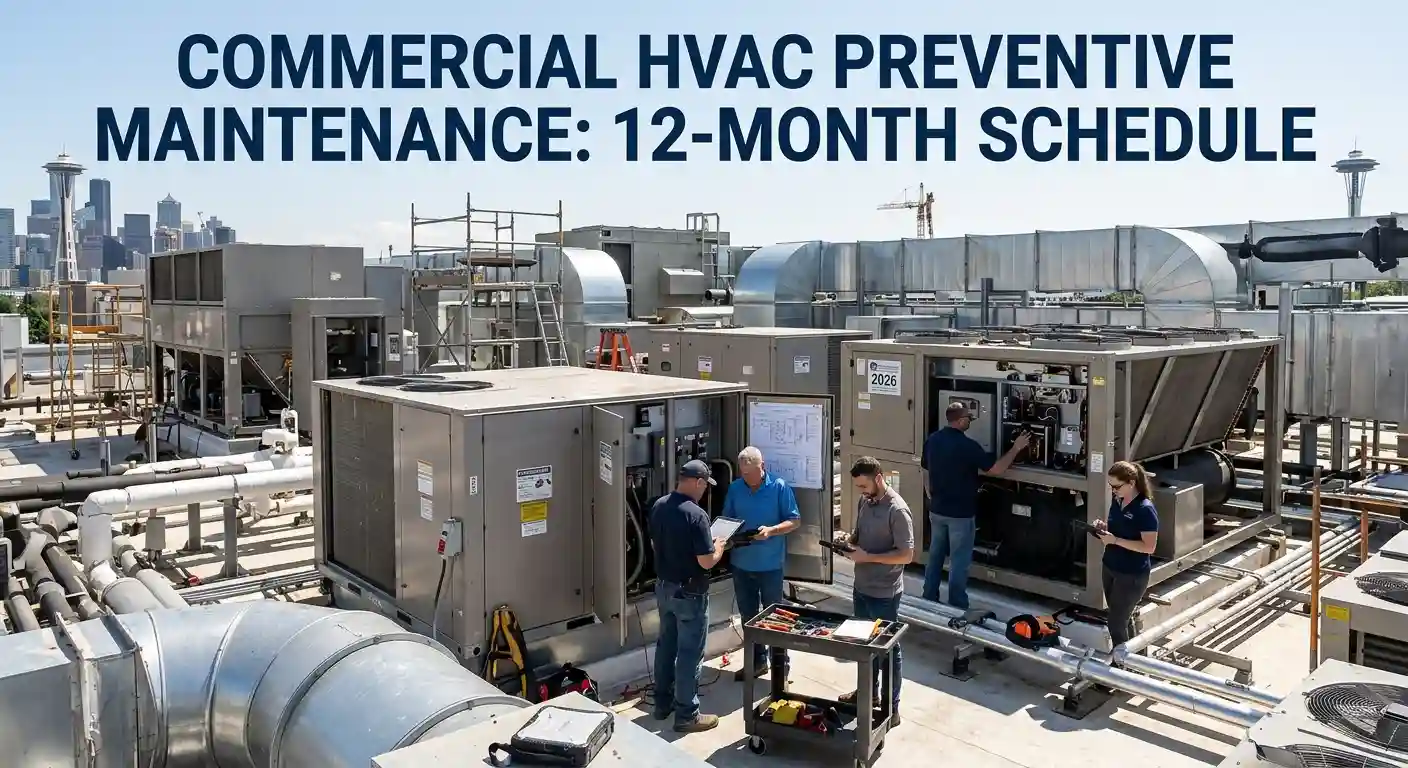

South Florida’s busiest commercial stretch runs from late fall through spring, and it arrives while cooling demand is still high. Preparing HVAC systems now means scheduling a full inspection, replacing filters, cleaning coils, verifying refrigerant charge, and confirming controls are set for rising occupancy. The goal is simple. Systems should be tuned before buildings fill up, not after a breakdown forces the issue. Operators who book professional maintenance ahead of the rush avoid emergency rates, protect tenant comfort, and keep energy costs in check during the months that generate the most activity. Aspen AC’s commercial HVAC maintenance programs are structured to get buildings ready before peak demand lands.
Why Does Busy Season Hit Differently in South Florida?
Most of the country slows its cooling systems down heading into winter. South Florida does the opposite, because occupancy climbs while the heat barely eases. Seasonal residents return, tourism builds, and retail, hospitality, and office buildings all see heavier foot traffic at the same time the climate keeps systems running. That combination puts equipment under pressure during the exact window when reliability matters most. A system that coasted through a quieter summer can struggle once the building is full again, which is why readiness is a scheduling decision made in advance rather than a reaction to the first complaint.
What Should Be Inspected Before the Rush Begins?
A proper pre-season inspection covers the components most likely to fail under sustained load. Technicians check refrigerant charge, clean condenser and evaporator coils, test capacitors and contactors, inspect belts and motors, and confirm condensate drains are clear. According to the U.S. Department of Energy, properly maintained commercial HVAC equipment runs more efficiently and lasts longer, which makes a pre-season visit one of the highest return tasks on the calendar. Clean coils and correct charge alone protect a meaningful share of rated capacity. Catching a worn belt or a weak capacitor now costs a fraction of what the same part costs during an emergency call once the building is busy.
How Do Controls and Schedules Factor In?
Rising occupancy changes how a building should be run, and controls set for a quieter period quietly work against efficiency. This is the right moment to recalibrate thermostats, update operating schedules, and confirm sensors are reading accurately. The ENERGY STAR operations and maintenance best practices guidance emphasizes that aligning equipment operation with actual occupancy is one of the most cost effective ways to cut energy use without replacing hardware. For multi tenant properties, that means matching airflow and setpoints to how each zone is actually used, so the building is not paying to condition empty space while struggling to keep busy areas comfortable.
Does Storm Season Still Matter This Late?
It matters right up to the end. The Atlantic hurricane season runs through November 30, so the early part of the busy season still overlaps with real storm risk. Rooftop equipment should be checked for secure anchoring, surge protection should be confirmed on compressors and control boards, and any wear left behind by the summer storm months should be corrected before a late system tests the building. Treating storm readiness and busy season readiness as one combined task saves time and closes the gap that late season weather likes to exploit.
Get Ahead of the Season With Aspen AC
The busiest months in South Florida reward buildings that were prepared and punish the ones that waited. Aspen AC has been getting commercial properties ready for this exact stretch since 1983, with the regional experience and service depth to tune a building before the demand arrives. Explore our full commercial services, read more in our latest news, and contact our commercial team to schedule your pre-season inspection. The season is already here. Your HVAC system should be ready to meet it.
FAQ
When should commercial HVAC maintenance be scheduled before busy season?
Ideally two to four weeks before occupancy starts climbing, which in South Florida means early to mid fall. Booking ahead secures an appointment before service calendars tighten, gives technicians time to order any parts, and ensures the system is tuned before the building fills up rather than during the first wave of demand.
How often should high traffic commercial buildings be serviced?
High use facilities generally benefit from quarterly professional maintenance rather than once or twice a year. South Florida’s long cooling season adds runtime that northern buildings never see, so equipment accumulates wear faster. Quarterly visits catch coil fouling, refrigerant drift, and electrical wear before they compound into capacity loss or failure.
Does preparing HVAC early actually lower energy costs?
Yes. Clean coils, correct refrigerant charge, fresh filters, and properly calibrated controls all restore rated efficiency, and aligning operation with occupancy reduces waste further. The savings run for every month of South Florida’s extended season, which means a pre-season tune up pays back faster here than in markets with shorter cooling demand.
What happens if we wait until a problem appears?
Waiting usually means paying emergency rates during the busiest weeks, competing for scarce service capacity, and disrupting tenants or customers at the worst possible time. A small issue caught during a planned inspection is routine. The same issue discovered mid rush becomes a costly, high pressure repair.
Get Ahead of the Season With Aspen AC
The busiest months in South Florida reward buildings that were prepared and punish the ones that waited. Aspen AC has been getting commercial properties ready for this exact stretch since 1983, with the regional experience and service depth to tune a building before the demand arrives. Explore our commercial services and contact our commercial team to schedule your pre-season inspection.
The season is already here. Your HVAC system should be ready to meet it.