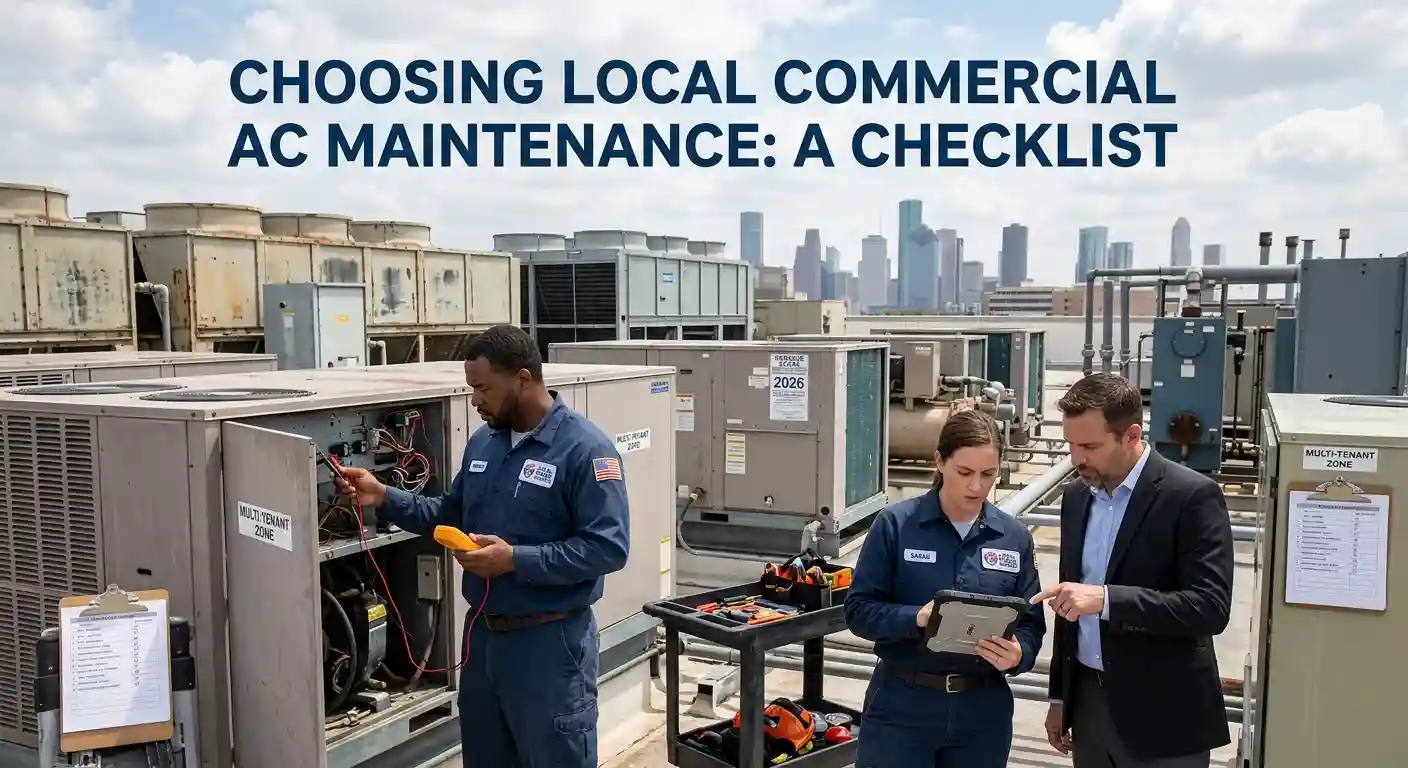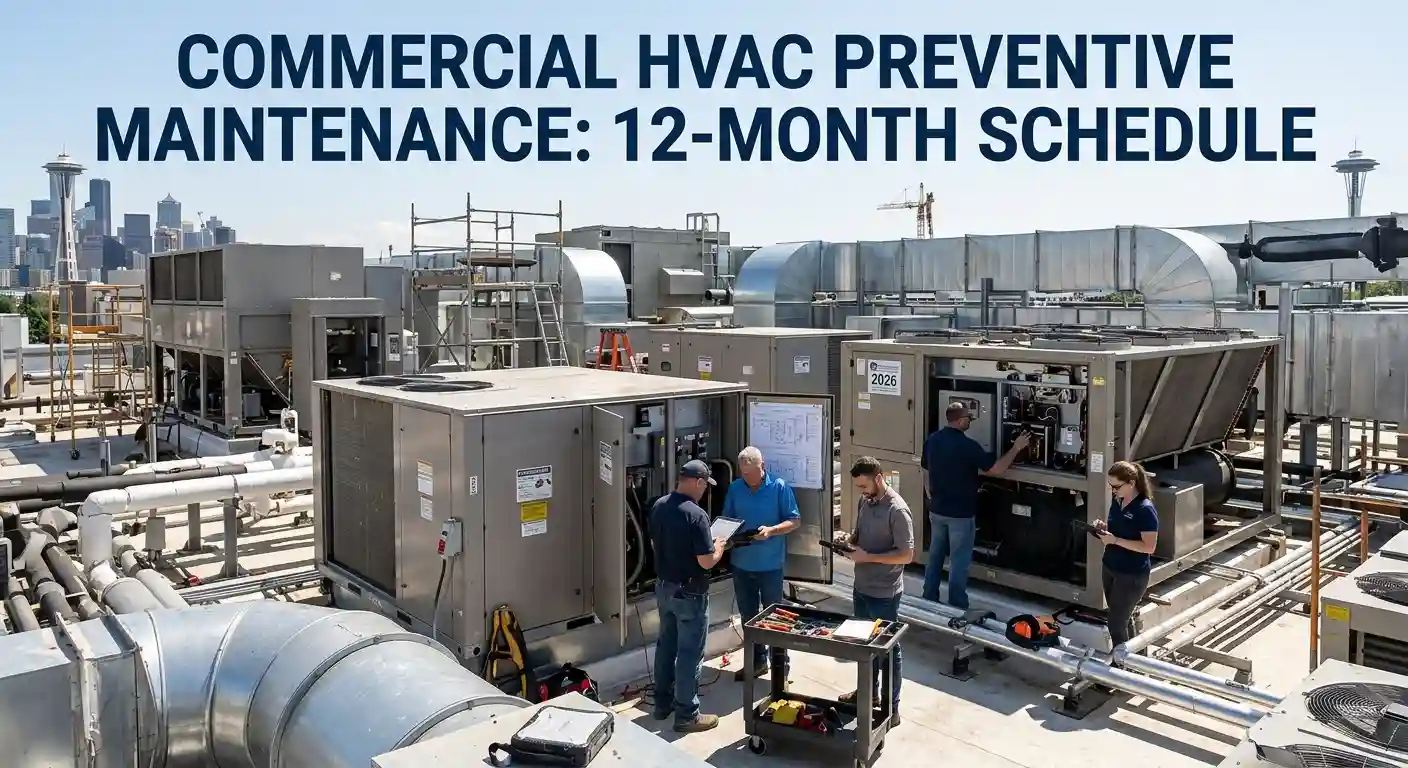

A 12-month commercial HVAC preventive maintenance schedule runs quarterly service visits timed around South Florida’s climate — pre-summer readiness in spring, peak-load monitoring in summer, post-season assessment and hurricane-tail follow-up in fall, and repair-and-replace execution in the mild winter months. Each quarter has a different job, and treating all four visits identically wastes the schedule’s real value.
Most commercial maintenance agreements promise quarterly visits without specifying what changes quarter to quarter, which is where a lot of maintenance programs lose their effectiveness. This guide lays out what each quarter should actually accomplish, building a complete annual cycle rather than four interchangeable visits.
What Should the Spring Visit (Pre-Summer) Cover?
The spring visit, ideally completed by late May before hurricane season and peak cooling demand both begin, should verify equipment is ready for the hardest months ahead — coil condition, refrigerant charge, electrical components under load, and rooftop tie-down inspection for wind-load compliance.
This visit carries extra weight because it’s the last chance to catch and fix problems before demand peaks and contractor schedules fill with emergency calls. Photographing equipment and anchoring hardware at this visit also builds the insurance documentation baseline our hurricane preparation guide covers — dated pre-season photos matter if a storm claim comes later in the year.
What Should the Summer Visit Monitor?
The summer visit, landing during peak cooling demand, should focus on performance verification under real load — confirming equipment is delivering its rated capacity, checking for early signs of the heat-driven electrical failures that spike this time of year, and catching marginal problems before they become July emergencies.
| Quarter | Primary focus | Timing |
|---|---|---|
| Spring | Pre-season readiness, hurricane prep, tie-down check | By late May |
| Summer | Under-load performance verification | Peak season, July-August |
| Fall | Post-summer assessment, storm-tail follow-up | October-November |
| Winter | Repair execution, replacement planning | December-February |
Equipment stressed by summer’s continuous run hours often shows its first symptoms during this visit — trending amp draws, capacity that’s quietly declined since spring — which is exactly the data the fall assessment builds on rather than starting its own diagnosis from a blank page.
What Should the Fall Visit (Post-Summer) Assess?
The fall visit assesses what summer’s stress cycle did to the equipment — coil fouling, refrigerant leaks exposed by peak-season runtime, electrical components that degraded under heat — and produces the documented condition data that feeds both repair scheduling and next year’s capital budget.
This is also when any hurricane-season storm damage gets a formal follow-up check, even absent visible damage, since surge and brownout stress on compressors and boards can surface as failures weeks after the event that caused them. Our post-summer assessment guide covers exactly what this visit should document and why the timing matters.
What Should the Winter Visit (Mild Season) Accomplish?
The winter visit, landing in South Florida’s mildest months, should execute the repairs and replacements the fall assessment flagged — this is the calendar’s best window for scheduled work, since equipment downtime is far more tolerable when the building isn’t fighting peak heat.
Replacement projects specifically benefit from winter timing: contractor scheduling is more flexible, equipment lead times are less pressured by demand spikes, and commissioning happens in forgiving conditions rather than under summer pressure. Our replacement cost guide covers the economics of timing a replacement to this window rather than waiting for a summer emergency to force the decision.
How Does the 12-Month Schedule Change for Coastal Equipment?
Coastal equipment — anything within a mile or two of the Atlantic or Intracoastal — needs the same four quarterly visits with heavier emphasis on coil condition at every single one, since salt-air corrosion compounds continuously and doesn’t pause between quarters the way some other maintenance items effectively do.
For coastal properties, the spring visit’s coil inspection deserves particular attention, since a full season of the coming summer’s heat and humidity will accelerate whatever corrosion is already present. Buildings east of I-95 should expect their maintenance reports to document coil condition trends more explicitly than an inland property’s equivalent report, because that trend line, tracked consistently quarter over quarter, is the earliest warning of accelerated coastal wear — well before it becomes visible enough to notice on a casual walk-by.
Does the Schedule Need to Account for Refrigerant Regulations?
Yes — any visit involving refrigerant handling, whether a routine top-off or a leak repair, falls under EPA Section 608 requirements for certified technicians and proper recovery procedures, which is worth confirming your maintenance provider follows consistently across all four quarterly visits, not just when a major repair happens.
The industry’s ongoing refrigerant transition also makes this a moving target worth tracking year to year — equipment on older refrigerant platforms may face rising service costs as availability shifts, which is useful information to fold into the fall assessment’s condition data when it feeds next year’s capital planning conversation, especially on units already flagged as candidates for replacement rather than continued repair.
What Documentation Should Come Out of a Full Year’s Visits?
A complete year of quarterly visits should produce a running equipment file per unit — condition ratings, readings trended quarter over quarter, photos, and any findings with their resolution — that becomes the evidence base for warranty claims, capital planning and next year’s budget conversation.
Property managers who can pull four quarters of consistent documentation into a single equipment history make faster, better-supported decisions than those relying on memory or invoices scattered across different vendors and formats. This is also the documentation an insurer or warranty claim will ask for after a failure, which makes the habit worth maintaining even in years when nothing dramatic happens — the file exists precisely for the year it does.
How Should the Schedule Adjust for Equipment Age?
Newer equipment in good condition can sometimes run on three visits a year without meaningful risk, while equipment past twelve to fifteen years, coastal-exposed units, or anything serving a critical space benefits from holding the full quarterly cadence regardless of how healthy it currently tests.
The right adjustment isn’t a blanket rule but a per-unit decision based on the equipment file this schedule builds — a five-year-old inland unit with clean readings every quarter is a reasonable candidate for a lighter schedule, while a twelve-year-old coastal unit with any trending concern should stay on the full four-visit cycle. Our maintenance agreements are structured to make this adjustment per unit rather than applying one schedule uniformly across a whole property.
What Does a Full Year of Preventive Maintenance Cost?
Maintenance agreements are customized based on equipment type, tonnage, number of units and visit frequency rather than priced as a flat annual figure — a property with twenty units on quarterly coastal-grade service costs meaningfully more than four units on a lighter inland schedule, and the quote should reflect that specific mix.
Full detail on published pricing structure, including agreement labor rates, is on our commercial HVAC pricing page. The relevant cost comparison isn’t the annual maintenance spend in isolation — it’s that spend against what a single avoided compressor failure or emergency after-hours call would have cost, which is typically the argument that settles whether the full 12-month schedule is worth its price — a comparison that consistently favors the schedule once even one emergency is counted against it.
Frequently Asked Questions
How many HVAC maintenance visits does a commercial property need per year?
Four is the standard cadence for most South Florida commercial equipment, timed to the seasons — spring readiness, summer monitoring, fall assessment, winter execution. Newer inland equipment can sometimes run fewer visits; older or coastal equipment benefits from holding all four.
When should the pre-summer HVAC visit happen?
By late May, before hurricane season and peak cooling demand both begin. This timing allows enough runway to address anything the visit finds before the building needs its equipment performing at full capacity.
Why does the fall visit matter if summer already had a visit?
The fall visit specifically assesses what summer’s continuous run hours did to the equipment — fouling, exposed leaks, heat-stressed electrical components — producing the documentation that feeds winter repair scheduling and next year’s budget.
Can a maintenance schedule be adjusted for a specific building?
Yes — visit frequency and focus should reflect equipment age, coastal exposure and criticality rather than applying one schedule uniformly. A documented equipment file built over time is what makes that adjustment defensible rather than a guess.
Aspen Air Conditioning runs 12-month preventive maintenance schedules built around South Florida’s seasons across Palm Beach and Broward Counties. Call 561-464-5010.