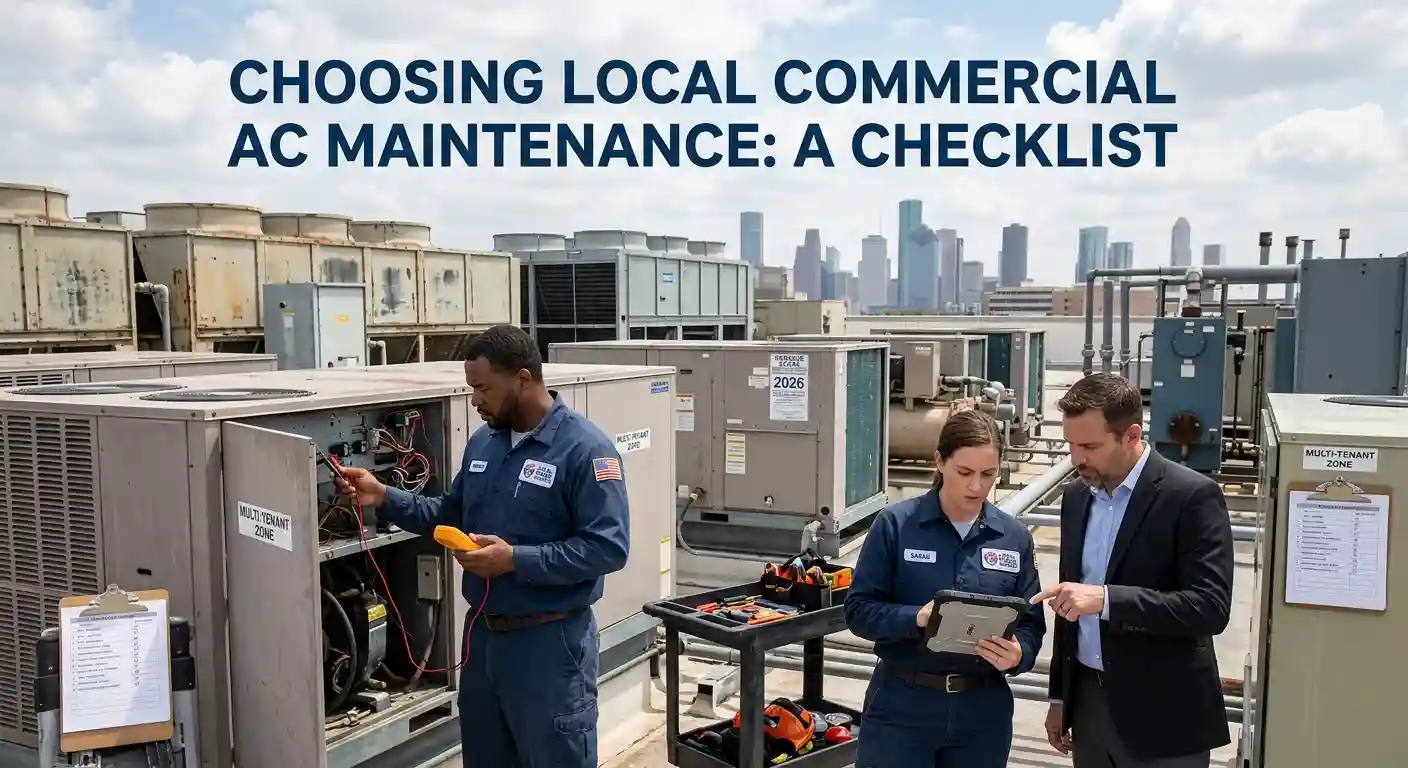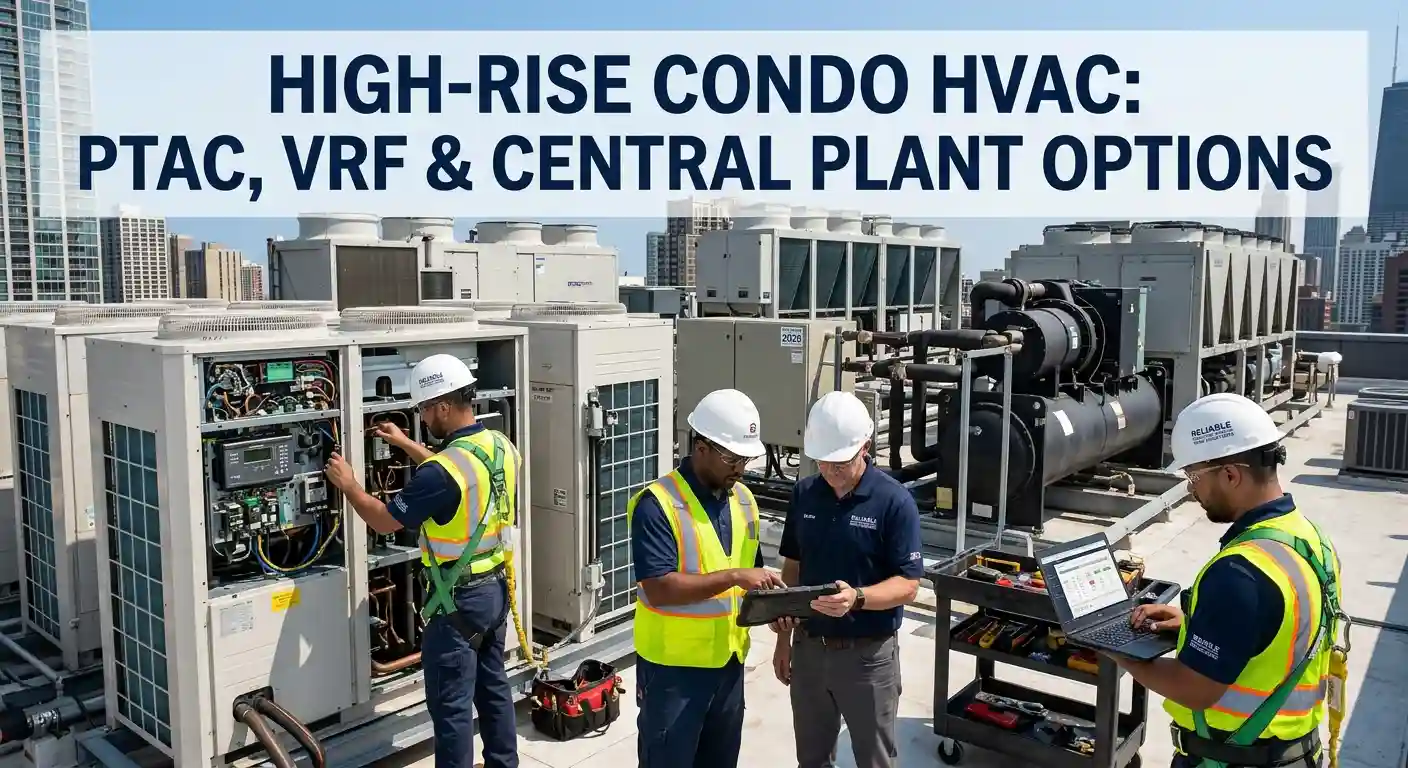
Commercial HVAC hurricane preparation means securing rooftop units, protecting electrical components, and documenting equipment condition weeks before a storm approaches — not after a warning is issued. NOAA’s 2026 outlook still stresses that it only takes one storm to cause major damage, and unsecured rooftop equipment remains one of the costliest, most preventable failure points on a commercial property.
Why Hurricane Season Puts Commercial HVAC Systems at Risk
Rooftop HVAC equipment fails in hurricanes for three predictable, preventable reasons: undersecured mounting hardware, unprotected electrical components, and drainage systems that can’t handle wind-driven rain. All three are fixable with pre-season attention — none of them require waiting for a named storm to address.
South Florida’s exposure makes this more than a seasonal formality. The Atlantic hurricane season runs June 1 through November 30, with activity historically peaking between mid-August and mid-October — the exact window commercial properties are moving through right now. NOAA’s 2026 outlook calls for a below-normal season, but agency officials were explicit that a quieter forecast doesn’t reduce the risk to any individual property: it only takes one storm making landfall to turn a below-average season into a costly one locally.
The financial case for prevention is straightforward. The U.S. Department of Energy notes that regular air conditioning maintenance improves system performance, reduces energy costs, and helps prevent unexpected failures during periods of high demand — and a hurricane-driven outage followed by a rushed emergency restart is about as high-demand as a South Florida commercial system ever faces.
Pre-Season Checklist: What to Handle Before Hurricane Season Begins
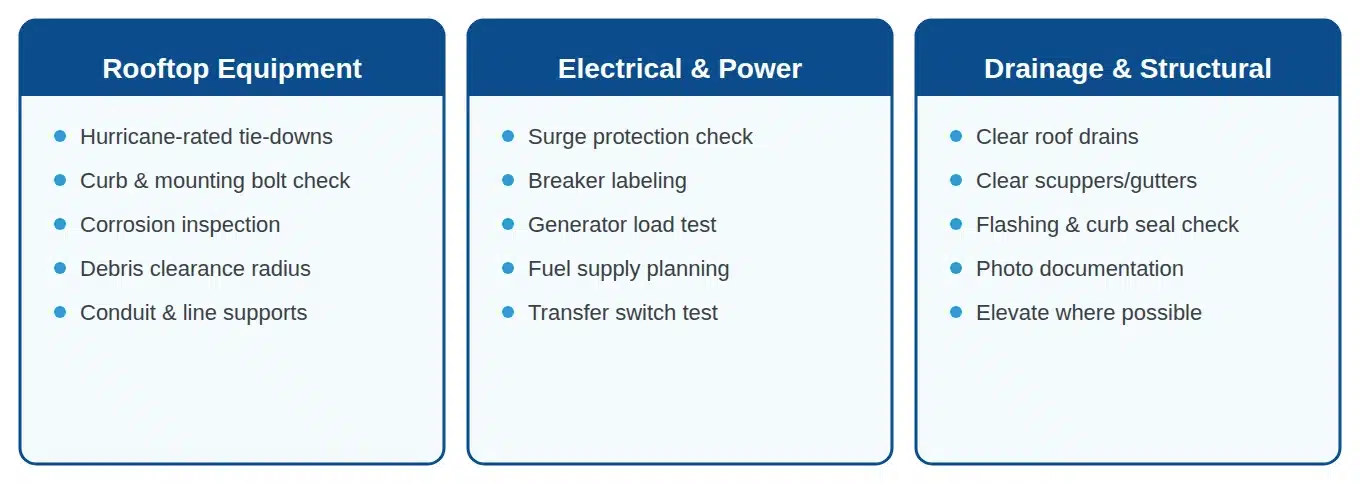
Effective hurricane preparation for commercial HVAC systems breaks down into three categories: rooftop equipment, electrical and power protection, and drainage and structural readiness. Handling all three before June gives your building a real head start over waiting for a storm watch.
- Schedule a professional rooftop HVAC inspection before June 1, covering curb attachment, mounting hardware, and refrigerant line supports
- Test and label backup generators and transfer switches, and confirm fuel supply arrangements
- Clear roof drains, scuppers, and gutters of debris so wind-driven rain has somewhere to go
- Photograph and document current equipment condition and serial numbers for insurance purposes
- Confirm your commercial HVAC maintenance coverage includes pre-storm and post-storm service calls, not just routine tune-ups
Securing Rooftop and Outdoor HVAC Equipment
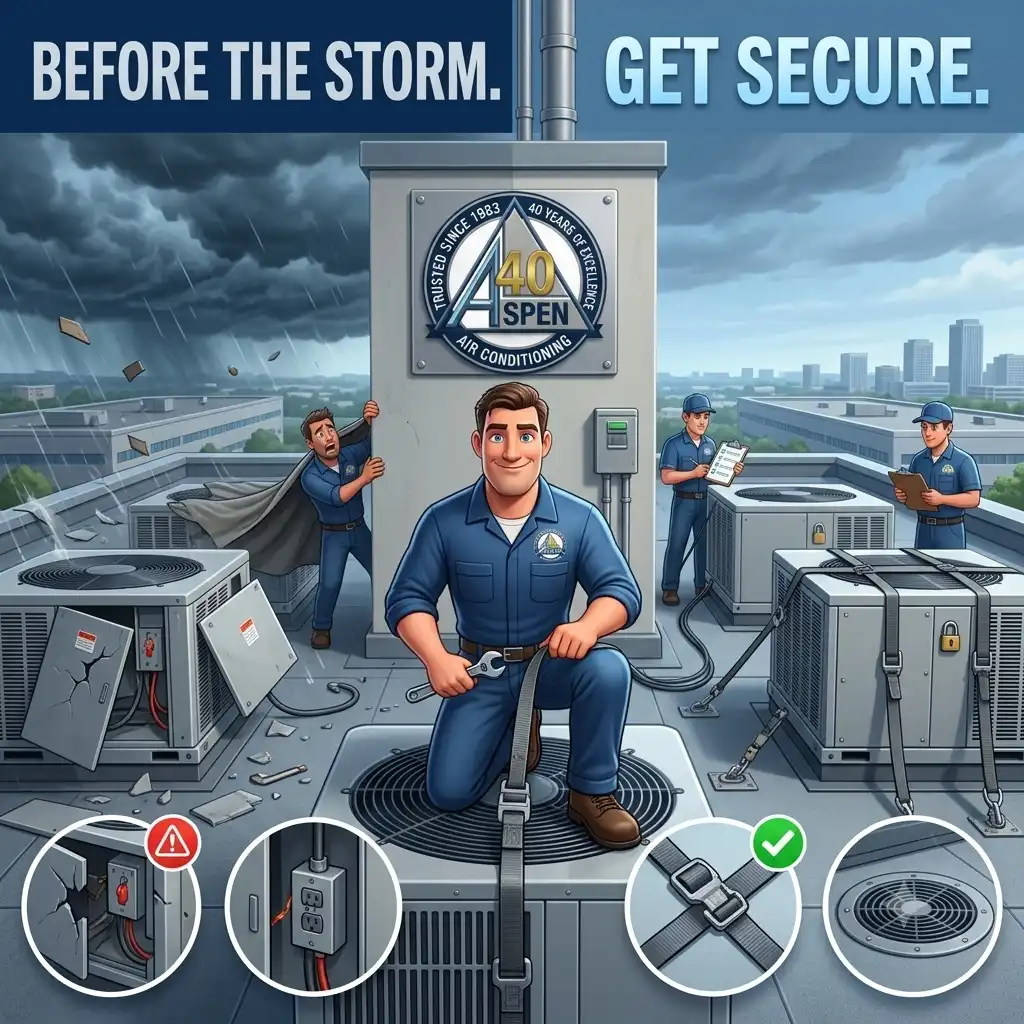
Securing a rooftop HVAC unit means anchoring it to the roof curb with manufacturer-rated hurricane tie-down straps — not relying on the unit’s own mounting frame, which isn’t designed to resist sustained wind loads on its own.
- Install hurricane-rated tie-down kits anchored through the curb, not just the equipment base
- Inspect mounting bolts and brackets for corrosion or loosening from equipment vibration over time
- Clear debris within a few feet of every outdoor unit to protect airflow and reduce projectile risk
- Confirm conduit runs and refrigerant lines are supported tightly enough to resist wind-induced movement
- Check flashing and curb seals around each unit for gaps that could let water intrude
This matters even more on properties with limited rooftop access or unusually exposed equipment, such as high-rise condominiums, where wind loads at elevation are significantly higher than at ground level.
Protecting Electrical Systems and Backup Power
Protecting HVAC electrical systems before a hurricane means verifying surge protection, labeling breakers clearly, and load-testing backup power — steps that prevent a storm-related power event from turning into an equipment replacement.
- Confirm surge protection is installed and functioning on HVAC electrical panels
- Label breakers clearly so units can be de-energized quickly and correctly before landfall
- Load-test backup generators and confirm automatic transfer switches engage properly
- Plan fuel supply logistics in advance — availability tightens quickly once a storm is named
- Review electrical panel condition for any signs of prior water intrusion or corrosion
24–48 Hours Before Landfall: Final Storm Prep
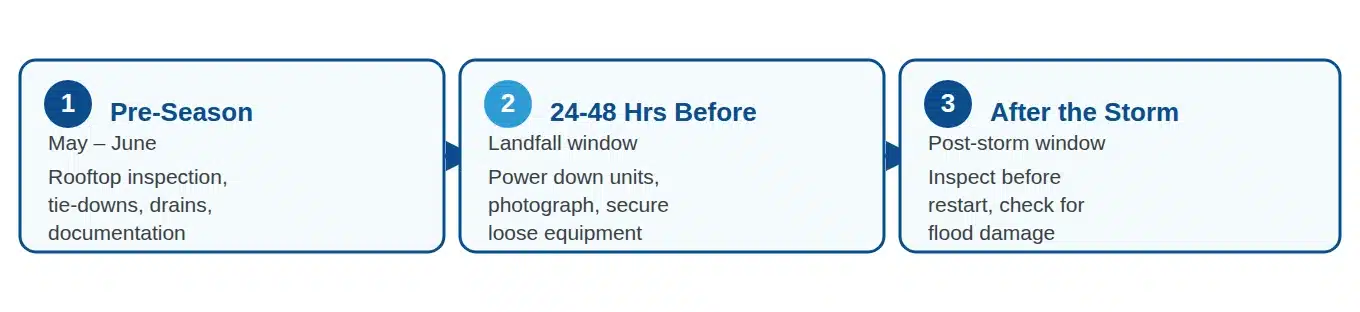
In the final 24 to 48 hours before a storm makes landfall, the priority shifts from inspection to shutdown: de-energize outdoor units at the breaker, photograph equipment condition, and secure anything not already anchored.
- Turn off outdoor HVAC units and switch off their dedicated breakers to prevent surge damage during uneven power restoration
- Photograph all rooftop and outdoor equipment for insurance documentation immediately before the storm
- Secure or remove any loose items near HVAC equipment that could become wind-driven debris
- Confirm generator fuel levels and transfer switch settings one final time
After the Storm: Safe Restart and Inspection
Never restart an HVAC system that was submerged or exposed to significant flooding, even if it appears to power on normally. Floodwater can damage electrical components, compressors, and controls in ways that aren’t visible from the outside.
- Conduct a visual inspection for physical damage, debris, and water intrusion before touching any controls
- Have a licensed technician inspect any unit that was submerged, took on water, or shows signs of electrical damage before restart
- Check control panels and wiring for moisture before restoring power
- If a unit was damaged, emergency HVAC repair or commercial HVAC repair service can get systems back online safely rather than risking a rushed self-restart
Hurricane Prep Isn’t a Substitute for Year-Round Maintenance
Pre-storm preparation addresses acute wind and water risk on a single event timeline. It doesn’t address the compounding wear that a six-month South Florida cooling season puts on equipment — the same wear that leaves undermaintained systems more vulnerable when a storm does arrive.
A commercial HVAC maintenance plan or maintenance contract catches the corrosion, loose hardware, and drainage issues that turn a survivable storm into an expensive one — long before hurricane season starts. Pairing a maintenance contract with a pre-season storm checklist is the difference between reacting to damage and preventing it.