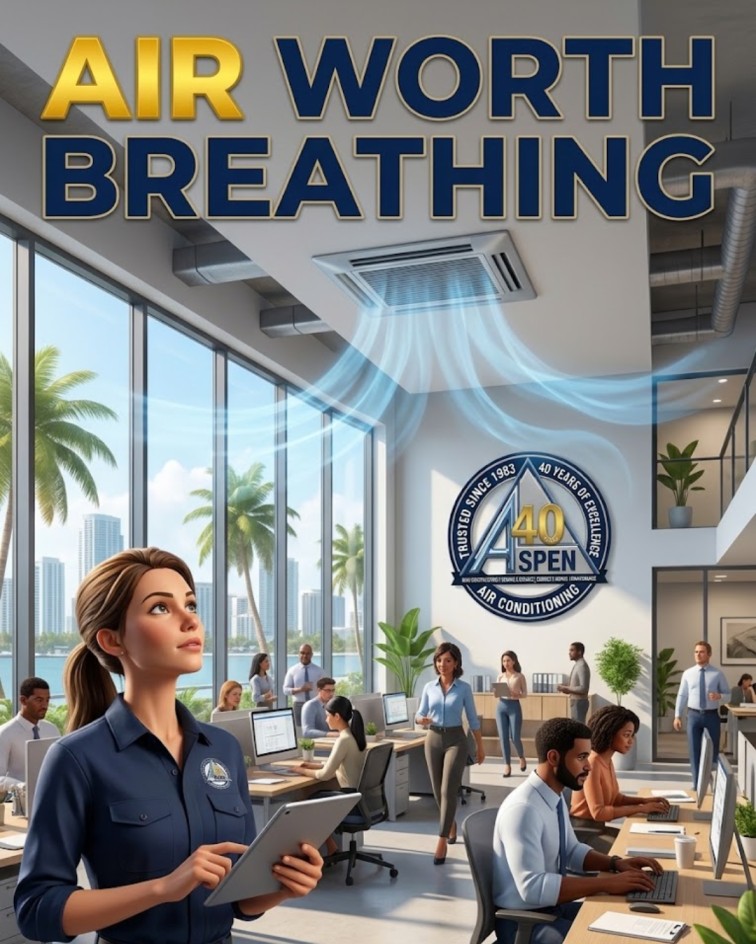
A fuller building loads the air faster than many systems are set to handle, because air quality scales directly with the number of people in the space. Buildings with sensitive occupants, including healthcare facilities, feel this shift first and hardest.
The system does not need to fail for air quality to slip. It simply needs to be running on settings calibrated for a quieter period while the real load climbs, and that mismatch shows up as stuffy air and complaints long before anyone blames the HVAC.
Why Does a Fuller Building Threaten Air Quality?
More occupants mean more carbon dioxide, more moisture, and faster buildup of dust and particulates, all pressing on ventilation and filtration at once. The load changes even though the equipment has not.
Stale air, lingering odors, and a rise in comfort complaints are the early signs, and they tend to appear well before anyone suspects the air handling system. Reading those signs early is what separates a quick adjustment from a drawn-out problem.
How Much Ventilation Does a Full Building Need?
Ventilation requirements rise with occupancy, because fresh air exchange is what dilutes the carbon dioxide and pollutants that people and activity generate. The U.S. Environmental Protection Agency’s indoor air quality guidance identifies adequate ventilation as a central pillar of a healthy indoor environment.
When a building fills up without a matching increase in fresh air, carbon dioxide climbs and the space feels stale even at a comfortable temperature. Verifying that ventilation rates suit current occupancy, rather than last season’s, keeps the air genuinely fresh rather than merely cool.
What Role Does Filtration and Humidity Play?
Filtration and humidity control carry the other half of the job. Filters capture allergens and particulates, and they load faster as occupancy rises, which makes a tighter replacement schedule essential under heavier use.
ENERGY STAR’s operations and maintenance best practices emphasize keeping filters and coils clean to sustain both air quality and efficiency. Humidity matters just as much in South Florida, where controlling indoor moisture limits mold and the heavy, stuffy feeling a crowded building can develop.
Why Is Air Quality a Business Issue, Not Just Comfort?
Air quality connects directly to how people perform and how they feel about a building. Occupants concentrate poorly in stuffy, humid conditions, and the U.S. Department of Energy notes that HVAC, which drives ventilation and filtration, accounts for a large share of commercial building energy use.
For offices, medical facilities, and retail, the air is part of the experience the building sells. Tenants and customers remember spaces that felt fresh and spaces that did not, which operators can protect as part of regular commercial HVAC maintenance.
FAQ
How does higher occupancy affect indoor air quality?
More people generate more carbon dioxide, moisture, and particulates, which press on ventilation and filtration at the same time. A system set for lower occupancy can leave the air feeling stale even at a comfortable temperature, so ventilation and filter schedules should rise with the building’s actual load.
How often should filters be changed in a busy commercial building?
More often than in a quiet one. Higher occupancy and South Florida humidity load filters faster, so busy buildings benefit from a tighter replacement schedule. A clogged filter restricts airflow and degrades air quality, so keeping filters fresh protects both the air and the equipment moving it.
What indoor humidity level supports good air quality?
Keeping indoor humidity controlled, generally below 60 percent, limits mold growth and the heavy, stuffy feeling crowded spaces can develop. Stable humidity works alongside ventilation and filtration, and all three together handle the large majority of commercial air quality concerns.
Keep the Air Healthy With Aspen AC
A building that fills back up deserves air that keeps pace with the crowd. Aspen AC has been protecting indoor air quality across South Florida’s commercial properties since 1983, managing ventilation, filtration, and humidity as one connected system. Contact our commercial team to put your building’s air quality on solid ground.
Cool air is expected. Clean air is what people remember.