
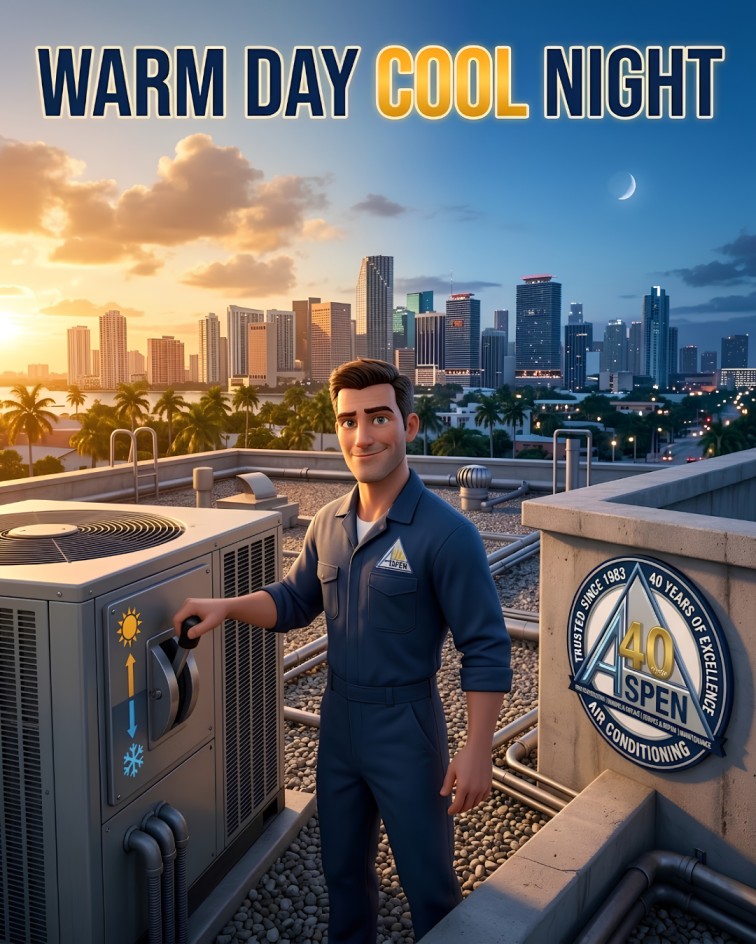
A building that cooled steadily for months suddenly needs to respond to both warm afternoons and cool nights, sometimes within hours. Equipment and controls calibrated for continuous cooling can lag, overshoot, or cycle awkwardly when the demand reverses.
The result is uneven comfort, zones that run warm or cold at the wrong times, and energy spent correcting the mismatch. Preparing a system to handle the daily swing smoothly is what keeps occupants comfortable through a South Florida winter that rarely sits still.
Do South Florida Buildings Actually Need Heating?
They need it more than many operators expect. Cool fronts can drop nighttime temperatures enough that spaces feel cold by morning, and heating components that stayed dormant all year may fail on first use if they were never checked.
ENERGY STAR notes that commercial unitary heat pumps can handle both cooling and heating from one efficient system, which suits a climate where the same week may need both. Verifying heating function before the first cool front prevents a cold-morning scramble.
How Should Controls Be Set for the Swing?
Winter in South Florida rewards controls that respond to real conditions rather than a fixed summer schedule. Recalibrating setpoints, confirming sensor accuracy, and setting sensible changeover between cooling and heating keeps the building from overworking in either direction.
The U.S. Department of Energy points out that heat pump rooftop systems can cut energy use substantially compared with conventional equipment, so a system set up to modulate intelligently through its efficiency programs captures savings across the whole swing. Smart changeover settings prevent the wasteful tug of war where heating and cooling fight each other across zones.
Which Properties Should Prepare First?
Buildings with wide exposure, large glass areas, or occupants present early and late feel the swing most. Offices, hospitality, and mixed-use properties all notice cool mornings and warm afternoons on the same day.
Preparing early means the system meets both demands without complaint, and it avoids the comfort calls that arrive the first week temperatures drop. A short seasonal visit sets the building up for a winter that behaves nothing like the rest of the country’s.
FAQ
Do commercial buildings in South Florida really use heating?
Yes, more than many expect. Cool fronts can drop nighttime temperatures enough that buildings feel cold by morning. Heating components that sat idle all year can fail on first use, so verifying heating function before the first front prevents an uncomfortable surprise.
Why does the daily temperature swing matter for HVAC?
Because the system has to reverse demand, sometimes within hours. Controls tuned for steady cooling can overshoot or cycle awkwardly when nights turn cool and afternoons stay warm. Preparing for the swing keeps comfort even and avoids energy wasted correcting the mismatch.
Are heat pumps a good fit for this climate?
They often are. A single heat pump system handles both cooling and efficient heating, which suits a climate where the same week can call for both. The right system and settings let a building meet warm afternoons and cool nights without separate equipment or wasted energy.
Handle the Swing With Aspen AC
South Florida winter is a moving target, warm by day and cool by night, and comfort depends on a system ready for both. Aspen AC has been preparing commercial buildings for this seasonal swing since 1983, with the technical depth to keep comfort steady around the clock. See our commercial services and contact our commercial team before the first cool front arrives.
Winter here does not pick a side. Your HVAC system should not have to either.