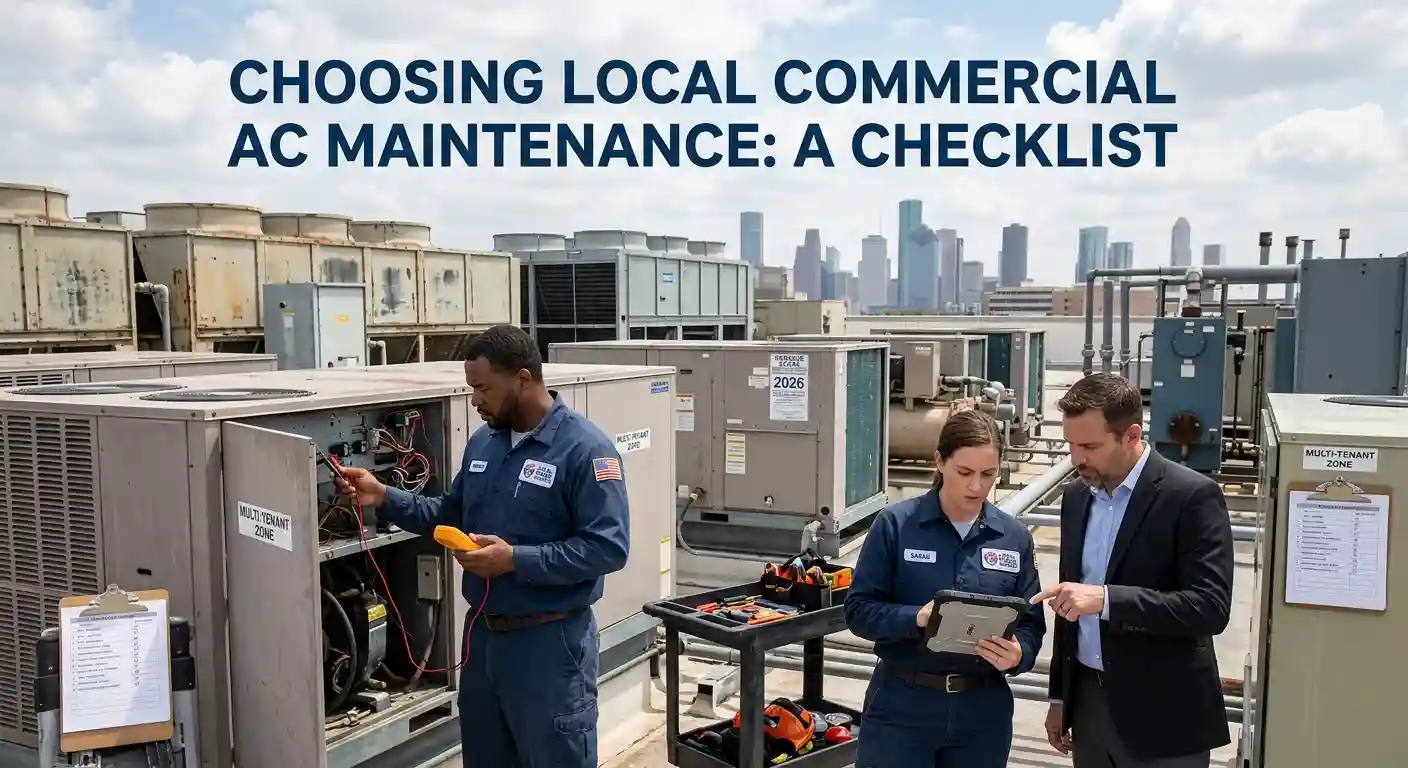

Commercial HVAC systems represent one of the largest capital investments a South Florida facility manager will make in 2026 — and without a structured plan, that investment carries significant financial and regulatory risk. This guide breaks down everything you need: current replacement costs for Boca Raton and Fort Lauderdale commercial properties, 2026 regulatory compliance requirements under the AIM Act and Florida Building Code, sector-specific planning frameworks for healthcare, retail, hospitality, and high-rise residential, and a step-by-step compliance checklist to protect your investment before a single dollar is committed.
Aspen AC has served commercial clients across Palm Beach County and Broward County since 1983. What follows is the capital planning intelligence our engineering team uses with clients every day — structured for your 2026 budget cycle.
Understanding the Financial Framework for HVAC Capital Expenditures
Capital planning for commercial AC upgrades requires a thorough assessment of both immediate replacement needs and anticipated system lifecycle costs. Prudent financial stewardship demands that facility managers evaluate not merely the acquisition cost of new equipment but rather the total cost of ownership (TCO) over the system’s projected operational lifespan. This analysis must account for energy consumption patterns, maintenance requirements, warranty provisions, and potential utility incentive programs available in South Florida.
The capital planning process should incorporate detailed site assessments, load calculations, and energy audits to ensure that proposed upgrades align with both budgetary constraints and operational objectives. Aspen AC’s engineering team regularly assists clients in developing multi-year capital improvement plans that balance immediate HVAC needs with long-term strategic goals.
How Much Does a Commercial HVAC Upgrade Cost in South Florida? (2026 Pricing Guide)
For facility managers and property owners in Boca Raton, Fort Lauderdale, West Palm Beach, and Coral Springs, understanding the investment range before entering a capital planning cycle is non-negotiable. Commercial HVAC upgrade costs in South Florida vary significantly by system type, building square footage, and project scope. The following reflects general 2026 market conditions for Southeast Florida commercial installations — actual pricing depends on site conditions and scope, so treat these as planning benchmarks rather than quotes:
Packaged Rooftop Unit (RTU) — used for retail, office, and single-floor commercial; typically $10,000–$30,000 and up per unit.
VRF/VRV System — used for high-rise condos and multi-zone commercial; typically $25,000–$100,000+.
PTAC/VPAC Replacement — used for hotels, assisted living, and multi-unit residential; typically $1,200–$3,500 per unit.
Chiller System — used for large-scale medical, industrial, and campus facilities; typically $80,000–$400,000+.
Mini-Split Multi-Zone — used for server rooms, restaurants, and boutique retail; typically $5,000–$18,000.
Full BAS/Controls Retrofit — applicable to any large commercial facility; typically $15,000–$75,000.
Figures reflect installed cost including labor, permitting, and commissioning in Palm Beach and Broward County markets.
Return on Investment Benchmarks
Modern, high-efficiency systems qualifying for ENERGY STAR certification can deliver meaningful reductions in HVAC-related energy consumption compared to equipment installed prior to 2016 — often in the range of 20–30% depending on the equipment being replaced and current condition. For a mid-size commercial property in Fort Lauderdale averaging $4,000–$8,000 monthly in cooling costs, that range translates to potential annual savings in the thousands of dollars.
Simple payback periods for most commercial replacements fall within 5–8 years when factoring in:
- Energy savings from high-efficiency equipment (SEER2 ratings of 15+ for commercial applications)
- Reduced emergency repair frequency and associated downtime costs
- Florida Power & Light (FPL) Business Energy Efficiency programs, including the Direct-Expansion A/C and Chiller rebate programs, for qualifying HVAC upgrades
- Federal Section 179 and Bonus Depreciation provisions allowing accelerated write-offs on qualifying commercial HVAC assets
On the tax side, 2026 is an unusually favorable year for equipment purchases: 100% bonus depreciation has been permanently restored for qualifying property acquired after January 19, 2025, and the 2026 Section 179 deduction limit sits at $2,560,000, with the phase-out threshold starting at $4,090,000. HVAC systems and related building improvements can qualify as Section 179 property in many cases, meaning the full cost may be expensed in the year of installation rather than depreciated over decades — though eligibility depends on your business structure and income, so this needs to be confirmed with your CPA before you commit capital.
Facility managers in Palm Beach County and Broward County should initiate conversations with their tax advisors alongside their HVAC contractor to capture maximum financial benefit from capital investment timing.
Ready to build your 2026 capital plan?
Schedule a Facility Assessment with Aspen AC
Regulatory Considerations and Compliance Requirements
The regulatory landscape governing commercial HVAC systems continues to evolve, with increasingly stringent energy efficiency standards and refrigerant phase-out schedules impacting capital planning decisions. The American Innovation and Manufacturing (AIM) Act has established clear timelines for the reduction of hydrofluorocarbon refrigerants, requiring facility managers to consider equipment compatibility and future-proofing strategies when planning capital expenditures.
Florida’s building codes and local ordinances in Palm Beach County and Broward County may impose specific requirements regarding system efficiency ratings, ventilation standards, and equipment placement that directly influence project scope and budget allocation. Engaging experienced commercial HVAC contractors during the planning phase ensures that proposed upgrades meet all applicable statutory and regulatory requirements.
Strategic Timing and Phased Implementation Approaches
Optimal capital planning involves strategic timing considerations that minimize operational disruption while maximizing financial efficiency. Many commercial entities in South Florida opt for phased implementation strategies that distribute capital expenditures across multiple fiscal periods, managing cash flow while systematically upgrading aging HVAC infrastructure.
This approach allows businesses to prioritize critical system replacements while deferring less urgent upgrades to subsequent budget cycles. The relatively mild winter months in South Florida — October through February — provide ideal conditions for major HVAC installations with minimal impact on occupant comfort. Aspen AC has coordinated numerous large-scale, multi-phase commercial AC upgrade projects that respect both budgetary limitations and operational continuity requirements.
Leveraging Technology and Performance-Based Contracting
Contemporary capital planning for commercial AC upgrades increasingly incorporates advanced technologies, including building automation systems (BAS), variable refrigerant flow equipment, and smart controls that optimize energy consumption through real-time monitoring and adjustment. These technological solutions often qualify for accelerated depreciation schedules under federal tax provisions, enhancing the financial attractiveness of capital investments in HVAC infrastructure.
Performance-based contracting arrangements — wherein HVAC contractors guarantee specific efficiency improvements or operational outcomes — represent an innovative approach that shifts certain project risks while aligning contractor incentives with client objectives. Such arrangements require detailed baseline measurements and clearly defined performance metrics, but can provide substantial value in complex commercial applications across Fort Lauderdale, Boca Raton, and West Palm Beach.
HVAC Capital Planning by Commercial Sector: What South Florida Facility Managers Need to Know
Commercial HVAC infrastructure is not one-size-fits-all. Each sector imposes distinct technical, regulatory, and operational requirements that directly shape capital planning strategy. Aspen AC has delivered commercial mechanical solutions across South Florida since 1983, and the following sector profiles reflect the planning realities our engineering team encounters across Palm Beach County, Broward County, and the greater Fort Lauderdale and Boca Raton markets.
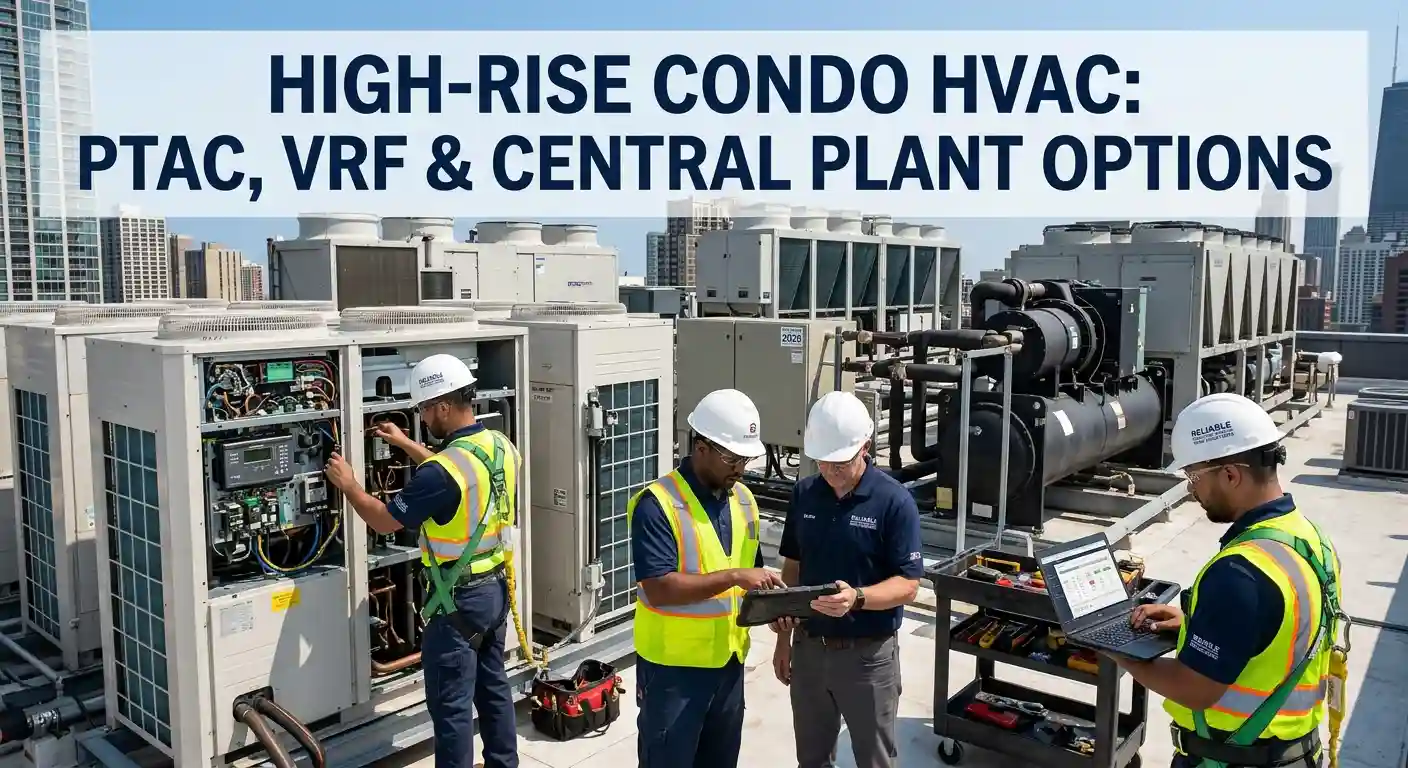
High-Rise Condominiums and Multi-Story Residential — High-rise properties present the most logistically complex capital planning scenarios. PTAC and VPAC systems serving individual units require coordinated replacement programs that respect tenant occupancy schedules. Capital planning for a high-rise portfolio in Boca Raton or West Palm Beach should include a full mechanical inventory with individual unit age mapping to sequence replacements across multi-year budget cycles without triggering simultaneous critical failures.
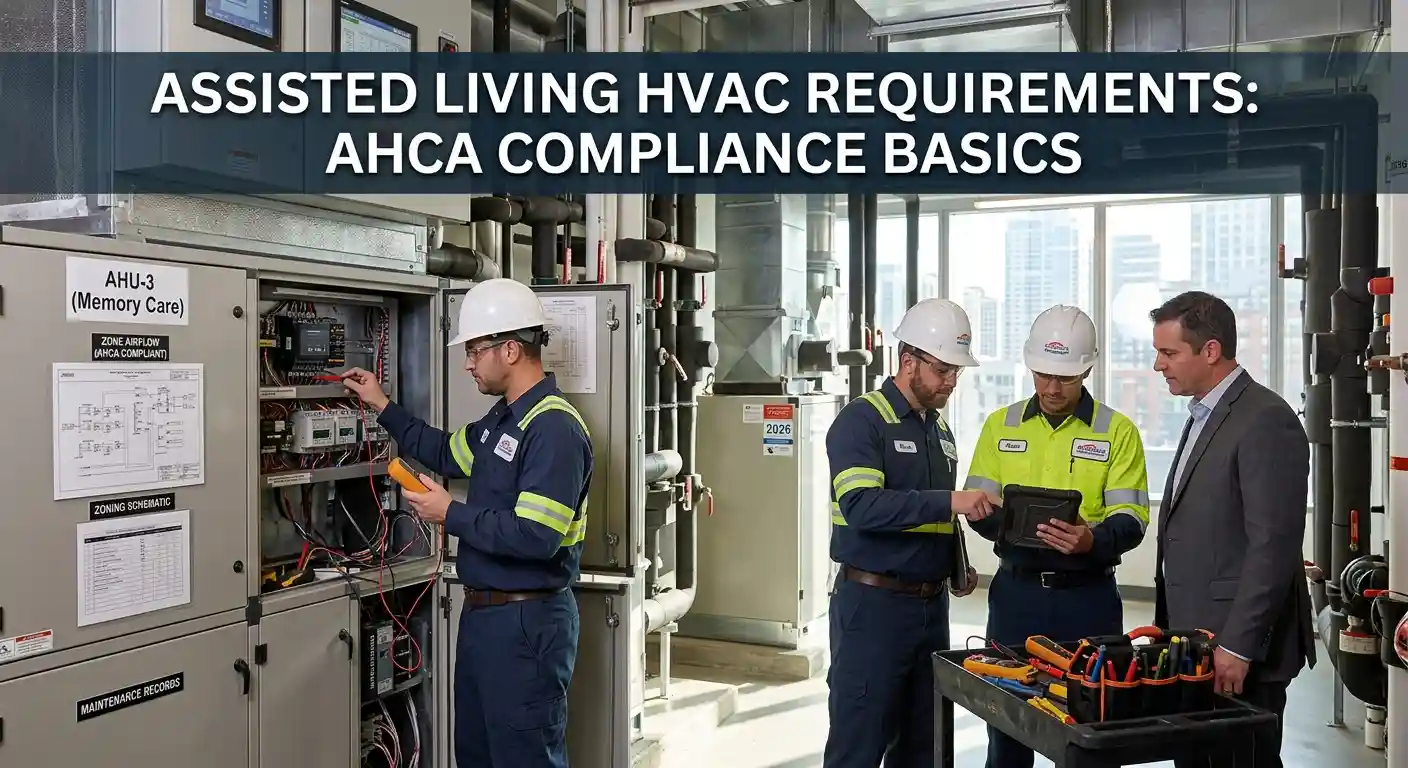
Healthcare Facilities and Assisted Living — HVAC systems in healthcare environments are life-safety infrastructure. Medical offices, surgical centers, and assisted living facilities in Palm Beach Gardens, Boynton Beach, and Coral Springs must maintain continuous environmental control with zero tolerance for unplanned downtime. Capital planning in this sector demands redundant system design, emergency bypass capability, and ASHRAE 170-compliant ventilation standards. Regulatory inspections from the Agency for Health Care Administration (AHCA) in Florida can directly implicate HVAC compliance, making documentation and commissioning records essential deliverables of any upgrade project.
Retail and Shopping Centers — Multi-tenant retail environments, from regional shopping centers in Fort Lauderdale and Pembroke Pines to boutique retail corridors in Delray Beach and Boca Raton, require capital planning that coordinates around tenant lease structures, operating hours, and building management agreements. Energy efficiency upgrades in multi-tenant retail benefit disproportionately from building automation integration, enabling zone-by-zone control and sub-metering for accurate tenant utility allocation.
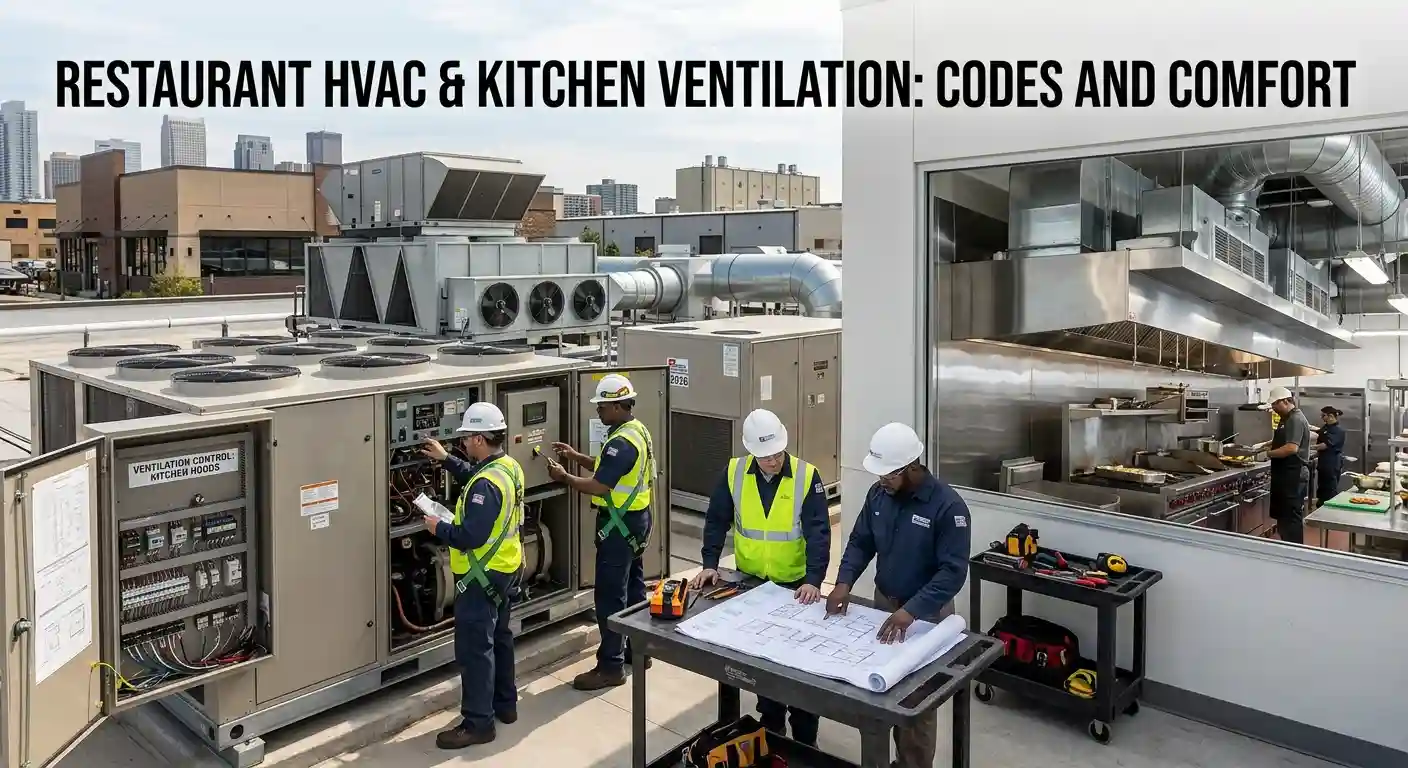
Restaurants and Hospitality — Kitchen exhaust and makeup air systems in commercial foodservice environments impose specific capital planning requirements beyond standard comfort cooling. Restaurants in Hollywood, Deerfield Beach, and Fort Lauderdale must account for hood exhaust integration, grease management, and local fire marshal compliance. Hotels face PTAC fleet management as a recurring capital obligation — a phased replacement program that cycles aging units on a rolling annual basis is the preferred strategy to avoid synchronized mass failures.
Warehouses, Industrial, and Manufacturing — High-bay industrial facilities in Margate, Pompano Beach, and Boynton Beach require cooling and ventilation solutions designed for extreme thermal load environments. Industrial HVAC capital planning must also address indoor air quality for OSHA compliance in facilities with chemical storage, manufacturing processes, or food handling operations.
2026 Regulatory Compliance Checklist: AIM Act, Florida Building Code & Energy Efficiency Standards
Commercial HVAC capital decisions made in 2026 are operating within one of the most consequential regulatory transition periods in the industry’s history. Facility managers across Southeast Florida must evaluate the following compliance requirements before finalizing equipment specifications or contractor agreements.
AIM Act — Refrigerant Phase-Down Compliance: Equipment purchased for 2026 installations should specify R-454B (Puron Advance) or R-32 refrigerant compatibility. Systems designed for R-410A that remain in service in the coming years face increasingly costly refrigerant sourcing and potential service disruption as production caps tighten.
Florida Building Code (FBC) — Mechanical Standards: Capital projects must comply with FBC Chapter 13 (Energy Efficiency) requirements, including minimum SEER2 ratings and mandatory energy performance documentation. Palm Beach County and Broward County building departments require mechanical permits for equipment replacements above defined threshold specifications.
ASHRAE Standards — Energy and Ventilation Compliance: ASHRAE Standard 90.1 (Energy Standard for Buildings) and ASHRAE Standard 62.1 (Ventilation for Acceptable Indoor Air Quality) establish the performance baselines Florida’s building code adopts by reference. Commercial HVAC upgrades must demonstrate compliance with ventilation rate requirements, economizer provisions, and equipment efficiency thresholds.
ENERGY STAR Commercial Building Certification: For commercial property owners pursuing ENERGY STAR building certification — a growing requirement for institutional tenants and ESG-focused investors — HVAC system efficiency ratings directly impact the building’s energy use intensity (EUI) score.
FPL Rebate Pre-Qualification: FPL business rebate programs require pre-approval before equipment purchase and installation. Facility managers must submit rebate applications through FPL’s energy efficiency portal prior to project commencement. Retroactive applications are not accepted.
Section 179 / Bonus Depreciation — Tax Year 2026: Commercial HVAC systems can qualify as Section 179 property in many cases, and 100% bonus depreciation remains available for qualifying property placed in service in 2026. Confirm eligibility and current-year figures with your CPA or tax advisor prior to project initiation, since eligibility depends on business structure and income.
Building a 2027 HVAC Capital Plan: Where to Start
Start with a condition assessment of every unit over ten years old, then rank replacements by failure risk and business impact rather than age alone. Off-season windows — November through March — offer the best pricing and scheduling for major commercial HVAC installation work, so budget approval by Q4 positions projects for the following spring. A phased replacement program spreads capital outlay across fiscal years while retiring the highest-risk equipment first.
Frequently Asked Questions
When is the best time to replace commercial HVAC equipment in South Florida?
The optimal window is October through February. South Florida’s mild winter months reduce operational demand, allowing for planned shutdowns with minimal occupant impact. Facility managers should initiate scope and procurement planning no later than September to secure equipment availability and preferred installation timelines.
What regulations affect commercial HVAC upgrades in Florida in 2026?
Three frameworks apply directly: the AIM Act (HFC refrigerant phase-down), the Florida Building Code (efficiency and ventilation minimums), and local permitting requirements in Palm Beach County and Broward County for rooftop unit replacements and mechanical room modifications.
How do I determine if my commercial HVAC system needs replacement versus repair?
Apply the Rule of 5,000: multiply system age by estimated repair cost. If the result exceeds $5,000, replacement typically delivers superior long-term ROI. Additional replacement indicators include R-22 refrigerant dependency, SEER2 ratings below 13.4, and equipment exceeding 15–20 years of service life in the South Florida climate.
Are there rebates for commercial HVAC upgrades in South Florida?
Yes. Florida Power & Light (FPL) administers business energy efficiency programs providing rebates for qualifying commercial HVAC equipment. Eligible upgrades include high-efficiency packaged units, variable-speed drive retrofits, and building automation integrations. Pre-approval before purchase is required.
What is a phased HVAC upgrade approach and is it right for my commercial property?
A phased approach distributes capital expenditure across two or more fiscal periods by prioritizing critical replacements in Year 1 while deferring secondary upgrades to subsequent cycles. This strategy is particularly effective for multi-tenant properties in Coral Springs, Plantation, Pembroke Pines, and West Palm Beach managing diverse equipment ages across a single portfolio.
What certifications should I verify when hiring a commercial HVAC contractor in South Florida?
At minimum: a valid Florida Mechanical Contractor license, full liability and workers’ compensation coverage, and NATE-certified technicians. Background-checked, drug-tested technician teams are a baseline requirement for healthcare, educational, and high-rise residential access in Palm Beach and Broward Counties.
How long does a commercial HVAC replacement project take in South Florida?
A single packaged rooftop unit replacement: one to three days. A full VRF system installation in Fort Lauderdale or Boca Raton: two to six weeks. Large-scale phased projects for healthcare or high-rise properties: one to three years across multiple mobilizations. Equipment procurement lead times of four to twelve weeks should be factored into all capital planning timelines.
How do I know if my commercial AC system in South Florida should be replaced or just repaired in 2026?
Consider replacement if the unit is older than 12–15 years, uses outdated refrigerant, requires frequent repairs, or fails to maintain humidity and comfort.
What line items should I include in a 2026 AC capital plan for a South Florida property?
Include equipment, controls, crane and rigging, electrical and structural work, permitting fees, inspections, temporary cooling, and a contingency buffer.
How do 2026 efficiency upgrades impact operating costs for Florida commercial buildings?
Moving to high-SEER2, variable-speed systems can cut cooling energy use by roughly 20–30%, lowering utility bills and reducing strain on equipment.
What risks do South Florida property managers face if they delay commercial AC upgrades past 2026?
They risk non-compliance with codes, higher emergency repair costs, expensive rush replacements, tenant complaints, and limited availability of older-compatible parts.
How should I coordinate AC upgrades with other building projects in a South Florida commercial property?
Align AC work with roof, electrical, or envelope projects to share mobilization costs, streamline permitting, and minimize repeated disruptions to tenants.
The optimal window is October through February. South Florida’s mild winter months reduce operational demand, allowing for planned shutdowns with minimal occupant impact. Facility managers should initiate scope and procurement planning no later than September to secure equipment availability and preferred installation timelines.
Three frameworks apply directly: the AIM Act (HFC refrigerant phase-down), the Florida Building Code (efficiency and ventilation minimums), and local permitting requirements in Palm Beach County and Broward County for rooftop unit replacements and mechanical room modifications.
Apply the Rule of 5,000: multiply system age by estimated repair cost. If the result exceeds $5,000, replacement typically delivers superior long-term ROI. Additional replacement indicators include R-22 refrigerant dependency, SEER2 ratings below 13.4, and equipment exceeding 15–20 years of service life in the South Florida climate.
Yes. Florida Power & Light (FPL) administers business energy efficiency programs providing rebates for qualifying commercial HVAC equipment. Eligible upgrades include high-efficiency packaged units, variable-speed drive retrofits, and building automation integrations. Pre-approval before purchase is required.
A phased approach distributes capital expenditure across two or more fiscal periods by prioritizing critical replacements in Year 1 while deferring secondary upgrades to subsequent cycles. This strategy is particularly effective for multi-tenant properties in Coral Springs, Plantation, Pembroke Pines, and West Palm Beach managing diverse equipment ages across a single portfolio.
At minimum: a valid Florida Mechanical Contractor license, full liability and workers’ compensation coverage, and NATE-certified technicians. Background-checked, drug-tested technician teams are a baseline requirement for healthcare, educational, and high-rise residential access in Palm Beach and Broward Counties.
A single packaged rooftop unit replacement: one to three days. A full VRF system installation in Fort Lauderdale or Boca Raton: two to six weeks. Large-scale phased projects for healthcare or high-rise properties: one to three years across multiple mobilizations. Equipment procurement lead times of four to twelve weeks should be factored into all capital planning timelines.
Consider replacement if the unit is older than 12–15 years, uses outdated refrigerant, requires frequent repairs, or fails to maintain humidity and comfort.
Include equipment, controls, crane and rigging, electrical and structural work, permitting fees, inspections, temporary cooling, and a contingency buffer.
Moving to high-SEER2, variable-speed systems can cut cooling energy use by roughly 20–30%, lowering utility bills and reducing strain on equipment.
They risk non-compliance with codes, higher emergency repair costs, expensive rush replacements, tenant complaints, and limited availability of older-compatible parts.
Align AC work with roof, electrical, or envelope projects to share mobilization costs, streamline permitting, and minimize repeated disruptions to tenants.
Partner with South Florida’s Most Trusted Commercial HVAC Experts
Successful capital planning for commercial AC upgrades demands technical expertise, financial acumen, and deep familiarity with regional conditions and regulatory requirements. Since 1983, Aspen AC has served as a trusted partner to commercial clients throughout Southeast Florida — from Port St. Lucie to Miami — providing comprehensive HVAC solutions that balance immediate needs with long-term strategic objectives.
Whether your organization requires a complete system replacement or a carefully phased upgrade program, the experienced professionals at Aspen AC develop customized capital plans that optimize your HVAC investment across Palm Beach County, Broward County, Boca Raton, Fort Lauderdale, West Palm Beach, Coral Springs, Pompano Beach, and every market in between.
Contact Aspen AC today to schedule a comprehensive facility assessment and begin your 2026 capital improvement strategy.
Disclaimer: Cost benchmarks, tax provisions, and regulatory information in this article are general guidance current as of publication, not a quote or tax advice for any specific property or business. Tax eligibility depends on your business structure and income — confirm current figures with your CPA and a licensed contractor before finalizing a capital plan.