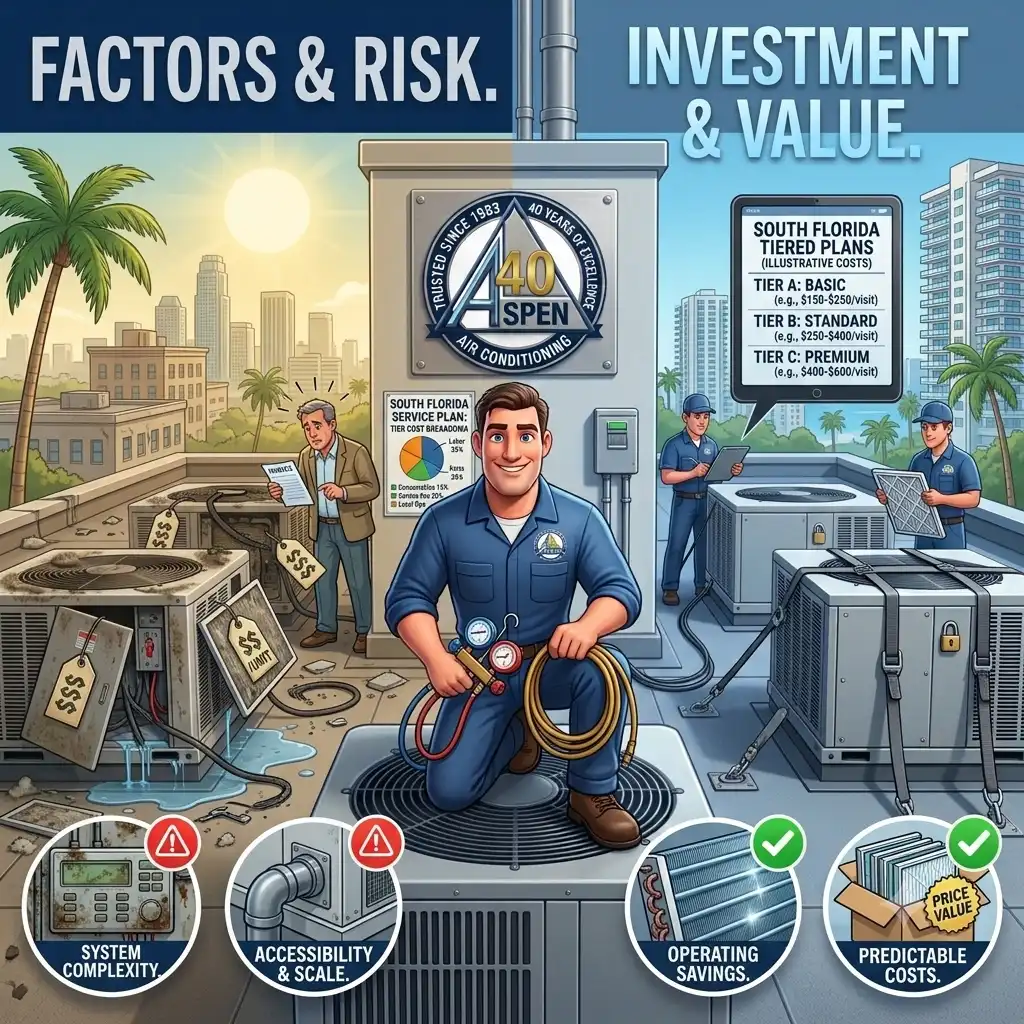
Commercial HVAC systems account for up to 40% of total energy costs in South Florida commercial buildings — and the right energy-saving strategy can cut that figure significantly. For facility managers across Boca Raton, Fort Lauderdale, and Palm Beach County, mild seasonal weather between November and April is the highest-leverage window to implement load management protocols, schedule preventive maintenance, and upgrade system controls before peak summer demand returns.
Schedule a Commercial HVAC Energy Assessment — Serving Boca Raton, Fort Lauderdale & Palm Beach County
South Florida’s commercial properties face a specific set of HVAC cost pressures: year-round compressor load, coastal humidity driving equipment degradation, FPL demand charges on peak-consumption days, and aging systems approaching the end of useful life under Florida’s Department of Business and Professional Regulation compliance requirements. The strategies below are designed for commercial facility managers, property owners, and HOA boards managing HVAC infrastructure across Palm Beach and Broward Counties — not generic tips, but operationally relevant guidance for this climate and these regulatory conditions.
Why South Florida’s Climate Creates Unique Commercial HVAC Energy Costs
South Florida’s subtropical climate operates differently from every other U.S. commercial HVAC market. While facilities in northern states cycle heating and cooling seasonally, commercial properties in Boca Raton, Fort Lauderdale, and across Palm Beach County run cooling systems for ten or more months per year. That continuous operational load has direct consequences for energy expenditure and equipment longevity.
Three climate-specific cost drivers compound the energy burden for South Florida commercial facility managers:
1. Humidity-Driven Compressor Load Relative humidity in South Florida averages 74% annually — among the highest of any major U.S. commercial market. High ambient moisture forces HVAC systems to work harder to maintain comfortable indoor conditions, increasing compressor runtime and electrical demand beyond what dry-climate benchmarks would suggest.
2. Coastal Corrosion on Mechanical Components Salt-laden air accelerates corrosion on condenser coils, contactors, and electrical connections — particularly for commercial properties within five miles of the coast in Boca Raton, Delray Beach, and Fort Lauderdale. Degraded components operate at reduced efficiency, silently increasing energy consumption before a failure event occurs.
3. FPL Demand Charge Exposure Florida Power & Light applies demand charges based on peak kilowatt draw within any 15-minute interval during a billing cycle. For commercial properties running oversized or poorly maintained HVAC systems, a single peak-demand event can increase the monthly bill by hundreds of dollars — independent of total energy consumed.
Understanding these three variables is the prerequisite for any effective commercial HVAC energy-saving strategy in Southeast Florida.
Strategic Load Management During Mild Weather Periods
During South Florida’s mild weather periods — typically November through April — commercial facilities in Palm Beach and Broward Counties can implement strategic load management protocols to reduce energy consumption without compromising comfort or compliance standards.
Modern commercial HVAC systems incorporate programmable controls that enable facility managers to adjust operational parameters in response to ambient temperature conditions. When outdoor temperatures range between 65°F and 75°F, buildings may require minimal mechanical cooling, presenting opportunities to cycle systems into economical operational modes. This approach reduces compressor runtime, decreases electrical demand charges on FPL accounts, and extends equipment longevity — while maintaining adequate ventilation rates pursuant to applicable Florida building codes and ASHRAE indoor air quality standards.
Economizer Functionality: Free Cooling for South Florida Commercial Properties
Economizer functionality represents one of the highest-ROI features available in contemporary commercial HVAC systems for the South Florida market. These mechanisms utilize outdoor air to provide free cooling when external conditions permit, substantially reducing the load on mechanical refrigeration equipment.
For Boca Raton and Fort Lauderdale commercial properties considering system upgrades, economizer-equipped units deliver demonstrable return on investment during the temperate season — reducing mechanical cooling hours by an estimated 15–25% during mild weather months depending on building envelope and occupancy load.
Ventilation Optimization and Indoor Air Quality Compliance
Mild weather periods create a strategic window for ventilation optimization that balances energy conservation with regulatory compliance. Commercial facilities in Florida remain subject to ventilation requirements established by the International Mechanical Code and ASHRAE standards, which mandate minimum outdoor air exchange rates based on occupancy classifications.
During periods of reduced occupancy or favorable outdoor conditions, demand-controlled ventilation (DCV) systems can modulate outdoor air intake to meet — but not exceed — minimum requirements. This reduces the energy penalty associated with conditioning outdoor air without triggering compliance risk under Florida’s mechanical codes.
For commercial properties in Palm Beach County and Broward County, properly calibrated building automation systems monitor carbon dioxide concentration, occupancy patterns, and outdoor air quality parameters to optimize ventilation delivery dynamically. The result: compliance maintained, energy waste eliminated.
Aspen AC’s commercial HVAC technicians — NATE-certified and serving Southeast Florida since 1983 — advise clients on ventilation strategies that satisfy all applicable Florida regulatory obligations while maximizing energy efficiency across building types from high-rise condominiums to healthcare facilities and industrial warehouses.
Preventive Maintenance as a Commercial HVAC Energy-Saving Strategy
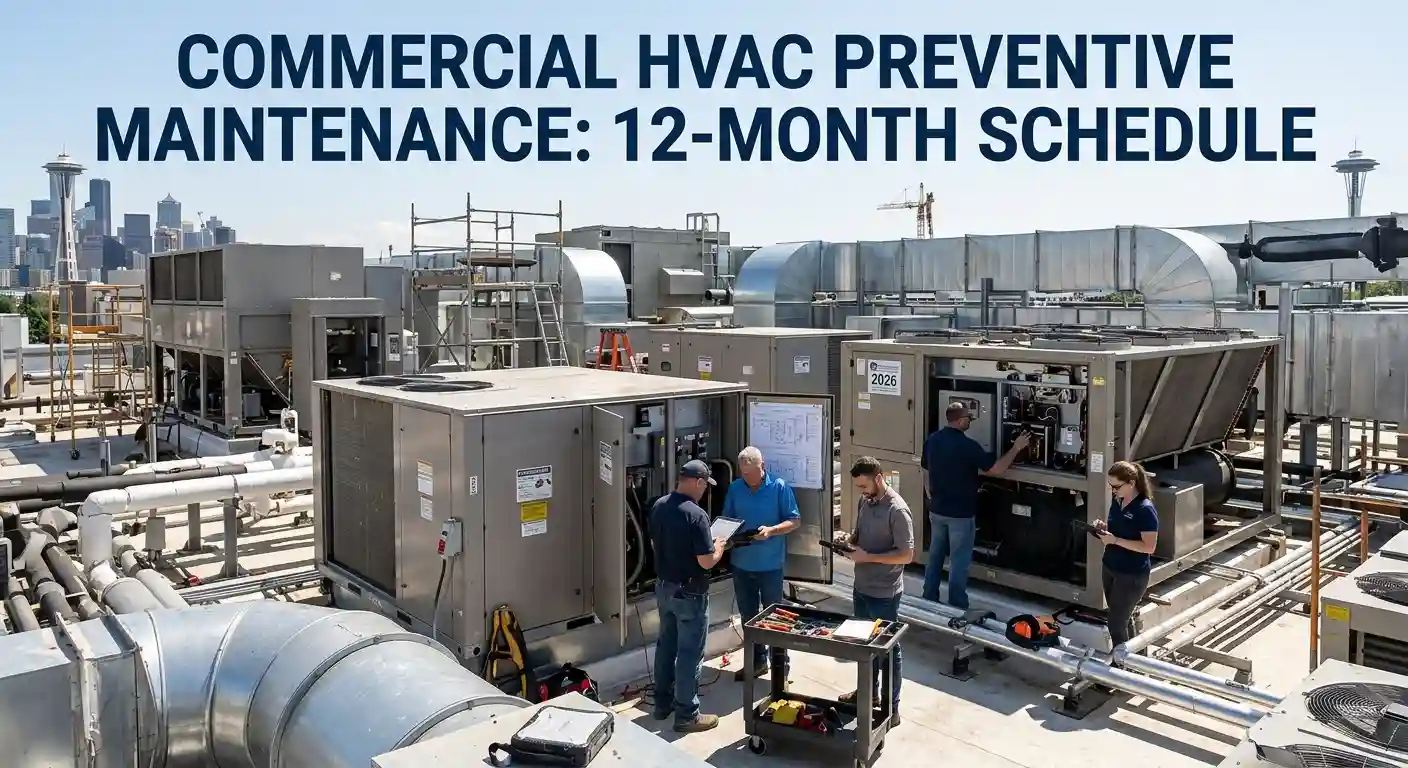
Preventive maintenance is not an optional service expenditure for South Florida commercial properties — it is the primary mechanism by which facility managers control HVAC energy costs between capital replacement cycles.
The data on this is unambiguous. According to the U.S. Department of Energy, a poorly maintained commercial HVAC system can consume 10–25% more energy than a properly serviced equivalent. For a commercial property in Boca Raton running a 20-ton rooftop unit, that inefficiency gap translates directly into thousands of dollars in avoidable annual energy spend — before accounting for FPL demand charges.
What Aspen AC’s Commercial Preventive Maintenance Programs Address:
Regular maintenance on commercial HVAC systems across Palm Beach and Broward Counties covers the components most directly tied to energy performance:
- Coil cleaning: Dirty evaporator and condenser coils force the system to transfer heat less efficiently, increasing compressor runtime and energy consumption. In South Florida’s humid coastal environment, coil fouling occurs faster than in dry-climate markets.
- Refrigerant level verification: Low refrigerant forces the compressor to cycle longer to achieve target temperatures. A system operating at 10% below optimal refrigerant charge consumes measurably more energy per cooling hour.
- Electrical component inspection: Worn contactors and degraded capacitors increase amperage draw. Coastal air accelerates contact corrosion in Fort Lauderdale and Boca Raton properties — routine inspection catches degradation before it affects energy bills or triggers emergency failure.
- Ductwork integrity assessment: The Florida Energy Code requires commercial buildings to maintain duct system tightness. Leaking ductwork in conditioned commercial spaces can waste 20–30% of conditioned air before it reaches occupied zones.
- Controls calibration: Miscalibrated thermostats and building automation setpoints are among the most common — and most correctable — sources of commercial HVAC energy waste in South Florida facilities.
Mild weather periods between November and April are the optimal scheduling window for comprehensive preventive maintenance. Unlike peak summer months, the temperate season allows Aspen AC’s NATE-certified technicians to perform detailed inspections, cleanings, and component replacements without imposing operational hardship on building occupants or businesses.
2026 Regulatory Compliance and Capital Planning for Palm Beach County Facility Managers
Two regulatory developments are directly affecting commercial HVAC energy costs and upgrade timelines for South Florida commercial properties in 2026.
EPA Refrigerant Mandate — R-410A Phase-Out The U.S. Environmental Protection Agency’s phased elimination of R-410A refrigerant in new HVAC equipment is now in effect. Commercial properties in Boca Raton, Fort Lauderdale, and across Palm Beach County operating aging systems that rely on R-410A face increasing service costs as refrigerant availability tightens and pricing rises. Properties approaching end-of-equipment-life on R-410A systems should incorporate replacement planning into the 2026 capital budget — new low-GWP refrigerant systems (R-454B, R-32) deliver improved energy efficiency alongside regulatory compliance.
Florida Energy Code — Commercial Building Efficiency Standards Florida’s Energy Code (FSEC compliance) sets minimum efficiency standards for commercial HVAC equipment replacement in commercial buildings. Systems replaced in 2026 must meet updated SEER2 and EER2 minimums. For facility managers in Palm Beach and Broward Counties, proactively scheduling equipment assessment and replacement before peak season avoids the cost premium associated with emergency procurement and summer installation scheduling.
Capital Planning Recommendation Aspen AC partners with commercial facility managers and property management firms across Southeast Florida to develop multi-year HVAC capital plans that align equipment replacement cycles with budget cycles, regulatory deadlines, and FPL rebate program windows. NATE-certified, licensed, bonded, and insured since 1983 — Aspen AC has the technical depth and local regulatory knowledge to position Palm Beach County commercial properties for both near-term energy savings and long-term compliance.
Frequently Asked Questions
Common questions about commercial HVAC energy savings, answered for South Florida operating conditions — and covered in detail during commercial AC maintenance visits.
How much can a South Florida commercial property save by optimizing its HVAC system?
Commercial properties in Palm Beach County and Broward County that implement a combination of preventive maintenance, demand-controlled ventilation, and controls calibration can reduce HVAC energy consumption by 15–30% annually, depending on system age, building envelope, and current maintenance status. Properties running aging, unmaintained systems on the higher end of that range represent the largest short-term savings opportunity.
What is the best time of year to service commercial HVAC systems in South Florida?
The optimal service window for commercial HVAC in Boca Raton, Fort Lauderdale, and across Palm Beach and Broward Counties is November through March. Mild outdoor temperatures reduce system load during maintenance visits, allow thorough inspections without operational disruption, and position equipment for maximum efficiency entering Florida’s high-demand summer cooling season.
Does preventive maintenance actually reduce commercial HVAC energy bills?
Yes. The U.S. Department of Energy estimates poorly maintained commercial HVAC systems consume 10–25% more energy than properly serviced equivalents. Specific maintenance actions — coil cleaning, refrigerant verification, ductwork sealing, and controls calibration — directly reduce compressor runtime, electrical demand, and FPL monthly charges for commercial properties in Southeast Florida.
What commercial HVAC upgrades offer the fastest ROI in South Florida?
The three upgrades with the shortest payback periods for South Florida commercial properties are: (1) building automation system (BAS) installation or upgrade for demand-controlled ventilation, (2) economizer retrofit on rooftop units to capture free cooling during mild weather months, and (3) VRF/VRV system installation for multi-zone commercial buildings requiring precise zone-by-zone climate control. Aspen AC installs and commissions all three across Palm Beach and Broward Counties.
Is Aspen AC licensed to perform commercial HVAC work in Palm Beach County and Broward County?
Yes. Aspen AC is fully licensed, bonded, and insured for commercial HVAC work throughout Southeast Florida, including Palm Beach County, Broward County, and service areas from Port St. Lucie to Miami. All technicians are NATE-certified (North American Technician Excellence), background-checked, and drug-tested.
When should South Florida commercial buildings schedule HVAC energy audits?
Annually or after major weather events; audits identify leaks and inefficiencies for quick 10-20% savings.
Are cool roofs effective for HVAC energy savings in South Florida?
Yes, they reflect heat, lowering cooling loads by 15%; qualify for $0.075-$0.325/sq ft rebates.
How does humidity affect commercial HVAC energy use in South Florida?
High humidity forces dehumidification, spiking bills 20%; use energy recovery ventilators to recover 50-70%.
What are common HVAC energy pitfalls for South Florida small businesses?
Oversized units short-cycle and waste 15-30% energy; right-size via load calculations.
Frequently Asked Questions
Common questions about commercial HVAC energy savings, answered for South Florida operating conditions — and covered in detail during commercial AC maintenance visits.
How much can a South Florida commercial property save by optimizing its HVAC system?
Commercial properties in Palm Beach County and Broward County that implement a combination of preventive maintenance, demand-controlled ventilation, and controls calibration can reduce HVAC energy consumption by 15–30% annually, depending on system age, building envelope, and current maintenance status. Properties running aging, unmaintained systems on the higher end of that range represent the largest short-term savings opportunity.
What is the best time of year to service commercial HVAC systems in South Florida?
The optimal service window for commercial HVAC in Boca Raton, Fort Lauderdale, and across Palm Beach and Broward Counties is November through March. Mild outdoor temperatures reduce system load during maintenance visits, allow thorough inspections without operational disruption, and position equipment for maximum efficiency entering Florida’s high-demand summer cooling season.
Does preventive maintenance actually reduce commercial HVAC energy bills?
Yes. The U.S. Department of Energy estimates poorly maintained commercial HVAC systems consume 10–25% more energy than properly serviced equivalents. Specific maintenance actions — coil cleaning, refrigerant verification, ductwork sealing, and controls calibration — directly reduce compressor runtime, electrical demand, and FPL monthly charges for commercial properties in Southeast Florida.
What commercial HVAC upgrades offer the fastest ROI in South Florida?
The three upgrades with the shortest payback periods for South Florida commercial properties are: (1) building automation system (BAS) installation or upgrade for demand-controlled ventilation, (2) economizer retrofit on rooftop units to capture free cooling during mild weather months, and (3) VRF/VRV system installation for multi-zone commercial buildings requiring precise zone-by-zone climate control. Aspen AC installs and commissions all three across Palm Beach and Broward Counties.
Is Aspen AC licensed to perform commercial HVAC work in Palm Beach County and Broward County?
Yes. Aspen AC is fully licensed, bonded, and insured for commercial HVAC work throughout Southeast Florida, including Palm Beach County, Broward County, and service areas from Port St. Lucie to Miami. All technicians are NATE-certified (North American Technician Excellence), background-checked, and drug-tested.
When should South Florida commercial buildings schedule HVAC energy audits?
Annually or after major weather events; audits identify leaks and inefficiencies for quick 10-20% savings.
Are cool roofs effective for HVAC energy savings in South Florida?
Yes, they reflect heat, lowering cooling loads by 15%; qualify for $0.075-$0.325/sq ft rebates.
How does humidity affect commercial HVAC energy use in South Florida?
High humidity forces dehumidification, spiking bills 20%; use energy recovery ventilators to recover 50-70%.
What are common HVAC energy pitfalls for South Florida small businesses?
Oversized units short-cycle and waste 15-30% energy; right-size via load calculations.
Commercial HVAC Energy-Saving FAQ — South Florida
How much can a South Florida commercial property save by optimizing its HVAC system?
Commercial properties in Palm Beach County and Broward County that implement a combination of preventive maintenance, demand-controlled ventilation, and controls calibration can reduce HVAC energy consumption by 15–30% annually, depending on system age, building envelope, and current maintenance status. Properties running aging, unmaintained systems on the higher end of that range represent the largest short-term savings opportunity.
What is the best time of year to service commercial HVAC systems in South Florida?
The optimal service window for commercial HVAC in Boca Raton, Fort Lauderdale, and across Palm Beach and Broward Counties is November through March. Mild outdoor temperatures reduce system load during maintenance visits, allow thorough inspections without operational disruption, and position equipment for maximum efficiency entering Florida’s high-demand summer cooling season.
Does preventive maintenance actually reduce commercial HVAC energy bills?
Yes. The U.S. Department of Energy estimates poorly maintained commercial HVAC systems consume 10–25% more energy than properly serviced equivalents. Specific maintenance actions — coil cleaning, refrigerant verification, ductwork sealing, and controls calibration — directly reduce compressor runtime, electrical demand, and FPL monthly charges for commercial properties in Southeast Florida.
What commercial HVAC upgrades offer the fastest ROI in South Florida?
The three upgrades with the shortest payback periods for South Florida commercial properties are: (1) building automation system (BAS) installation or upgrade for demand-controlled ventilation, (2) economizer retrofit on rooftop units to capture free cooling during mild weather months, and (3) VRF/VRV system installation for multi-zone commercial buildings requiring precise zone-by-zone climate control. Aspen AC installs and commissions all three across Palm Beach and Broward Counties.
Is Aspen AC licensed to perform commercial HVAC work in Palm Beach County and Broward County?
Yes. Aspen AC is fully licensed, bonded, and insured for commercial HVAC work throughout Southeast Florida, including Palm Beach County, Broward County, and service areas from Port St. Lucie to Miami. All technicians are NATE-certified (North American Technician Excellence), background-checked, and drug-tested.
When should South Florida commercial buildings schedule HVAC energy audits?
Annually or after major weather events; audits identify leaks and inefficiencies for quick 10-20% savings.
Are cool roofs effective for HVAC energy savings in South Florida?
Yes, they reflect heat, lowering cooling loads by 15%; qualify for $0.075-$0.325/sq ft rebates.
How does humidity affect commercial HVAC energy use in South Florida?
High humidity forces dehumidification, spiking bills 20%; use energy recovery ventilators to recover 50-70%.
What are common HVAC energy pitfalls for South Florida small businesses?
Oversized units short-cycle and waste 15-30% energy; right-size via load calculations.
Contact Aspen AC for Commercial HVAC Energy Solutions in South Florida
Aspen AC has served as the commercial HVAC contractor Southeast Florida facility managers rely on since 1983 — over four decades of technical expertise, local regulatory knowledge, and operational reliability across Palm Beach and Broward Counties.
Whether the objective is reducing FPL energy costs on an aging system, developing a capital plan for 2026 equipment upgrades, implementing a preventive maintenance program for a high-rise condominium or healthcare facility, or commissioning a new VRF system in a Fort Lauderdale commercial build-out — Aspen AC’s NATE-certified technicians are available seven days a week with same-day emergency response within four hours.
In South Florida’s commercial property market, HVAC energy waste is not a fixed cost. It is a controllable variable — and the mild weather window is the time to act on it.
Contact Aspen AC to schedule a Commercial HVAC Energy Assessment for your Boca Raton, Fort Lauderdale, or Palm Beach County property.