
VRF systems fit multi-zone commercial buildings with varied schedules and comfort needs — offices, hotels, condos and mixed-use properties — while packaged rooftop units remain the practical choice for large, open, single-zone spaces like warehouses and retail boxes. The right answer depends on how a building is zoned and used, not on size alone.
Both technologies can cool a commercial building well; they solve different problems. This guide compares them directly on the factors that actually decide the choice, so the decision starts from your building’s zoning needs rather than from whichever system a bid happened to include.
What’s the Core Difference Between VRF and Rooftop Units?
A rooftop unit conditions one zone (or a few, with multiple units) from a single self-contained package, while a VRF system uses one outdoor unit feeding many indoor units through a refrigerant piping network, each capable of independent zone-level control.
That structural difference is the whole decision. Rooftop units are simple, familiar and inexpensive per ton for open spaces with uniform use. VRF systems cost more to install but deliver genuine zone-by-zone control and superior part-load efficiency — valuable specifically in buildings where different areas need different temperatures at different times, and largely wasted expense in buildings that don’t actually need it.
When Does VRF Make More Sense Than Rooftop Units?
VRF wins for multi-zone buildings with varied occupancy schedules — offices with different departments, hotels with guest rooms and common areas, condos with individually controlled units — where the ability to condition each zone independently produces real comfort and efficiency gains a rooftop system can’t match.
| Building type | Better fit | Why |
|---|---|---|
| Warehouse, single-zone retail | Rooftop unit | Open space, uniform use, no zoning benefit to pay for |
| Multi-tenant office | VRF | Different tenants, different schedules, independent zones |
| Hotel guest floors | VRF | Individual room control, simultaneous heating/cooling potential |
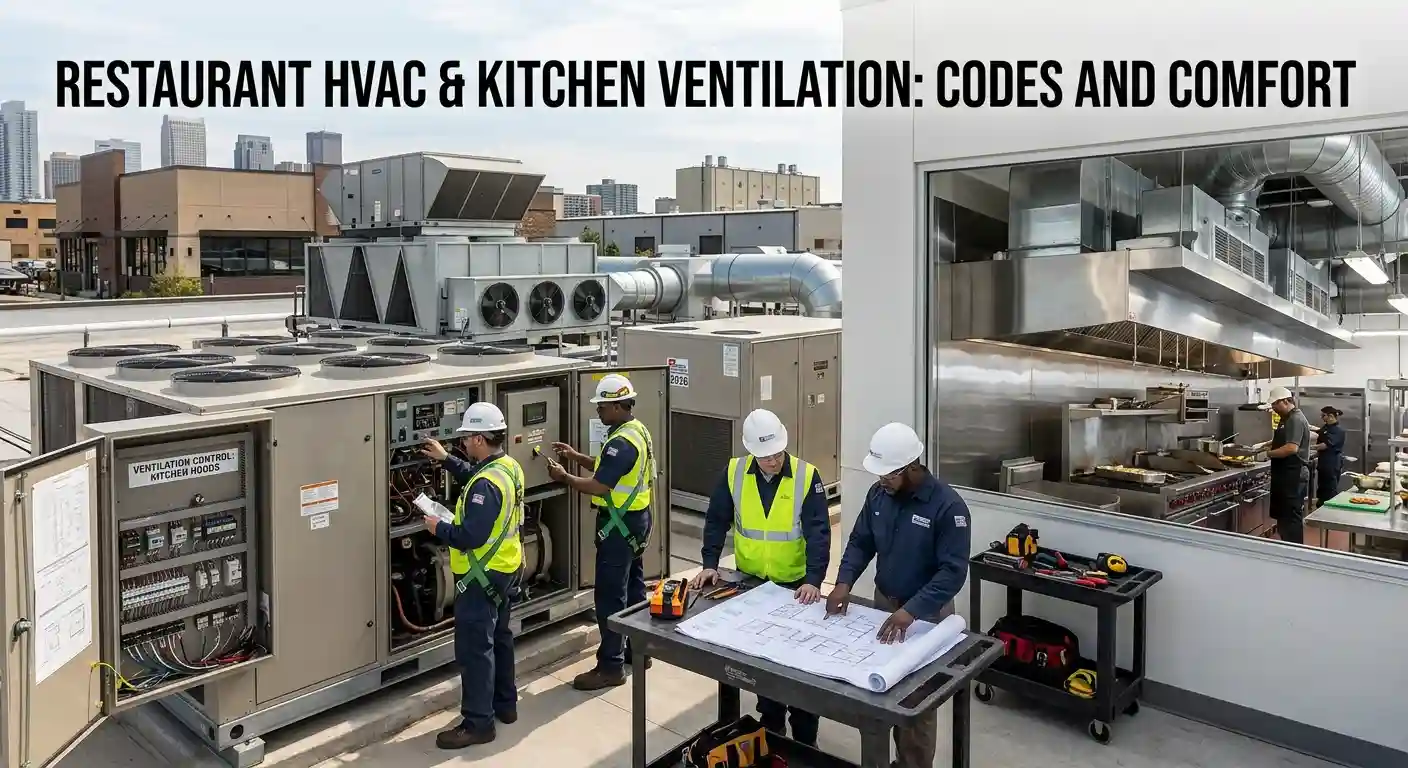
| Restaurant (dining + kitchen) | Often both | Kitchen makeup air needs differ sharply from dining comfort needs |
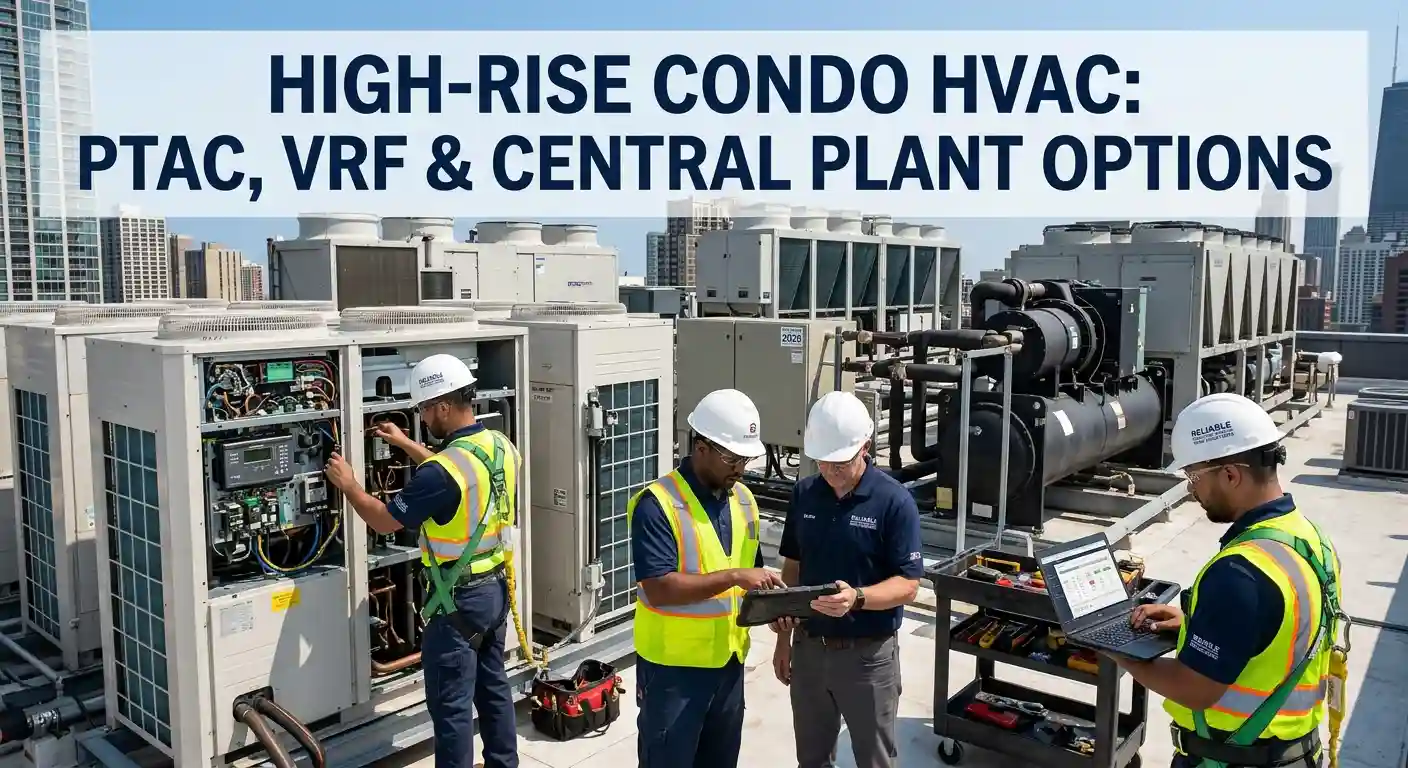
| High-rise condo | VRF or central plant | Per-unit control expected; scale favors central systems at larger sizes |
Our VRF brand comparison covers the equipment side once the system type is decided.
When Do Rooftop Units Still Make More Sense?
Rooftop units remain the practical choice for large open spaces with uniform occupancy — warehouses, big-box retail, gymnasiums — where zone-level control adds cost without adding real comfort or efficiency benefit, since the whole space is used the same way at the same time.
They’re also simpler to service: any qualified commercial HVAC technician can work on a packaged rooftop unit, while VRF systems benefit from brand-specific factory training that narrows the pool of technicians fully qualified to service them. For straightforward single-zone applications, that serviceability advantage is real and shouldn’t be dismissed just because VRF is the newer technology.
How Do VRF and Rooftop Units Compare on Efficiency?
VRF systems generally deliver better part-load efficiency because their compressors modulate to match demand rather than cycling fully on and off, which matters enormously in South Florida where buildings spend most operating hours at partial load rather than peak.
Rooftop units have closed much of that gap with variable-speed compressor options, but VRF’s zone-by-zone modulation still tends to win on buildings with genuinely uneven load patterns — a west-facing conference room and an interior storage closet on the same system benefit differently from VRF’s ability to serve each independently rather than averaging their needs into one thermostat’s decision.
How Do Installation Costs Compare?
VRF systems typically cost more to install than an equivalent-tonnage rooftop solution, reflecting the additional indoor units, refrigerant piping network and controls infrastructure a zoned system requires — a real cost premium that should be weighed against the zoning benefit a specific building actually needs.
Commercial replacement and installation pricing generally runs $10,000 to $30,000 and up per unit, roughly $2,000 to $3,500 and up per ton, published on our commercial HVAC pricing page — VRF projects tend toward the higher end of comparable-tonnage ranges given the added system complexity. The relevant comparison isn’t VRF’s price against rooftop’s price in isolation; it’s VRF’s price against what a rooftop system plus separate zoning solutions would cost to achieve comparable control, which often narrows the gap considerably once separate zoning controls, dampers and additional ductwork are priced into the rooftop alternative.
How Do Maintenance Requirements Differ?
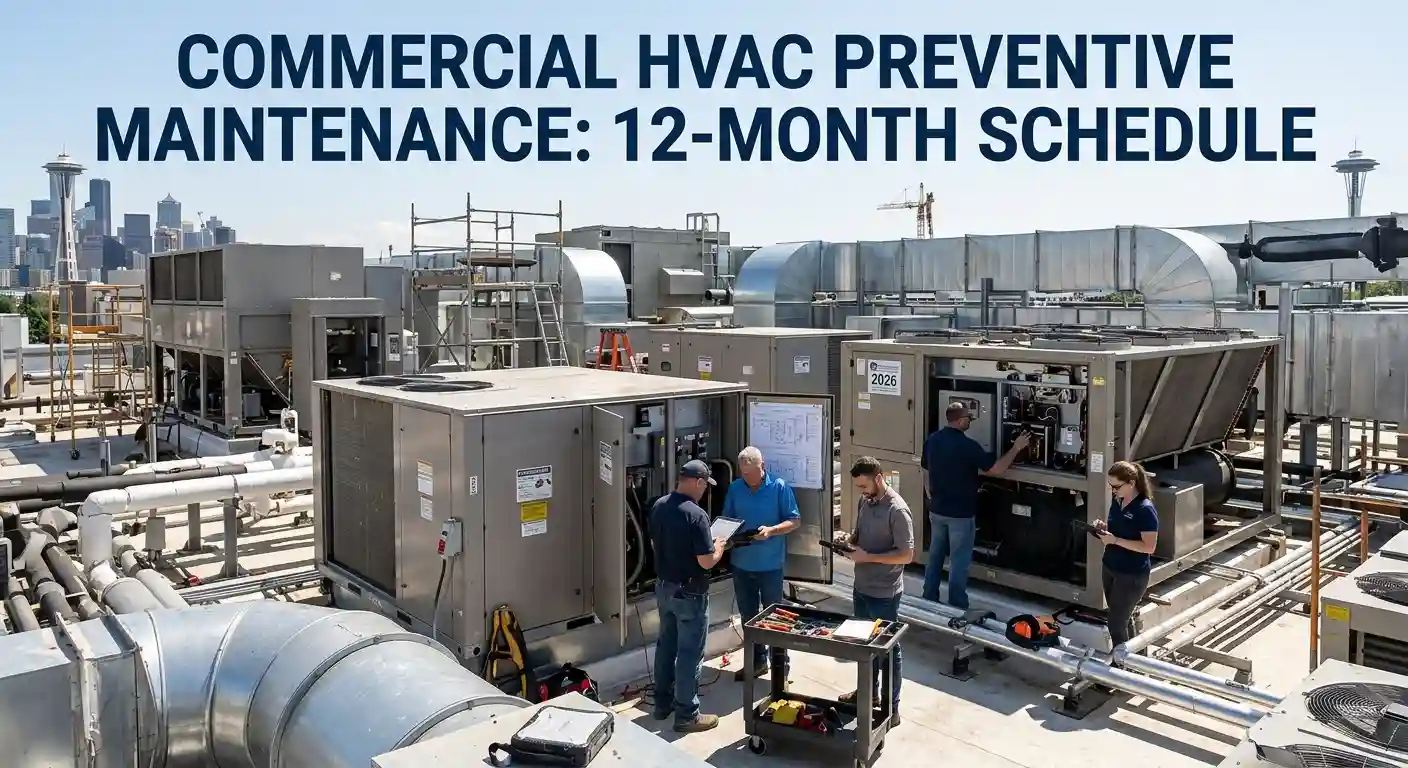
Rooftop unit maintenance is straightforward and familiar to any commercial technician — coil cleaning, refrigerant checks, electrical testing on one self-contained unit. VRF maintenance covers the same fundamentals across many more indoor units plus the outdoor unit and piping network, requiring more visit time per system even though each individual task is similar.
VRF systems also benefit from technicians factory-trained on the specific brand, since diagnostic tools and troubleshooting procedures vary between manufacturers in ways that matter when something goes wrong. Before committing to VRF, confirm genuine factory-trained service capacity exists locally for the brand under consideration — a system that’s hard to service well locally becomes a liability regardless of how well it performs on paper, since the best-engineered VRF platform still depends on a technician who actually knows it.
Can a Building Use Both Systems Together?
Yes — many commercial buildings mix rooftop units for open, uniform-use areas with VRF for zoned spaces within the same property, matching each system to the area it actually serves rather than forcing one technology to cover everything.
A retail building might run rooftop units over the sales floor while using VRF or ductless splits for a server room and back-office areas with different comfort needs. A restaurant commonly needs a rooftop-style approach for kitchen makeup air alongside zoned comfort cooling for the dining room. This hybrid approach is common enough that it shouldn’t be treated as a compromise — often it’s the most cost-effective way to give each part of a building the system it actually needs, rather than compromising the whole property around a single technology’s limitations.
How Should You Decide for Your Building?
Start from your building’s zoning reality, not from brand preference or what a previous building used: map how many genuinely distinct zones your space needs, how different their schedules and loads are, and whether that variation justifies VRF’s cost premium over a simpler rooftop approach.
A building with one occupancy pattern throughout rarely justifies VRF’s added cost. A building with meaningfully different zones — different tenants, different schedules, different exposures — often earns that cost back in comfort and efficiency over the system’s life. Our commercial HVAC installation team walks through this zoning analysis with actual load data before recommending either system, rather than defaulting to one technology across every project regardless of what the building actually needs.
How Does Acoustic Performance Compare?
VRF indoor units generally run quieter than rooftop-unit-fed ductwork, since VRF’s smaller, distributed indoor units and variable-speed operation produce less mechanical noise than a central system pushing air through ductwork sized for peak load.
That advantage matters most in occupied spaces where noise is a real design concern — medical offices, upscale retail, hotel guest rooms. Efficiency standards published through ASHRAE increasingly reflect part-load and acoustic performance alongside raw capacity, which is part of why VRF has gained ground in applications where occupant experience carries real weight in the system decision, not just operating cost.
Frequently Asked Questions
Is VRF better than rooftop units?
Neither is universally better — VRF wins for multi-zone buildings with varied schedules, rooftop units win for large open spaces with uniform use. The right choice depends on your building’s zoning needs, not on which technology is newer or more efficient in the abstract.
Is VRF worth the extra cost for a small office building?
Often yes if the office has multiple tenants or departments with different schedules and comfort needs. For a small, single-tenant office with uniform use throughout, a rooftop unit may deliver comparable comfort at meaningfully lower installed cost.
Can VRF and rooftop units be combined in one building?
Yes, and it’s common — matching each system to the area it serves, such as rooftop units over open retail space and VRF or ductless splits for a server room or back-office zone with different needs.
Which system is easier to find a service technician for?
Rooftop units, generally — any qualified commercial HVAC technician can service them. VRF systems benefit from brand-specific factory training, so confirm local service capacity for the specific VRF brand before installation, not after something needs repair.
Aspen Air Conditioning installs and services both VRF and rooftop systems across Palm Beach and Broward Counties, matched to what your building actually needs. Call 561-464-5010.