
A commercial HVAC maintenance contract includes scheduled preventive visits — typically two to four per year — covering inspection, cleaning, testing and adjustment of your equipment, plus documented condition reports, priority scheduling and preferred labour pricing when repairs arise. What separates a good agreement from a bad one is the specifics: exactly what each visit covers, what’s excluded, and what the paperwork proves.
Here’s what belongs in a commercial maintenance contract, what doesn’t, and the clauses worth reading twice before you sign.
What Does a Commercial HVAC Maintenance Contract Include?
The core product is scheduled preventive work performed to a defined checklist, wrapped in service terms that matter when something breaks anyway. A complete commercial agreement covers:
| Component | What it means in practice |
|---|---|
| Scheduled visits | Two to four per year, per-unit checklists, set scope |
| Inspection & testing | Refrigerant charge, electrical, controls, safeties, airflow |
| Cleaning | Coils, drains, filters — the items that prevent failures here |
| Documentation | Per-unit service reports, condition notes, photos |
| Priority response | Agreement customers move up the queue when demand peaks |
| Preferred labour pricing | Discounted hourly rate on repairs between visits |
Anything vaguer than this — “periodic maintenance as required” — is a handshake, not a contract, and it will be interpreted in the provider’s favor in the busy season.
What Happens During Each Scheduled Visit?
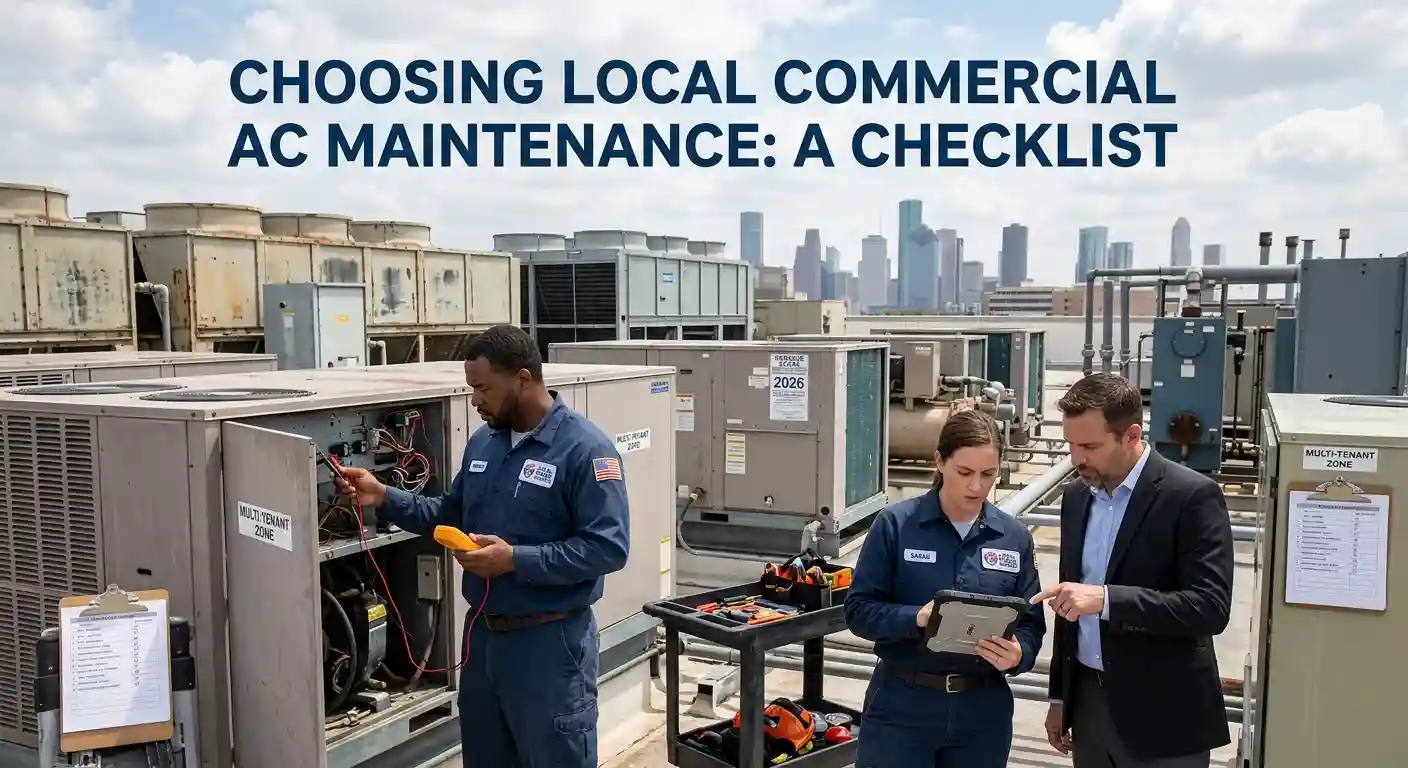
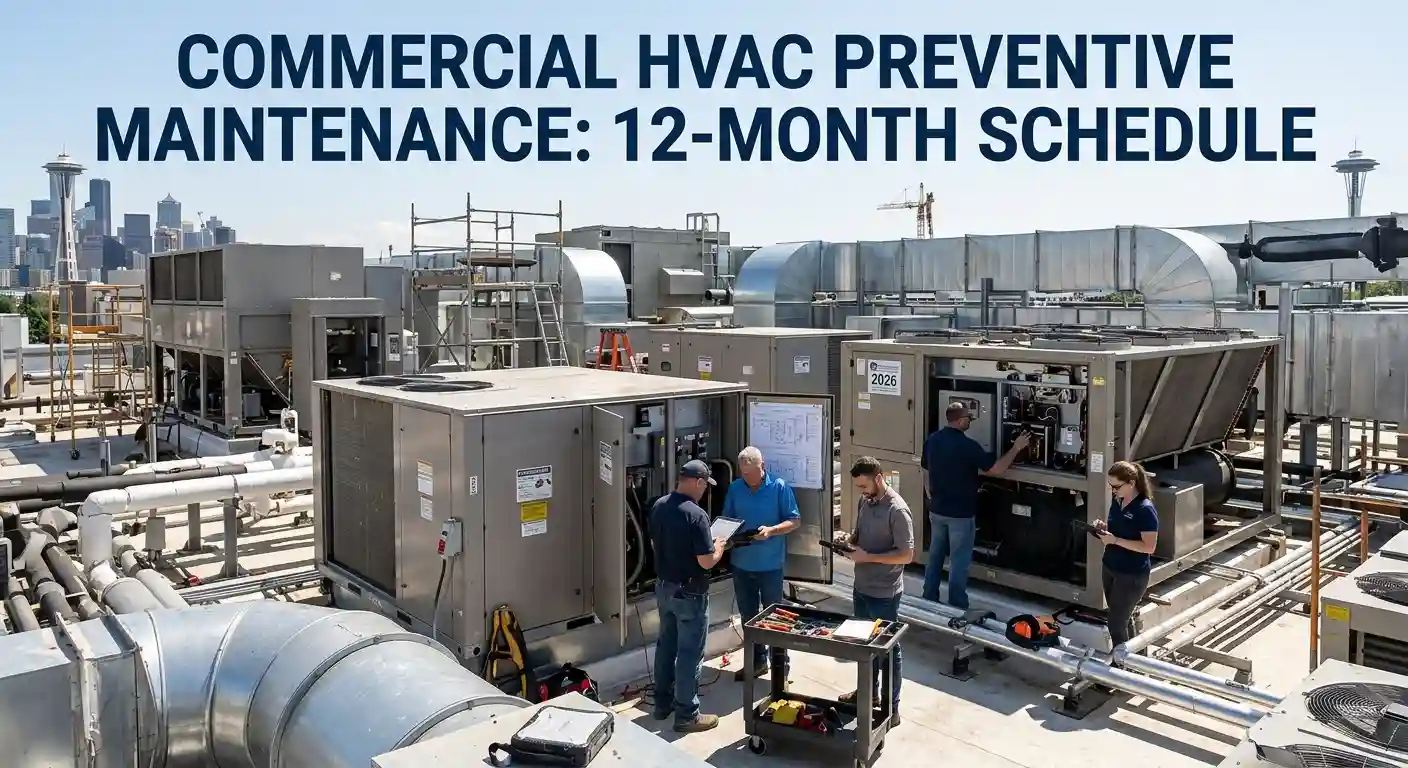
A proper commercial visit works a per-unit checklist, not a walk-past. The technician inspects and tests electrical connections, contactors and capacitors (heat-stressed parts that fail first in this climate), verifies refrigerant charge and records operating pressures, checks compressor amp draws against nameplate, cleans condensate drains and treats them against the algae that thrives here, changes or documents filters, and washes coils — the single most consequential task in South Florida, where salt air and humidity foul heat-transfer surfaces relentlessly.
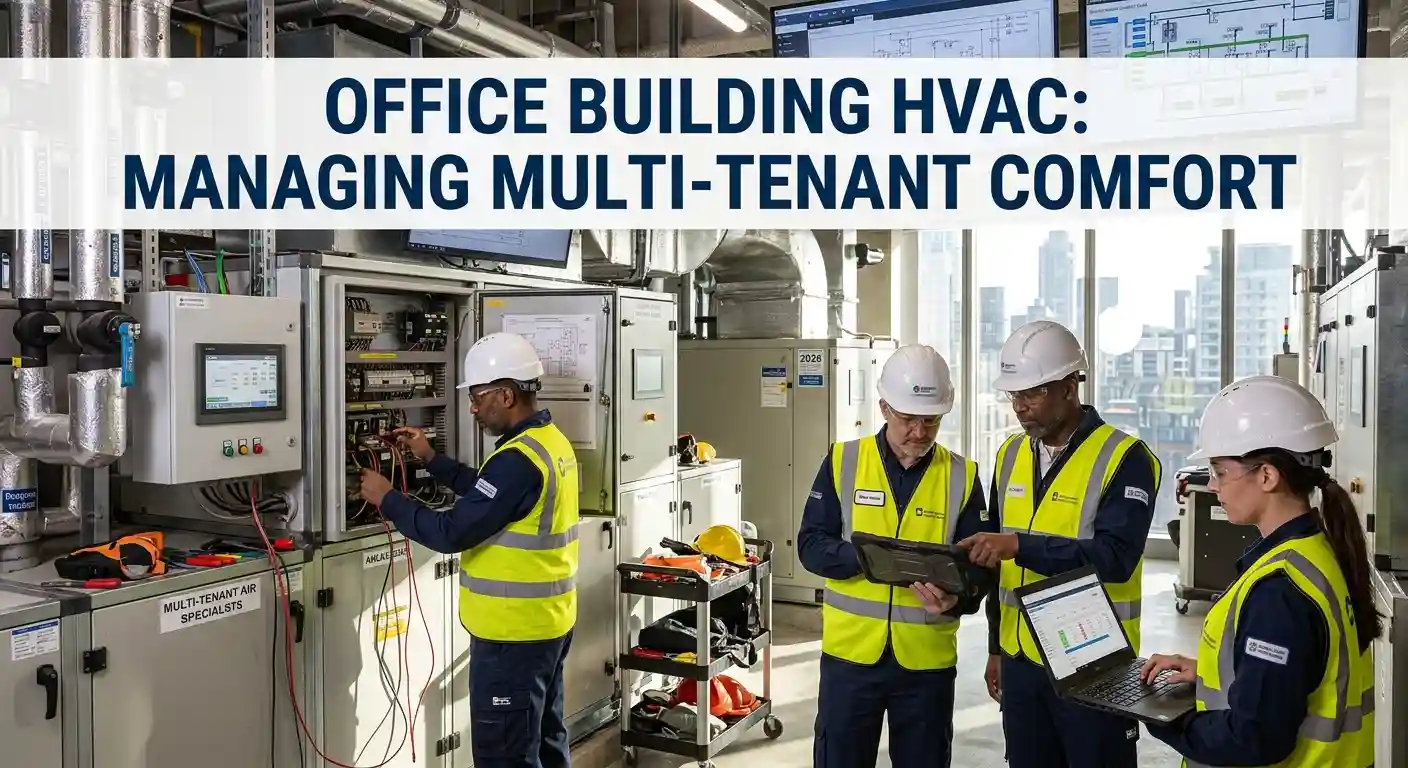
Controls get exercised: setpoints verified, safeties tested, economizers cycled. The visit ends in writing: what was found, what was done, what’s trending wrong, with readings recorded so the next visit sees the trend. The difference between maintenance and theater is the checklist and the numbers — ask to see a sample report before signing. A visit that leaves no readings behind left no maintenance behind either; it left a signature. Thirty extra minutes of documented testing per unit is where the value of the entire agreement quietly lives.
How Many Visits Per Year Do You Need?
Most commercial agreements include two to four scheduled visits annually, with four being the standard for many commercial properties — and in South Florida the quarterly cadence has real engineering behind it. Our equipment runs essentially year-round: there’s no winter rest, salt accumulation on coastal coils compounds continuously, and condensate systems work every day of the year.
Annual maintenance that suffices in Ohio is a quarter of what this climate asks. The visit count that fits your building depends on equipment age and criticality: newer equipment in a forgiving building can run on two to three visits; older units, coastal exposure, or operations where downtime is expensive — restaurants, medical, server-dependent offices — justify the full quarterly schedule. The wrong answer is stretching intervals to cut cost: deferred maintenance doesn’t cancel the work, it converts it into repairs at emergency prices.
What Do Agreement Customers Get Beyond the Visits?
Two benefits that matter most on the worst day of the year. Preferred labour pricing: at Aspen, ESMP agreement customers pay $165 per hour for repair labour against the standard $195 — a meaningful difference across any real repair, and across a year of incidental calls.
Priority scheduling: when a heat wave has every phone ringing, agreement customers move to the front of the queue — which, in August, is the benefit you’ll remember. Agreements also change the quality of repairs you buy: the technician arriving already knows your equipment and its history from the visit reports, diagnosis starts from data instead of zero, and small findings get caught at visit prices instead of growing into emergency invoices. The contract, used well, is less a discount card than an early-warning system with a hotline attached.
What Is Typically NOT Included?
Parts and repair labour beyond the preventive scope — and the good contracts say so plainly. A standard preventive agreement covers the scheduled work; when a visit finds a failing capacitor or a compressor trending toward trouble, the repair is quoted separately at agreement rates.
Also outside the scope, and worth confirming in writing: refrigerant beyond incidental top-offs (leak repairs price separately, and refrigerant costs depend on type, quantity and system requirements), major component replacement, work arising from vandalism, storms or power events, and equipment modifications. Some providers sell “full coverage” agreements that bundle repairs — read those harder, not softer: caps, exclusions and pre-existing-condition language decide what “full” means. Transparency here is a provider-quality signal: the contractor who lists exclusions clearly is planning to honor the inclusions.
What Documentation Should the Contract Produce?
A paper trail that proves the work happened and shows your equipment’s trajectory: per-unit service reports for every visit, with readings (pressures, amp draws, temperatures) recorded rather than box-ticked; photos of condition items — coil surfaces, corrosion, drain pans; a running equipment inventory with age and condition ratings; and written recommendations with the reasoning, so budget decisions trace to evidence.
This documentation earns its keep three ways: it makes warranty claims defensible (manufacturers ask for maintenance records), it feeds capital planning with real condition data instead of guesswork, and — for properties with tenants, insurers or compliance obligations — it’s the evidence of diligence when questions arrive. If a provider’s sample report is a checkbox sheet with a signature, that’s the maintenance you’ll get.
Which Clauses Deserve a Second Read?
Five, in our experience of inheriting other companies’ contracts. Scope per visit: does the checklist name the tasks, or say “as needed”? Response-time language: “priority” should come with an hours number for agreement customers, not an adjective. Rate lock: does the agreement fix the preferred labour rate for the term, and what triggers escalation? Term and exit: auto-renewal windows and cancellation notice matter when service disappoints.
And exclusions and caps, as above — especially any language letting the provider re-classify preventive findings as excluded pre-existing conditions. None of this is adversarial; it’s alignment. The provider willing to sharpen these clauses is telling you how they operate. The one who won’t is telling you too.
How Is Contract Pricing Set?
Commercial maintenance agreements are customized based on equipment type, system tonnage, number of units, service frequency and property requirements — which is why credible providers quote after a site survey rather than from a rate card. The inputs are mechanical: twenty rooftop units cost more to maintain than four; coastal equipment needs more coil work than inland; a medical building’s documentation needs exceed a warehouse’s.
Most agreements include two to four scheduled visits annually, with four the standard for many commercial properties. When comparing quotes, compare scope before price: a cheaper agreement with fewer tasks per visit isn’t cheaper, it’s smaller. Aspen’s ESMP structure, including the $165-per-hour agreement labour rate against the standard $195, is laid out with the rest of our published pricing on our commercial HVAC pricing page, and our maintenance contracts team builds the site-specific quote from there.
Frequently Asked Questions
What’s the difference between a maintenance contract and a service call?
A service call fixes a problem after it appears, at standard rates and standard queue position. A maintenance contract works to prevent the problem, documents equipment health over time, and buys preferred labour pricing and priority response for whatever breaks anyway.
How many maintenance visits per year does commercial HVAC need?
Two to four annually, with four the standard for many commercial properties. South Florida’s year-round run hours, salt exposure and humidity push serious buildings toward quarterly — annual-only maintenance from milder climates under-serves equipment here.
Are parts included in a maintenance agreement?
Typically no — standard preventive agreements cover the scheduled work, with repairs quoted separately at agreement labour rates. Full-coverage agreements bundling parts exist but read their caps and exclusions carefully. Either way, the inclusions should be listed, not implied.
Can a maintenance contract really extend equipment life?
Yes — measurably. Clean coils, verified charge and healthy electrical components keep compressors inside their design conditions, and trending catches degradation while it’s a cheap fix. In our coastal service records, consistently maintained equipment routinely outlasts neglected equipment by years. Aspen Air Conditioning writes commercial maintenance agreements the way we’d want to sign one — defined scope, real documentation, quarterly discipline. Palm Beach and Broward Counties, since 1983. Call 561-464-5010.