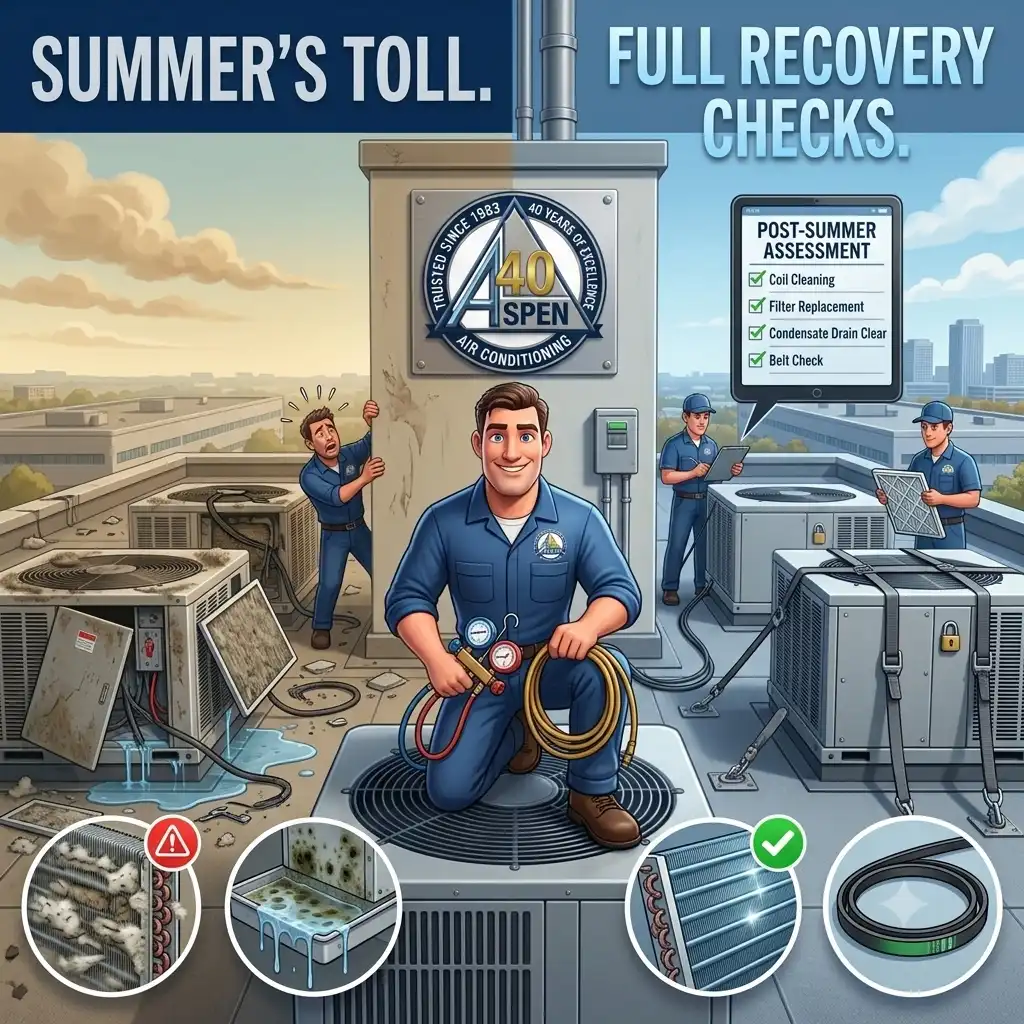
Commercial AC System Assessment Before South Florida’s Spring Heat

Commercial HVAC Maintenance Miami

A commercial AC system assessment before South Florida’s spring heat should inspect eight critical components: refrigerant charge, condenser coils, electrical connections, condensate drain lines, ductwork integrity, thermostat calibration, air handling units, and indoor air quality systems. Skipping this assessment in Boca Raton, Fort Lauderdale, or anywhere across Palm Beach and Broward Counties means entering peak cooling season — where outdoor temperatures exceed 90°F for five or more consecutive months — with undetected faults that compound under load.

South Florida’s subtropical climate introduces failure conditions that don’t exist in most U.S. commercial markets. Salt air corrosion degrades coastal condenser coils faster than inland environments. Year-round cooling demand compresses the maintenance window that property managers in cooler climates take for granted. And when a commercial system fails in July in Fort Lauderdale, emergency response premiums, operational downtime, and tenant or occupant impact make the cost of that failure significantly higher than a pre-season assessment ever would have been.

Aspen AC has performed commercial HVAC assessments across Southeast Florida since 1983. Every assessment is conducted by NATE-certified technicians — the highest technical certification in the industry — across all commercial system types: packaged units, split systems, VRF/VRV, PTACs, and advanced controls. Here is exactly what a comprehensive pre-season commercial AC assessment covers, and what to look for at each inspection point.

Critical Components Requiring Pre-Season Inspection

Commercial air conditioning systems comprise numerous interdependent components, each susceptible to degradation through operational wear, environmental exposure, and temporal deterioration. Prior to spring’s arrival, facility managers should prioritize thorough examination of the following systems.

Refrigerant levels require immediate attention — insufficient charge compromises cooling capacity and elevates energy consumption. In South Florida’s high-demand environment, even a marginal refrigerant deficit that goes undetected in March becomes a full capacity failure by June. Equally critical is the assessment of electrical connections, control systems, and thermostat calibration, as malfunctioning components precipitate system failures precisely when thermal load peaks.

Condenser coils warrant particular attention given their exposure to outdoor elements and propensity to accumulate debris, oxidation, and biological growth in Florida’s humid environment. Compromised heat exchange efficiency resulting from coil contamination forces increased compressor runtime, accelerating mechanical wear and inflating operational costs. Regular commercial AC maintenance protocols treat coil cleaning as a non-negotiable preventative measure that extends equipment longevity while optimizing performance.

Air handling units, ductwork integrity, and filtration systems similarly require systematic evaluation. Leaking ducts constitute a significant source of conditioned air loss, while contaminated filters impede airflow and diminish indoor air quality — a consideration of elevated importance in commercial environments where occupant health and comfort carry legal and reputational implications.

The Commercial AC Pre-Season Assessment Checklist: 8 Critical Inspection Points

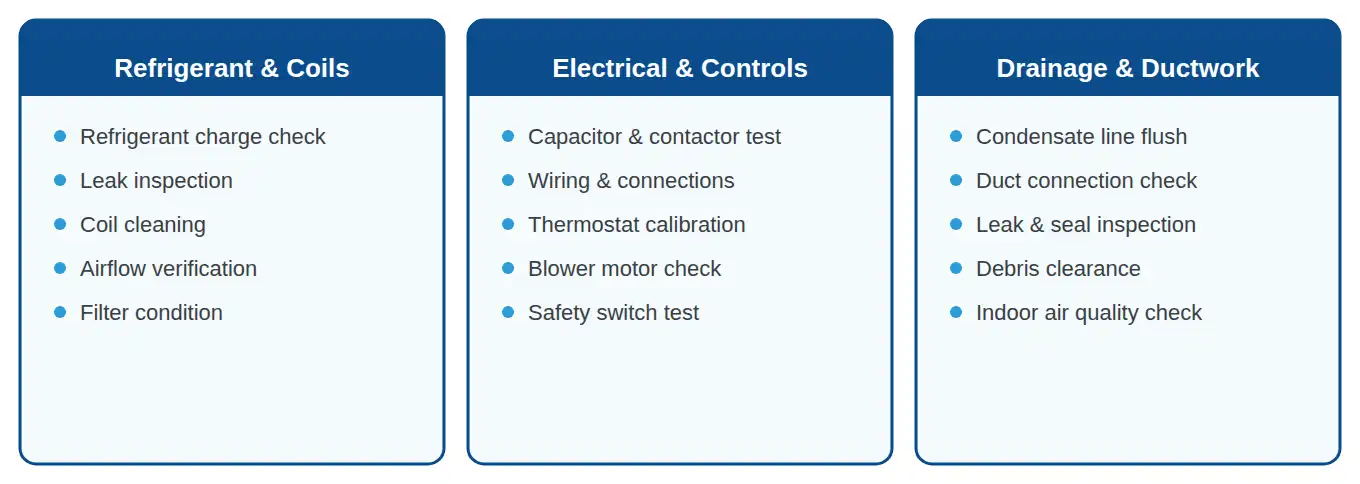
A comprehensive commercial AC system assessment in South Florida should cover the following eight inspection points without exception. This checklist applies to all commercial system types — packaged rooftop units, split systems, VRF/VRV installations, and PTACs.

1. Refrigerant Charge Verification Technicians measure system refrigerant levels against manufacturer specifications and inspect for active or latent leaks. In Florida’s continuous-use environment, low refrigerant is the leading cause of compressor failure during peak season. Any deviation from rated charge must be corrected and leak-tested before the system enters high-load operation.

2. Condenser Coil Inspection and Cleaning Condenser coils exposed to South Florida’s coastal air accumulate salt deposits, biological growth, and debris at an accelerated rate. A pre-season assessment includes a full coil cleaning, fin straightening, and corrosion assessment. Fouled coils increase head pressure, elevate energy consumption, and shorten compressor lifespan.

3. Electrical Connection Audit All electrical terminals, contactors, capacitors, and wiring are inspected for looseness, corrosion, and thermal damage. Loose or degraded electrical connections are a primary ignition risk and a leading cause of compressor and fan motor failure. In commercial systems operating under continuous load, this inspection is non-negotiable.

4. Condensate Drain Line Clearance South Florida’s humidity generates significant condensate volume. Blocked drain lines result in water damage, mold proliferation, and — in smart-controlled systems — automatic shutdowns that interrupt operations without warning. Pre-season clearance and treatment with biocide prevents biological blockage throughout the cooling season.

5. Ductwork Integrity Assessment Duct leakage in commercial buildings accounts for measurable conditioned air loss and uneven zone distribution. A pre-season assessment includes pressure testing or visual inspection of accessible duct runs, connection points, and insulation condition. Repairs made before peak season eliminate the energy penalty and comfort complaints that follow facility managers into summer.

6. Thermostat and Controls Calibration Thermostat calibration drift and control system faults cause systems to short-cycle, over-run, or fail to respond to zone demand. In multi-zone commercial properties — high-rise condominiums, office buildings, retail centers — calibration errors across zones multiply energy waste and occupant complaints. Pre-season calibration resets the system baseline before thermal stress exposes the drift.

7. Air Handling Unit Inspection Blower motors, fan blades, belts, bearings, and evaporator coils within air handling units are inspected for wear, contamination, and alignment. A degraded AHU operating under peak summer load in Palm Beach County is a system failure waiting for a trigger. Pre-season inspection catches bearing wear, belt fraying, and coil contamination before they become emergency repair events.

8. Indoor Air Quality Systems Check UV lights, air purifiers, and filtration media integrated into commercial systems require pre-season verification that they are operational and properly sized for current occupancy loads. In healthcare facilities, assisted living centers, and high-density commercial environments across Broward and Palm Beach Counties, IAQ system performance is both a regulatory requirement and an occupant health obligation.

Is your commercial system due for all 8? Aspen AC’s NATE-certified technicians conduct pre-season assessments across Palm Beach and Broward Counties — 7 days a week, with same-day availability. Licensed, bonded, and insured since 1983.

Why South Florida’s Climate Demands a Different Assessment Standard — Boca Raton, Fort Lauderdale & Palm Beach County

Commercial property managers operating in Chicago, Dallas, or Atlanta approach pre-season HVAC maintenance with a fundamentally different risk profile than those managing assets in Boca Raton, Fort Lauderdale, West Palm Beach, or anywhere across Palm Beach and Broward Counties. South Florida’s climate does not simply create more demand — it creates categorically different degradation conditions that require a higher assessment standard.

Salt Air Corrosion affects every commercial property within several miles of the coastline. Boca Raton and Fort Lauderdale commercial properties face accelerated corrosion of condenser coil fins, electrical terminals, and exposed metal components. A condenser coil that would last 15 years in an inland market may require replacement or protective coating treatment within 8 to 10 years in a coastal South Florida environment. Pre-season assessments in this market must explicitly include corrosion staging — not merely cleaning.

Year-Round Cooling Load eliminates the true “off-season” that HVAC systems in other markets use to recover between heavy-use cycles. In Palm Beach County and Broward County, commercial systems operate under meaningful cooling demand eleven to twelve months per year. The cumulative operating hours on compressors, fan motors, and electrical components in Southeast Florida significantly exceed national averages. A system that passed its last assessment in October may have accumulated thousands of additional run-hours before its March pre-season check.

Humidity and Biological Growth in South Florida’s subtropical environment accelerate drain line blockage, evaporator coil contamination, and filter degradation at rates that quarterly maintenance schedules — standard in other markets — cannot adequately address. Facility managers in Fort Lauderdale and Palm Beach County managing commercial properties with high occupancy density face IAQ compliance exposure if biological contamination in ductwork or air handling units goes undetected between assessments.

Hurricane Season Preparation intersects directly with pre-season AC assessment timing. South Florida’s Atlantic hurricane season begins June 1. A pre-season commercial AC assessment conducted in March or April provides the operational baseline documentation that insurance carriers and facility managers require before storm season. Systems assessed, repaired, and documented before June 1 are demonstrably better positioned for post-storm restart than systems with no pre-season record.

For commercial properties in Boca Raton, Delray Beach, West Palm Beach, Jupiter, Fort Lauderdale, Coral Springs, Pompano Beach, and Deerfield Beach — the assessment standard must reflect the operational reality of this specific climate, not a national average.

Regulatory Compliance and Liability Considerations

Commercial property owners and operators bear legal responsibilities regarding indoor environmental quality and equipment safety standards. Jurisdictional building codes, environmental regulations, and occupational health statutes establish minimum maintenance requirements for HVAC systems — non-compliance with which may expose businesses to regulatory penalties, insurance complications, or liability claims arising from inadequate environmental controls.

Furthermore, documented commercial HVAC maintenance records serve as evidence of due diligence in premises liability contexts. Should equipment failure result in business interruption, property damage, or occupant injury, comprehensive maintenance documentation demonstrates reasonable care in facility management — a critical factor in legal proceedings and insurance claim adjudication. For healthcare facilities and assisted living centers operating under Florida Department of Health oversight, documented HVAC maintenance is not optional — it is a licensing requirement.

Assessment Priorities by Property Type: High-Rise Condominiums, Healthcare Facilities & Commercial Office Buildings

Not all commercial properties share the same assessment priorities. Aspen AC’s four decades of specialized service across Southeast Florida’s most demanding property types — high-rise condominiums, healthcare facilities, warehouses, and multi-tenant retail centers — has established sector-specific assessment protocols that go beyond the standard eight-point checklist.

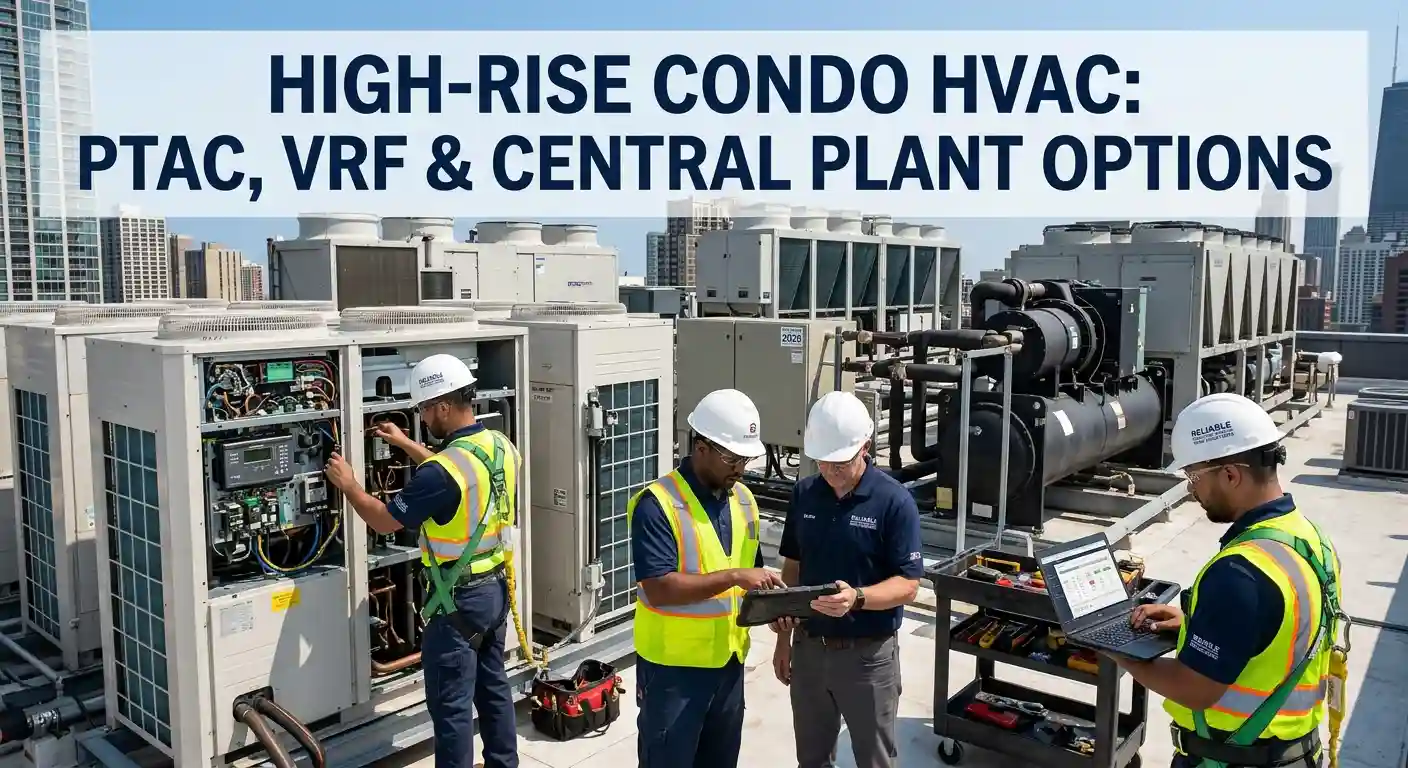
High-Rise Condominiums — Palm Beach County & Broward County Multi-story residential and mixed-use high-rise properties present mechanical complexity that single-story commercial buildings do not. Pre-season assessments for high-rise condominiums must account for: vertical refrigerant line integrity across multiple floors, PTAC unit condition across individual units (which accumulate independently from the central system), mechanical floor air handling unit performance under full-building load, and building pressure differential management. HOA boards and property managers in West Palm Beach, Boca Raton, and Fort Lauderdale managing high-rise assets should require documented floor-by-floor assessment reports — not a single system-wide sign-off.

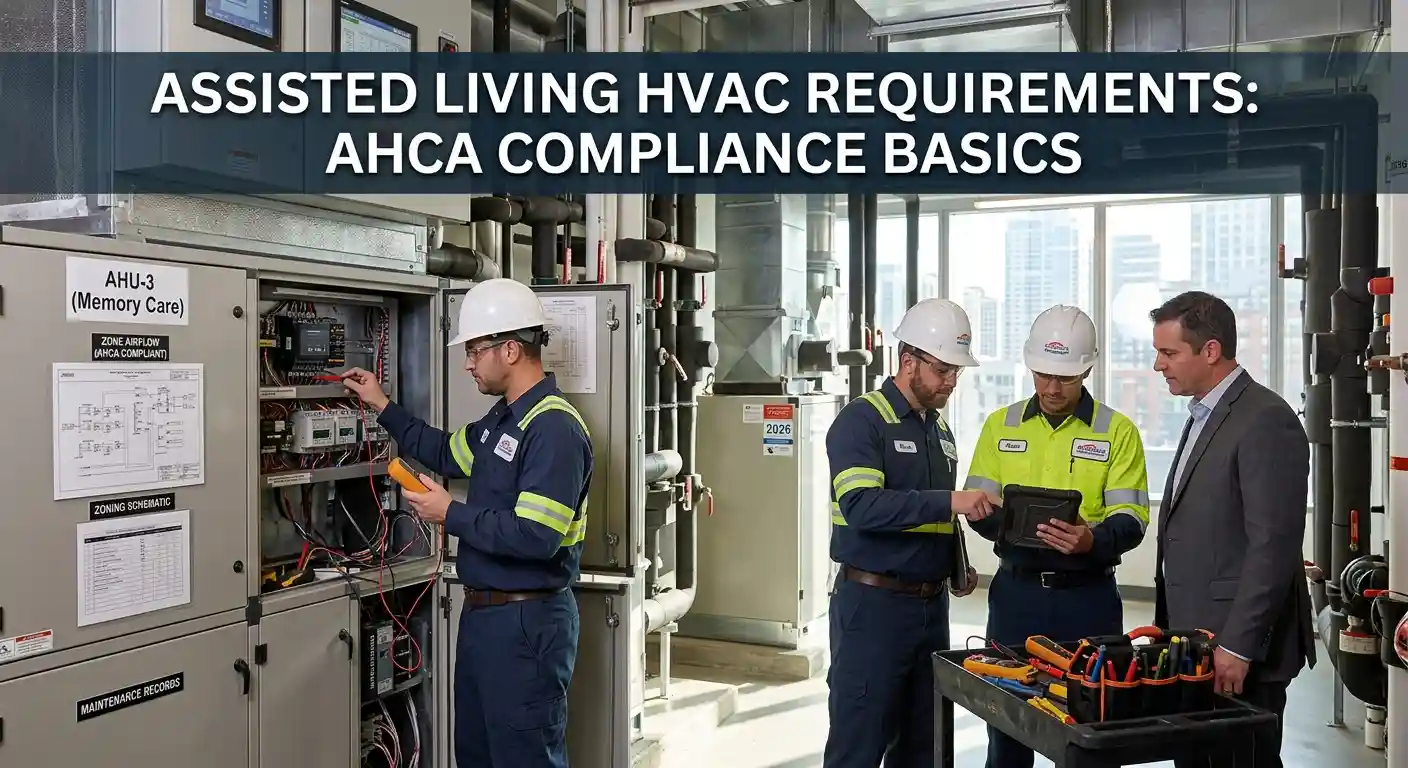
Healthcare Facilities and Assisted Living Centers Healthcare HVAC assessment goes beyond mechanical performance. Florida-regulated medical facilities and assisted living centers must maintain specific pressure relationships between clinical zones, isolation rooms, and common areas. Pre-season assessments for these properties must include pressure differential verification, HEPA and high-MERV filtration integrity checks, and redundancy system testing. A failed air handling unit in a standard office building causes discomfort. A failed unit in an assisted living center in Palm Beach County triggers regulatory reporting obligations. The assessment standard must match the consequence of failure.

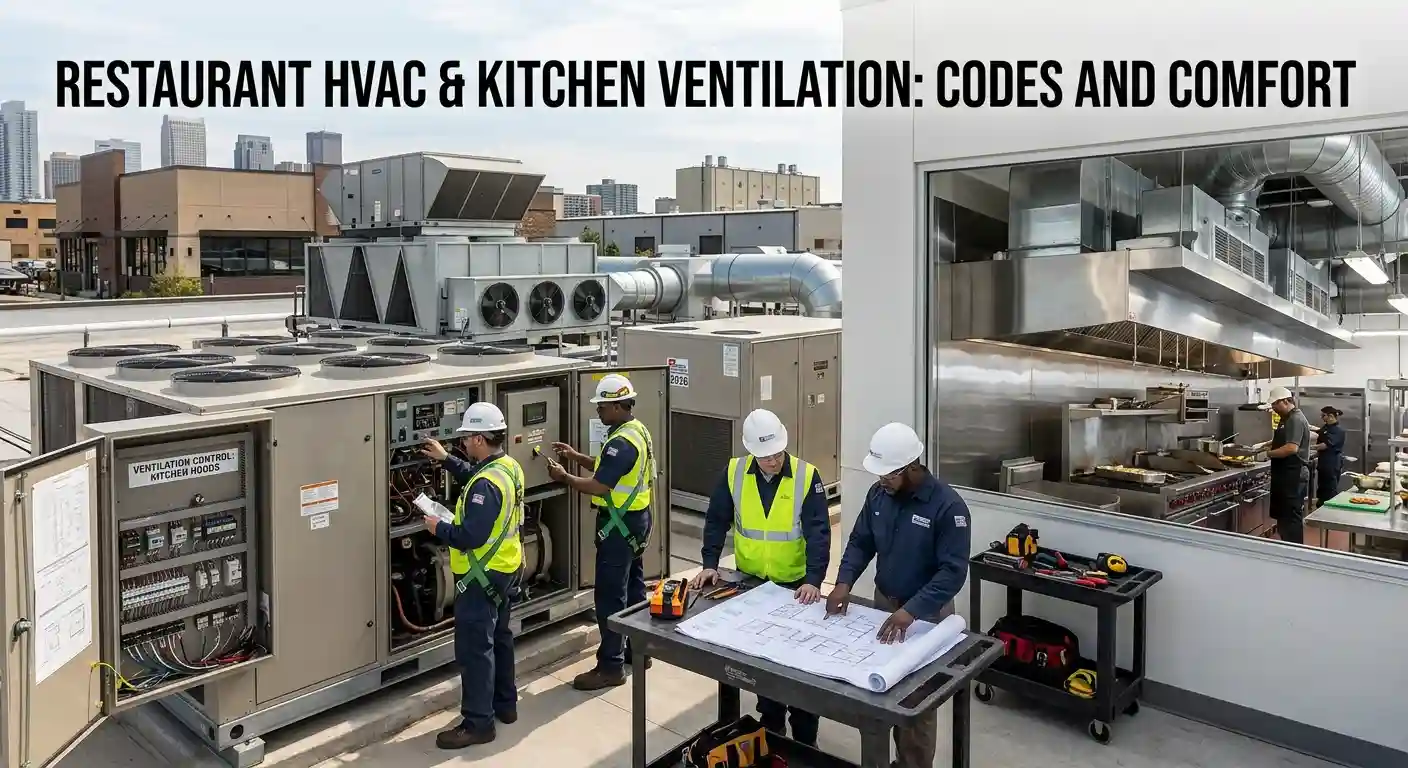
Warehouses and Industrial Facilities — Broward County Industrial and warehouse HVAC systems in Broward County operate under continuous high-load demand — often with minimal redundancy. Pre-season assessments for these properties prioritize: rooftop packaged unit inspection across large unit counts, economizer damper function verification, exhaust and makeup air system balance, and electrical load capacity assessment ahead of summer demand peaks. Deferred maintenance on warehouse HVAC systems compounds faster than any other commercial property type due to the continuous duty cycles involved.

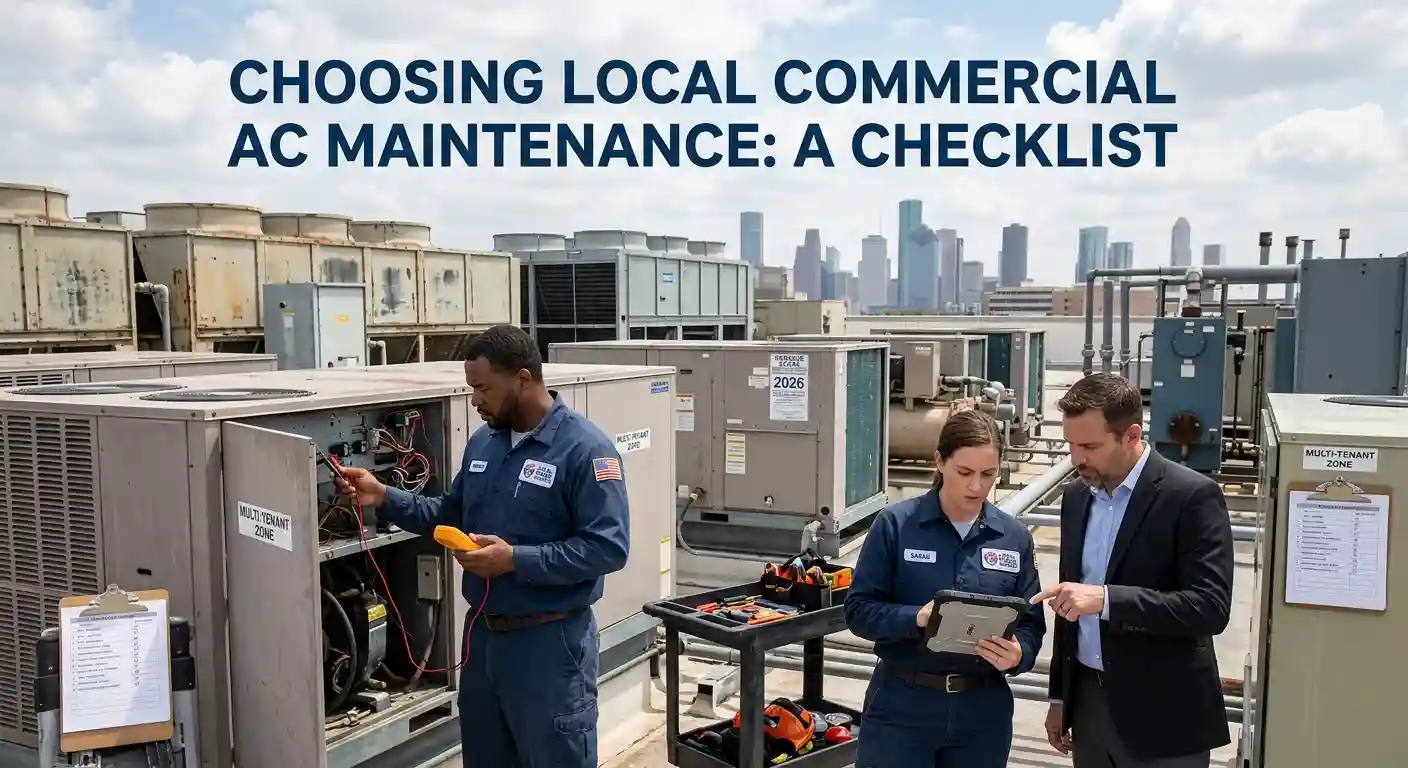
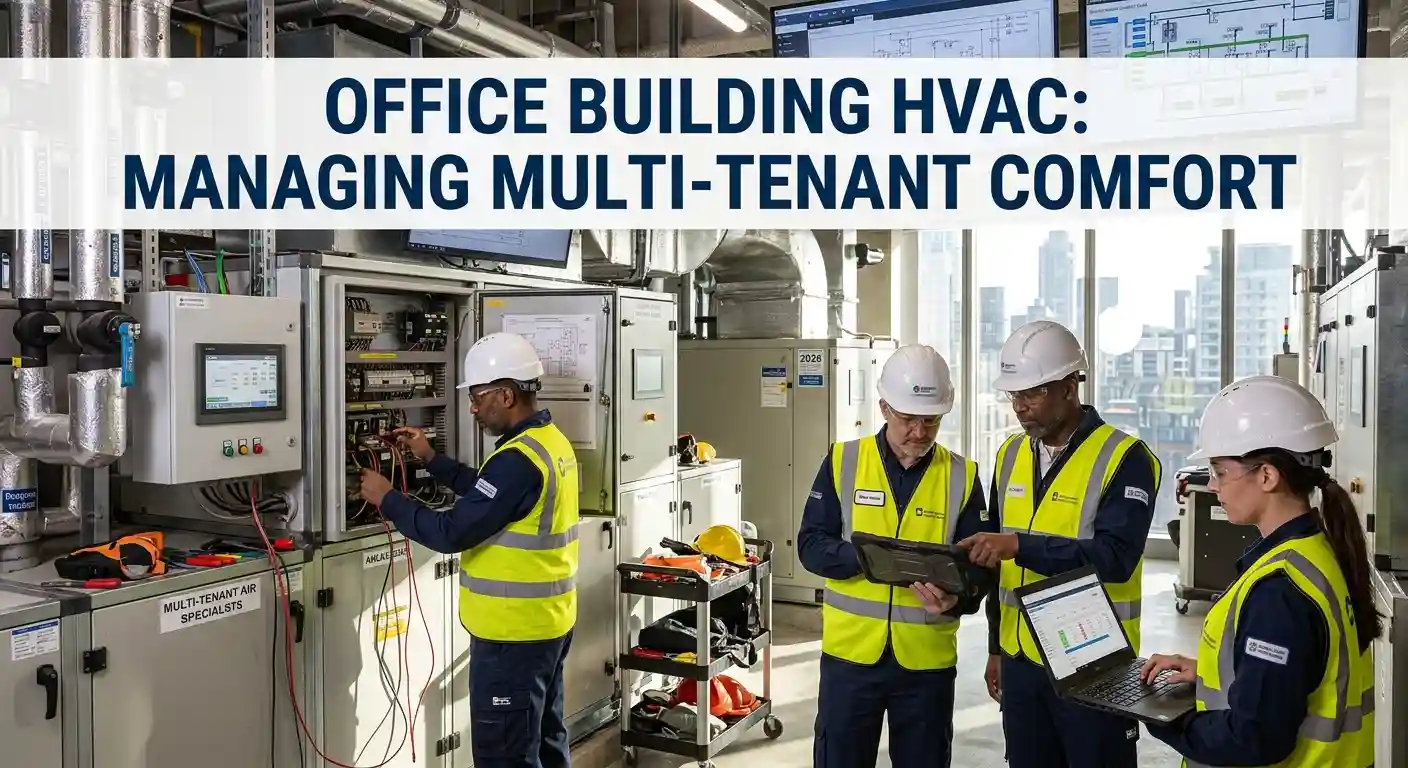
Multi-Tenant Retail and Office Centers Multi-tenant commercial properties present an assessment coordination challenge: individual tenant HVAC zones may be maintained by different parties under different lease structures. A pre-season property-wide assessment by a single qualified contractor — rather than fragmented tenant-by-tenant service — identifies cross-zone duct leakage, shared equipment conflicts, and building automation system calibration issues that individual tenant maintenance programs will never surface.

Energy Efficiency and Financial Prudence

The financial implications of deferred maintenance extend beyond immediate repair costs. Well-maintained HVAC systems operate with substantially greater efficiency than neglected counterparts. Pre-season assessments identify operational inefficiencies — refrigerant leaks, worn components, calibration drift — that incrementally increase energy consumption throughout the cooling season.

For commercial enterprises managing significant square footage across South Florida’s demanding climate, the cumulative energy savings achieved through proactive commercial AC maintenance frequently offset assessment and service costs within a single cooling season. Preventing catastrophic system failures through preventative intervention eliminates expedited service premiums, operational disruptions, and the potential revenue losses associated with emergency repairs during peak business periods — when contractor availability tightens and response time premiums apply across Palm Beach and Broward Counties.

What Does a Commercial AC Assessment Include?

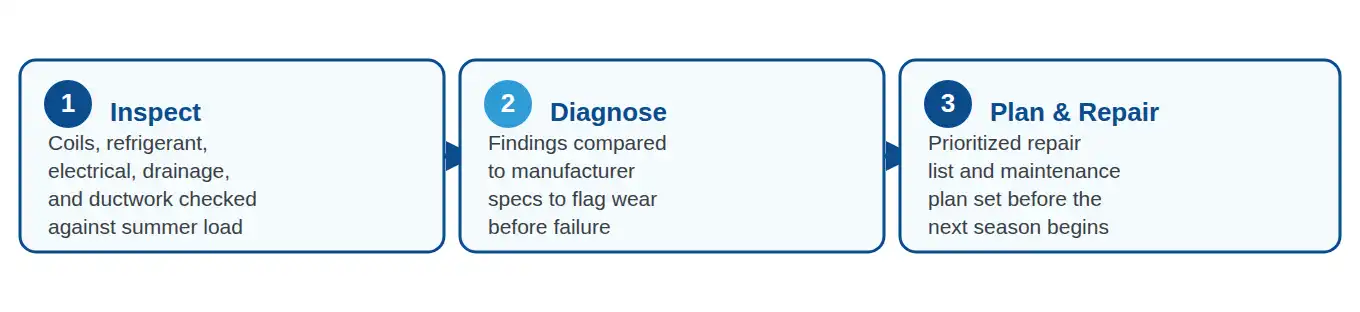
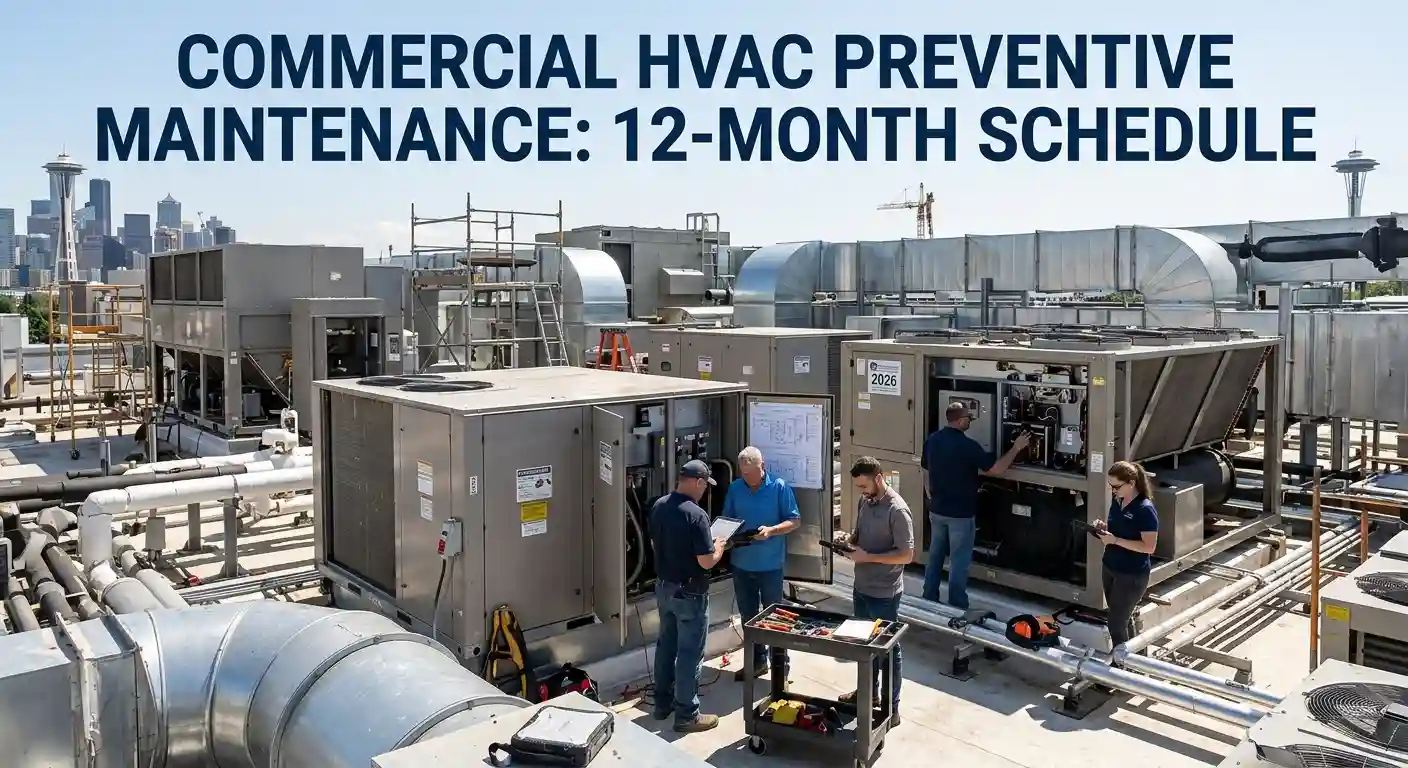
A proper pre-season assessment covers five areas: refrigerant charge and leak checks, electrical connections and capacitor testing, coil and drain condition, airflow and static pressure readings, and a documented condition report for each unit. Findings split into two lists — items to monitor and items needing commercial AC repair before summer load arrives.

Frequently Asked Questions: Commercial AC Assessments in South Florida

How often should a commercial AC system be assessed in South Florida?

Commercial HVAC systems in South Florida should be professionally assessed a minimum of twice per year — once in late winter or early spring (February through April) before peak cooling demand, and once in early fall (September through October) after the peak season concludes. South Florida’s year-round cooling load and subtropical climate conditions place significantly higher accumulated stress on commercial systems than national averages, making bi-annual assessment the baseline standard rather than the premium option.

A comprehensive commercial AC assessment covers refrigerant charge verification, condenser coil inspection and cleaning, electrical connection audit, condensate drain line clearance, ductwork integrity evaluation, thermostat and controls calibration, air handling unit inspection, and indoor air quality system verification. For specialized property types — healthcare facilities, high-rise condominiums, and industrial facilities — additional inspection points apply based on regulatory requirements and operational complexity.

Undetected refrigerant leaks, fouled condenser coils, and degraded electrical components that would have been identified and corrected during a pre-season assessment become active failure points once peak thermal load begins. Emergency HVAC repair in South Florida during summer carries significant cost premiums over scheduled maintenance. Beyond direct repair costs, system failures during peak occupancy periods create business interruption losses, tenant or occupant complaints, and — in regulated facilities — potential compliance exposure.

A pre-season commercial AC assessment is a scheduled, fixed-cost service engagement. Emergency commercial HVAC repair in South Florida during peak season — particularly for compressor failures, electrical faults, or refrigerant system failures — involves after-hours labor rates, expedited parts procurement, and business interruption costs that routinely exceed scheduled maintenance costs by a substantial margin. The financial case for pre-season assessment is not theoretical: it is documented in every emergency repair invoice issued during a South Florida July or August.

Select a contractor that is fully licensed, bonded, and insured in Florida; employs NATE-certified technicians; has documented experience with your specific system type and property category; and can provide comprehensive written assessment reports. For commercial properties in Palm Beach County — including Boca Raton, West Palm Beach, Delray Beach, Boynton Beach, and Jupiter — and Broward County — including Fort Lauderdale, Coral Springs, Pompano Beach, and Plantation — Aspen AC has delivered commercial HVAC assessments and maintenance since 1983.

Clear debris like leaves/dirt from outdoor unit. Use coil cleaner and water spray; avoid bending fins. Do this 1-2 times yearly.

Tighten loose parts, lubricate motors/bearings, and check belts/pulleys. Persistent noise signals fan or compressor issues—call a tech.

No, requires certified tools. Look for warm air or icing as signs of low charge; pros measure per manufacturer specs.

Seal duct leaks, clear vents, and balance airflow. Inspect thermostat and zoning for hot spots.

Often not—frequent repairs and inefficiency rise. Monitor bills/repairs; upgrade if over 10 years for heat/humidity demands.

Schedule Your Pre-Season Commercial AC Assessment With Aspen AC

As spring heat intensifies across Palm Beach, Broward, and the broader Southeast Florida commercial market, the window for pre-season assessment narrows. Systems that enter peak cooling season without a documented assessment are operating on deferred risk — and in South Florida’s climate, deferred risk has a predictable outcome.

Aspen AC’s NATE-certified technicians conduct comprehensive commercial AC assessments for every property type across our full service area: Boca Raton, West Palm Beach, Delray Beach, Boynton Beach, Jupiter, Palm Beach Gardens, Fort Lauderdale, Coral Springs, Pompano Beach, Plantation, Deerfield Beach, Hollywood, and Pembroke Pines.

Contact Aspen AC today to schedule your pre-season commercial AC assessment. Same-day service available. Seven days a week. Licensed, bonded, and insured since 1983.