Early-year commercial HVAC maintenance reduces operating costs for South Florida businesses by restoring system efficiency to nameplate performance — cutting energy consumption by 15–25% and eliminating the compounding repair costs that deferred maintenance guarantees. For commercial facilities in Palm Beach County, Broward County, and the greater Fort Lauderdale–Boca Raton corridor, scheduling a comprehensive maintenance assessment before April is the single highest-ROI operational decision available in Q1.
South Florida’s subtropical climate generates over 2,800 annual cooling hours for commercial HVAC systems — nearly double the national average — meaning equipment degradation, coil fouling, and refrigerant loss accumulate at rates that standard maintenance schedules underestimate. The financial consequence is direct: every month a commercial system operates below peak efficiency is a month your utility budget absorbs preventable losses. The operational consequence is equally clear: systems that enter peak season (April–October) without professional servicing carry significantly elevated failure risk during the months your business can least afford downtime.
This guide covers the economic case for early-year maintenance, Florida’s regulatory compliance requirements, the compounding cost of deferral, and the specific warning signs that signal your facility needs professional assessment now — not at the next budget cycle.
The Economic Imperative of Preventative HVAC Maintenance
Commercial heating, ventilation, and air conditioning systems represent considerable capital investments, and their operational efficiency directly correlates with organizational profitability. When HVAC systems operate without regular maintenance, they consume substantially greater quantities of energy to achieve the same climate control outcomes. This inefficiency manifests as high energy bills that erode profit margins and divert capital from core business operations. Research consistently demonstrates that well-maintained HVAC systems operate 15–20% more efficiently than neglected counterparts, translating to substantial annual savings for commercial operators.
Early-year maintenance provides additional strategic advantages beyond immediate cost reduction. By scheduling comprehensive system evaluations during the first quarter, facility managers position their organizations to identify and remediate potential failures before the peak cooling season commences. In South Florida’s subtropical climate, where air conditioning systems bear substantial operational loads for the majority of the calendar year, this preventative approach proves particularly prudent from both fiscal and operational continuity perspectives.
Regulatory Compliance and Liability Considerations
Beyond the economic implications, commercial property owners and operators in Florida bear specific legal obligations regarding HVAC system maintenance and indoor air quality standards. Failure to maintain adequate ventilation and climate control systems may constitute breach of implied warranty of habitability in commercial lease arrangements, potentially exposing property owners to litigation. Furthermore, the Florida Building Code establishes minimum standards for mechanical system maintenance, and demonstrable neglect may result in code enforcement actions or increased liability exposure in the event of tenant health complaints or system failures.
Early-year maintenance creates documented evidence of due diligence, establishing a defensible position should disputes arise regarding system adequacy or maintenance obligations. Professional HVAC contractors provide comprehensive service documentation that demonstrates compliance with industry standards and manufacturer specifications, thereby reducing potential legal exposure whilst simultaneously addressing the operational concern of high energy bills through systematic efficiency optimization.
The Compound Effect of Deferred Maintenance
The financial consequences of deferred HVAC maintenance extend beyond elevated utility expenses. When minor issues remain unaddressed, they typically escalate into more severe failures requiring emergency repairs or premature equipment replacement. These reactive expenditures invariably cost significantly more than preventative maintenance whilst simultaneously disrupting business operations. High energy bills serve as an early warning indicator that system efficiency has deteriorated, yet many commercial operators delay intervention until catastrophic failure occurs.
The compounding nature of HVAC degradation means that each month of deferred maintenance results in progressively greater inefficiency and accelerated component wear. Early-year maintenance interrupts this degenerative cycle, restoring optimal performance parameters and extending equipment service life. For commercial facilities throughout Palm Beach, Broward, and Miami-Dade counties, where HVAC systems operate under demanding conditions year-round, this preventative approach represents sound fiscal stewardship.
Commercial HVAC Maintenance Across Southeast Florida: What Palm Beach & Broward Businesses Need to Know
Southeast Florida’s commercial environment places unique operational demands on HVAC infrastructure that businesses in temperate climates simply do not face. From Boca Raton corporate campuses to Fort Lauderdale hospitality corridors, from West Palm Beach medical offices to Coral Springs retail centers — every commercial operator in the tri-county region shares one non-negotiable reality: HVAC systems here do not get an off-season.
The Regional Climate Factor
Palm Beach County and Broward County average over 2,800 hours of cooling load annually — nearly double the national average for commercial facilities. This continuous operational cycle accelerates component wear, filter saturation, refrigerant degradation, and coil fouling at rates that standard national maintenance schedules fail to account for. Early-year maintenance — executed between January and March, before humidity levels peak — is not a best practice for South Florida commercial operators. It is a baseline operational requirement.
City-Specific Considerations
Different commercial environments across the region present distinct HVAC challenges:
- Boca Raton & Delray Beach: High concentration of Class A office buildings and medical facilities. Systems in these environments require precision airflow calibration and stricter IAQ compliance due to occupant density and regulatory exposure.
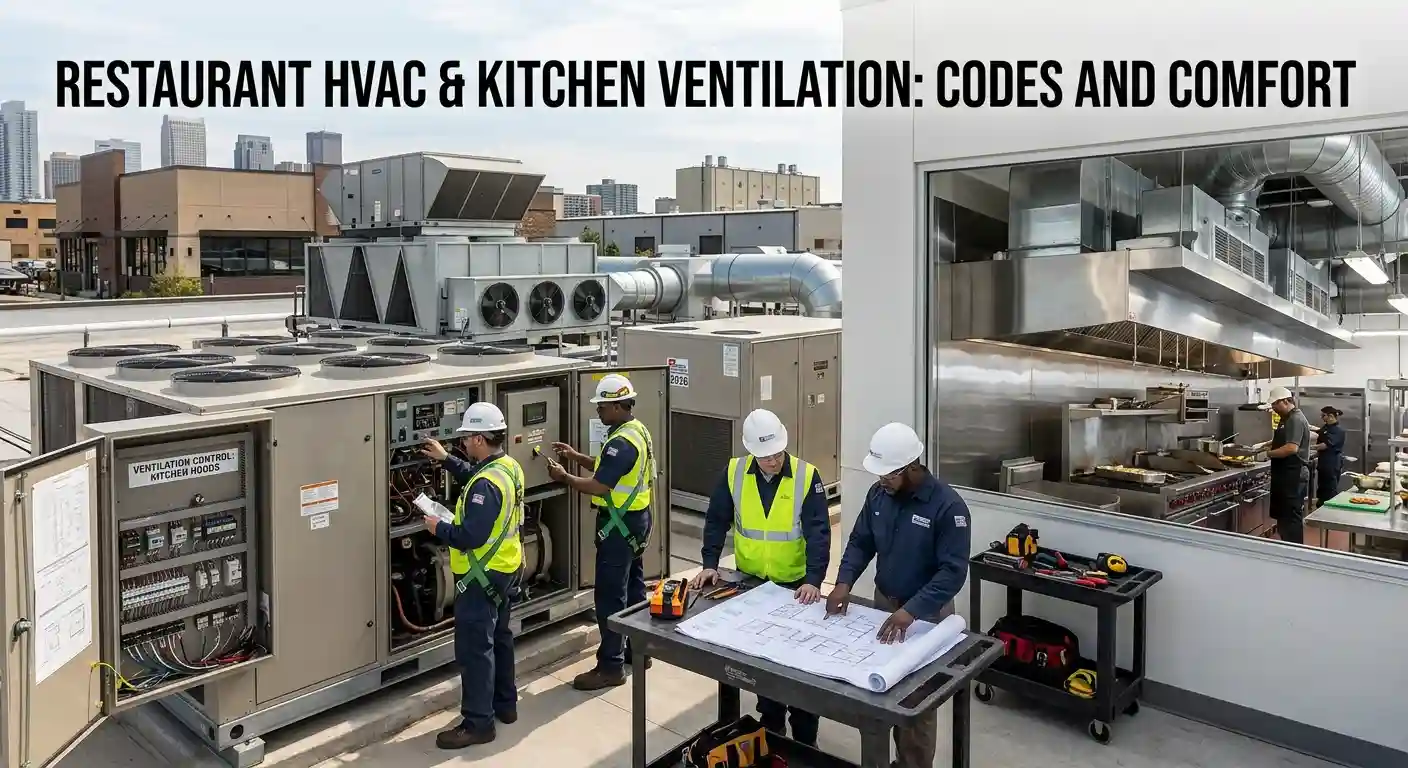
- Fort Lauderdale & Pompano Beach: Mixed-use commercial and hospitality properties. Restaurant and hotel HVAC systems face elevated grease particulate loads and kitchen exhaust integration demands that accelerate filtration degradation.
- West Palm Beach & Palm Beach Gardens: Corporate headquarters and financial services campuses. Redundant system reliability is non-negotiable; deferred maintenance creates unacceptable business continuity risk.
- Coral Springs, Plantation & Margate: High-volume retail and educational facilities. Intermittent high-occupancy loads — characteristic of schools and shopping centers — stress economizer cycles and demand proactive coil and drain pan servicing.
- Hollywood & Pembroke Pines: Dense residential-commercial mixed corridors with aging infrastructure. Buildings constructed pre-2000 frequently operate legacy packaged units and PTACs requiring specialized early-year refrigerant and controls assessment.
Florida Building Code Compliance: What Local Operators Must Know
Florida Statute 553 and the Florida Building Code (FBC) Mechanical Chapter establish specific performance requirements for commercial HVAC systems, including minimum ventilation rates per ASHRAE Standard 62.1. Broward County and Palm Beach County building departments have both increased enforcement activity around mechanical system documentation requirements in recent years. Early-year maintenance with a licensed, insured contractor generates the service records necessary to demonstrate code compliance — a critical protection layer for commercial property owners operating in these jurisdictions.
Aspen AC’s service teams operate across the full Southeast Florida corridor — from Port St. Lucie south through Palm Beach County into Broward — with direct familiarity with the code enforcement environments and building stock characteristics of each submarket.
When Do Maintenance Savings Actually Show Up?
Energy savings from restored efficiency appear on the first full billing cycle after service — typically 30 to 60 days. Avoided-repair savings compound through summer, when the failures that January and February maintenance visits catch would otherwise surface as peak-season breakdowns. Most South Florida facilities recover the cost of an annual maintenance contract through energy reduction alone before hurricane season.
Frequently Asked Questions: Commercial HVAC Maintenance in South Florida
How much does commercial HVAC maintenance cost in South Florida?
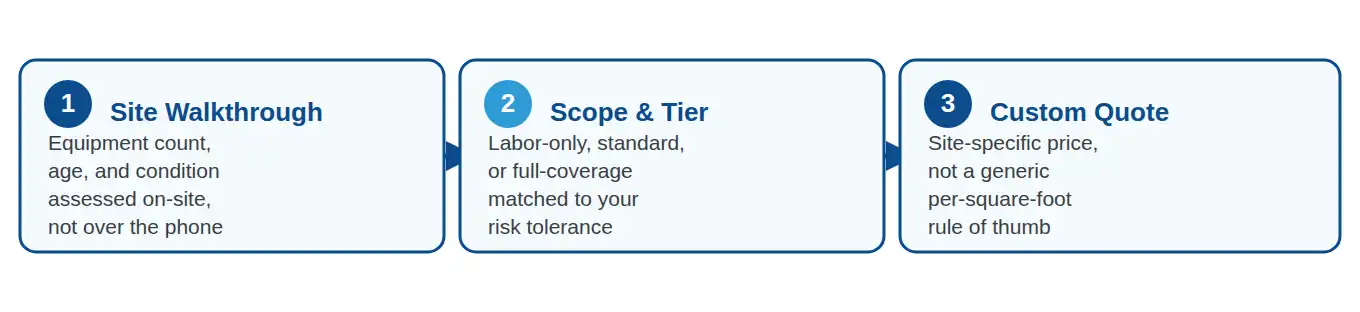
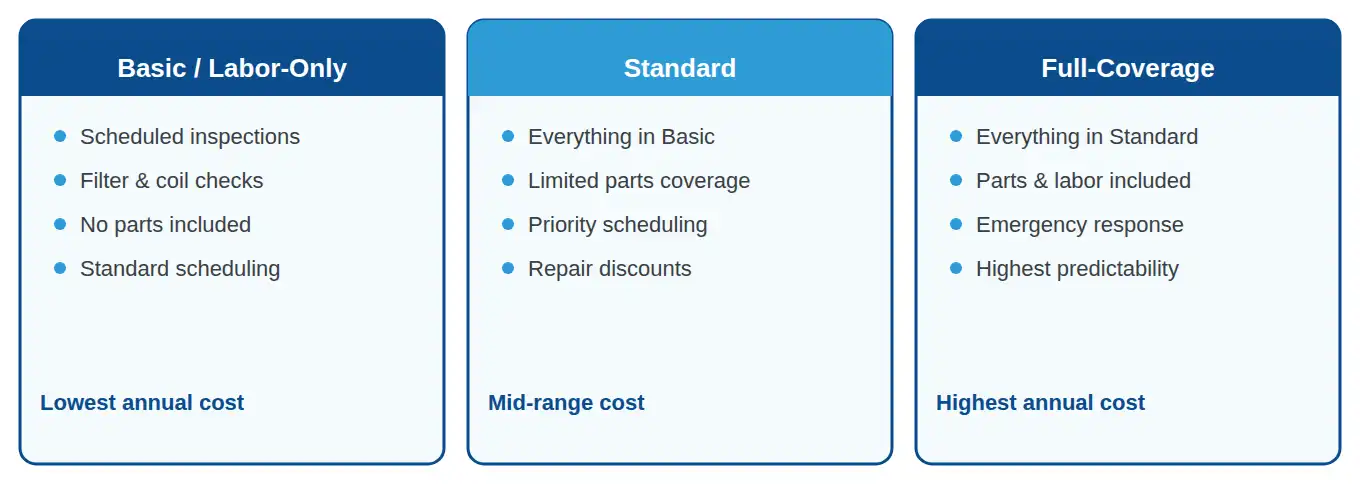
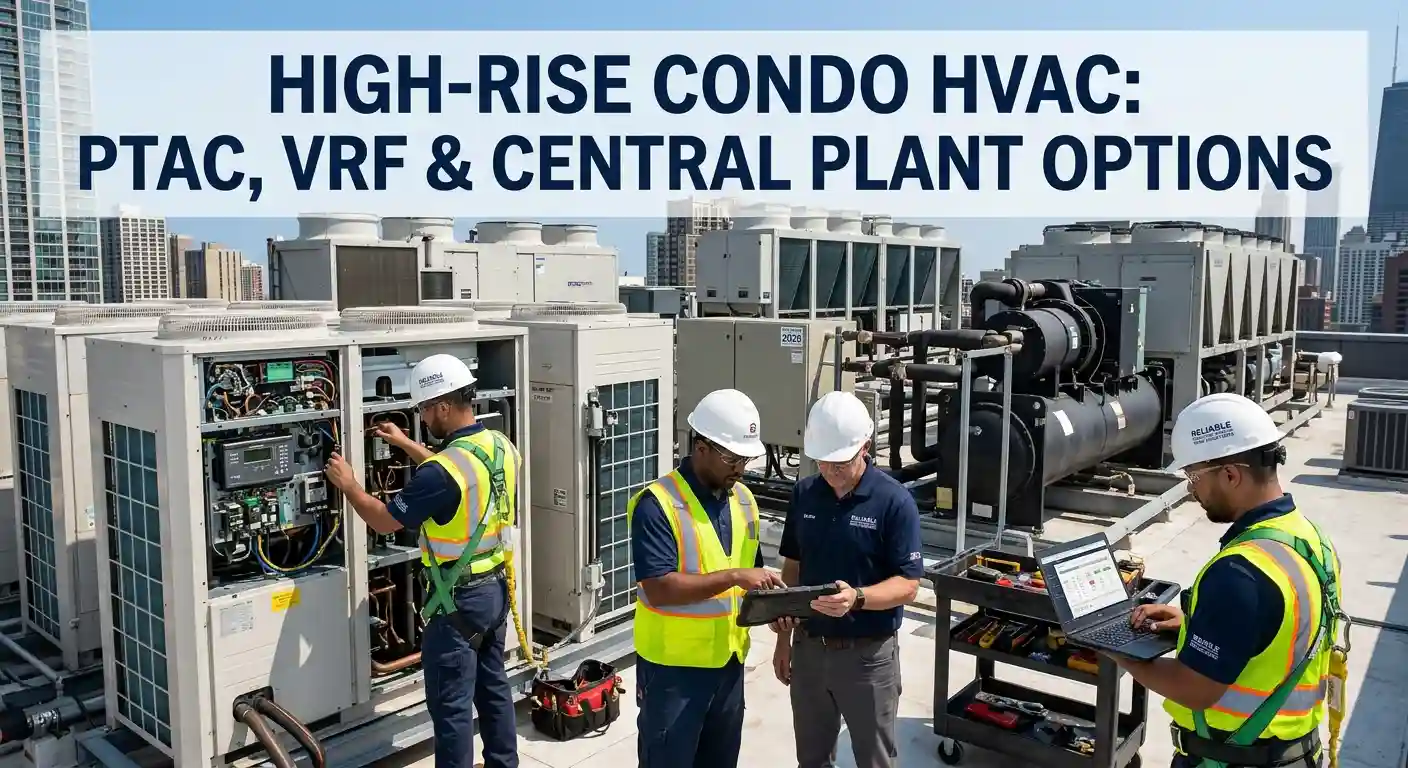
Commercial HVAC maintenance contracts in South Florida are customized based on system type, equipment count, facility size, and service frequency. Packaged rooftop units and split systems for small-to-mid commercial facilities are quoted per agreement rather than at a flat per-system rate. VRF/VRV systems and large-scale mechanical installations serving high-rise condominiums or healthcare facilities command higher investment due to diagnostic complexity and regulatory requirements. Preventative maintenance contracts consistently deliver 3:1 to 5:1 ROI versus reactive repair expenditures when evaluated over a 3-year cycle.
When is the best time to schedule commercial HVAC maintenance in Florida?
January through March represents the optimal maintenance window for South Florida commercial operators. This period falls before peak cooling season demand, allowing technicians full diagnostic access without operational disruption risk. Scheduling during this window also ensures systems are calibrated and performing at maximum efficiency before the April–October high-load period, when temperatures and humidity levels drive maximum energy consumption and system stress.
How often should a commercial HVAC system be serviced in South Florida?
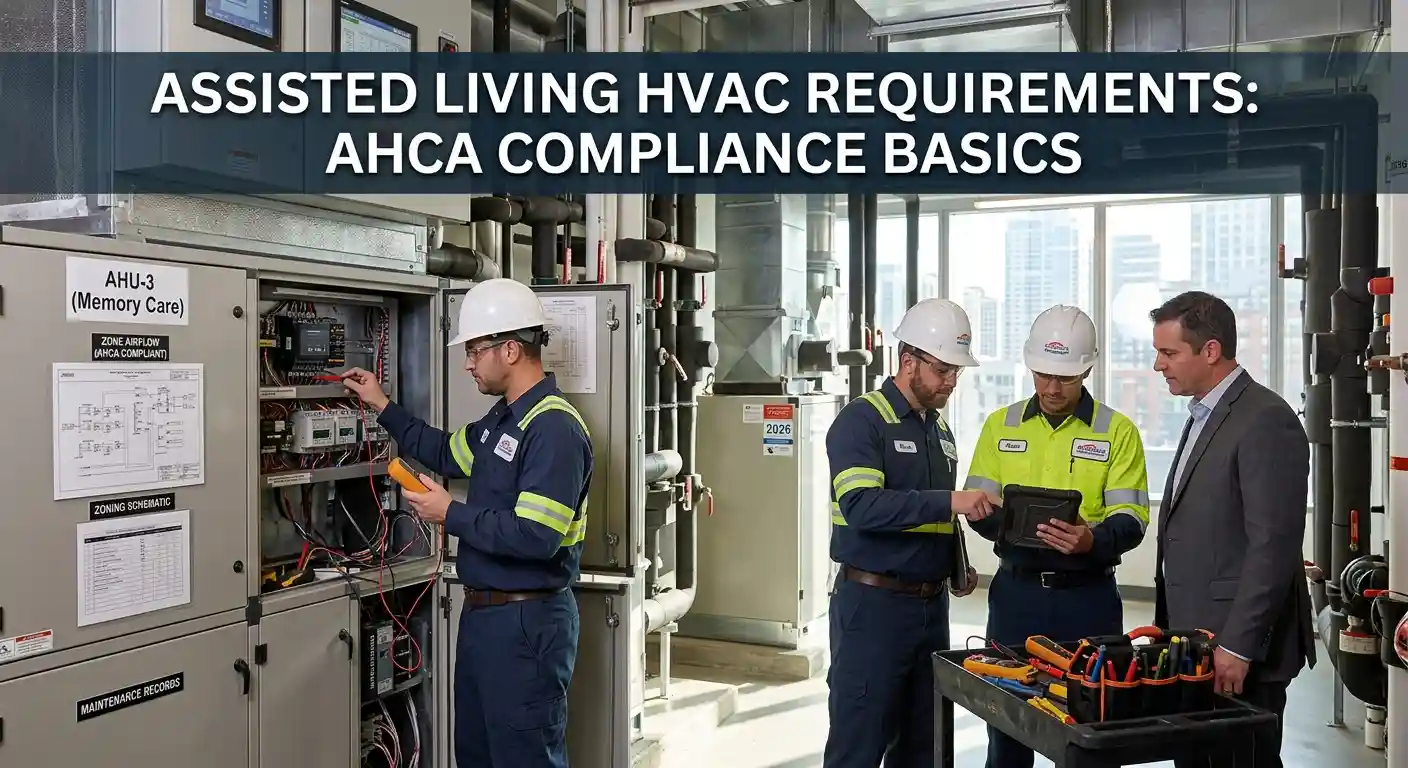
Given South Florida’s year-round cooling load, commercial systems should receive a minimum of two comprehensive service visits per year — one in Q1 (early-year optimization) and one in Q3 (mid-season performance check). High-occupancy or mission-critical environments — including healthcare facilities, data centers, and assisted living centers — require quarterly servicing. Single-visit annual maintenance is insufficient for the operational demands of the Southeast Florida climate.
What does a commercial HVAC maintenance visit include?
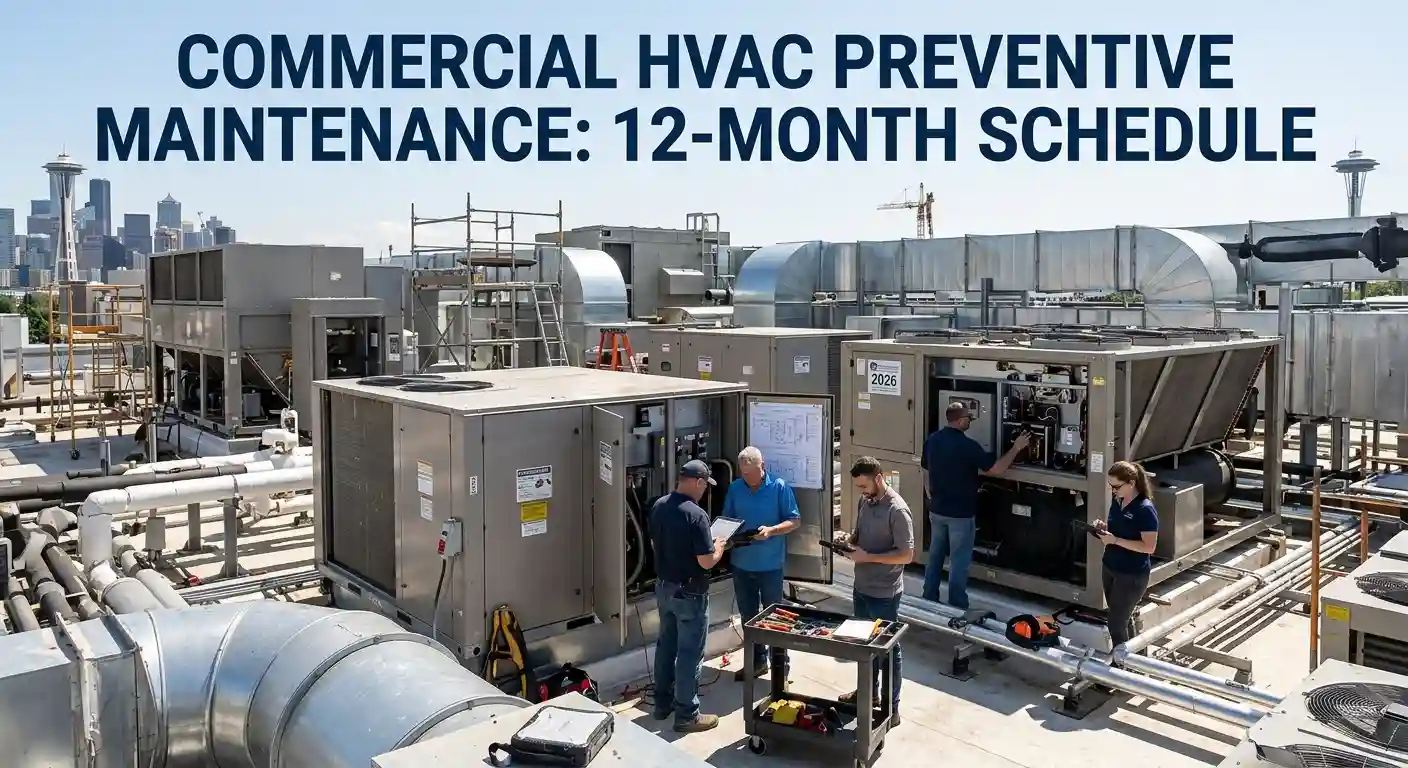
A comprehensive commercial HVAC maintenance visit covers: refrigerant level inspection and leak testing, coil cleaning (evaporator and condenser), electrical connection tightening and amp draw verification, thermostat and controls calibration, drain pan and condensate line clearing, air filter replacement or inspection, belt and motor lubrication assessment, and full system performance documentation. For IAQ-sensitive environments, duct integrity inspection and UV system verification are also included.
Can deferred HVAC maintenance void equipment warranties in Florida?
Yes. Most commercial HVAC equipment manufacturers — including Carrier, Trane, Daikin, and Lennox — require documented proof of regular professional maintenance to honor warranty claims. Failure to maintain service records creates warranty voidance exposure on equipment that may represent $50,000–$500,000+ in capital investment. Licensed contractor service documentation is the primary evidence accepted by manufacturers in warranty dispute proceedings.
How does commercial HVAC maintenance reduce energy bills?
HVAC systems operating with fouled coils, restricted airflow, low refrigerant charge, or degraded controls consume 15–25% more energy to deliver equivalent cooling output. For a commercial facility with a $4,000 monthly utility bill, that inefficiency represents $600–$1,000 in preventable monthly expense. Early-year maintenance restores systems to nameplate efficiency ratings, directly reducing energy consumption from the first billing cycle post-service.
How Often Do Commercial HVAC Systems Need Maintenance in Florida?
Twice yearly: spring for AC prep and fall for efficiency checks, given year-round usage and humidity challenges.
What Are Signs Your Commercial HVAC Needs Urgent Maintenance?
Rising energy bills, uneven cooling, strange noises, or poor airflow signal issues; address early to avoid breakdowns.
Does HVAC Maintenance Improve Indoor Air Quality for Businesses?
Yes, by clearing mold, dust, and spores from filters and coils, especially vital in humid South Florida offices.
How Does South Florida's Climate Affect HVAC Efficiency?
Extreme heat, humidity, and salt corrode parts, slashing efficiency by 20-30% without proactive early care.
What Are Common Commercial HVAC Maintenance Costs?
Visits start from the $395 minimum commercial service invoice; ROI via 20-40% energy savings offsets this in months.
Ready to reduce your facility’s energy costs this quarter? Schedule your commercial HVAC maintenance assessment with Aspen AC — serving Palm Beach County, Fort Lauderdale, and the full Southeast Florida corridor since 1983.
What a Professional Commercial HVAC Maintenance Visit Includes: Aspen AC’s Certified Process
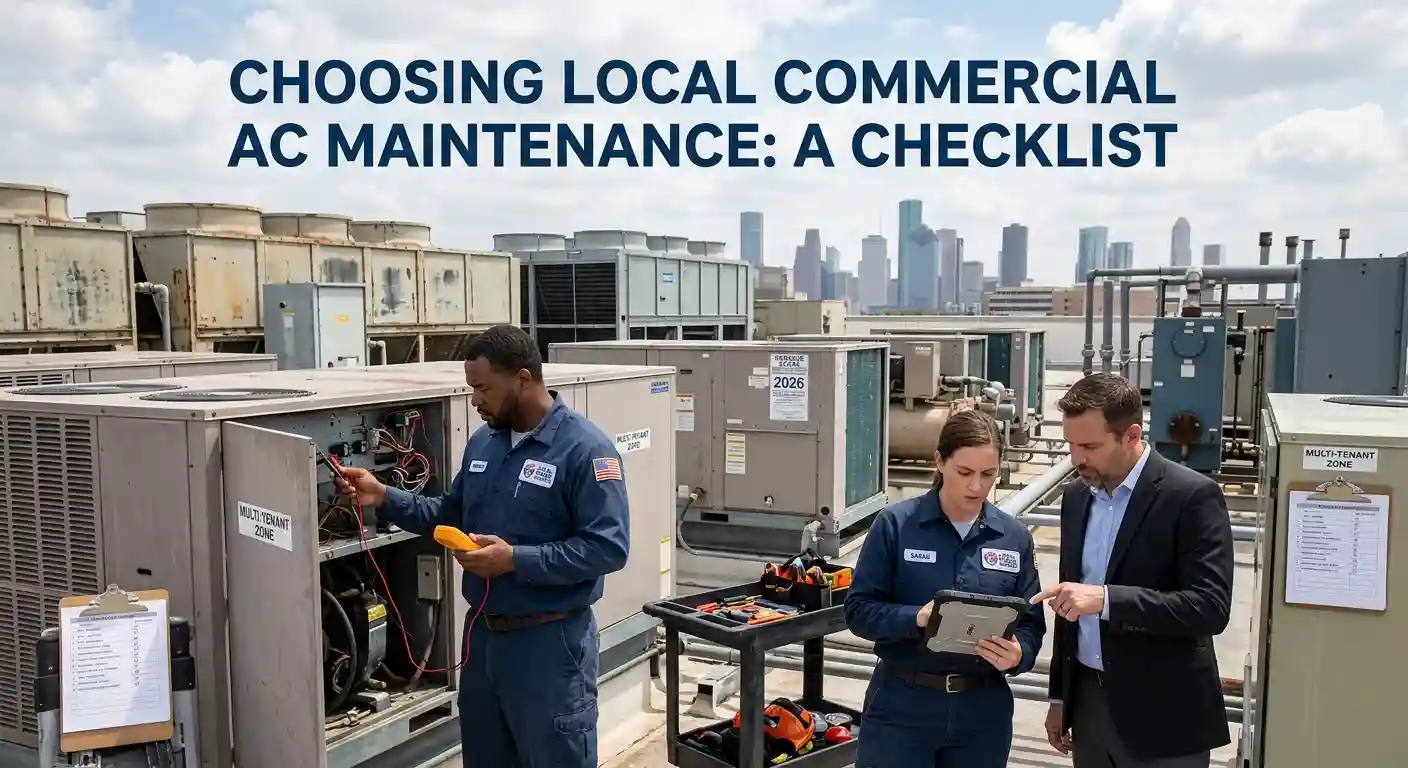
Understanding what separates a comprehensive maintenance program from a superficial inspection is critical for commercial facility managers evaluating HVAC service providers. Aspen AC’s maintenance protocol is executed by NATE-certified technicians — holding the highest field certification recognized by the HVAC industry — and follows a documented multi-point process calibrated to South Florida’s specific operational conditions.
Pre-Visit Documentation Review Before arriving on-site, Aspen AC technicians review prior service records, equipment age, system type, and any flagged issues from previous visits. This preparation eliminates redundant diagnostic time and ensures that each visit addresses both routine maintenance and the specific performance history of the facility’s equipment.
On-Site Diagnostic & Service Sequence
- Electrical System Inspection — All electrical connections are inspected and torqued to manufacturer specification. Amperage draw is tested against nameplate ratings. Contactors, capacitors, and disconnect components are evaluated for wear indicators.
- Refrigerant System Assessment — Refrigerant pressures are measured and compared against manufacturer operating parameters. Leak detection is performed on all accessible line sets and connections. Any deviation from specification is documented with remediation recommendations.
- Coil Service — Evaporator and condenser coils are inspected for fouling, corrosion, and fin damage. Coil cleaning is performed using appropriate no-rinse or low-pressure methods based on coil material and contamination level.
- Airflow and Filtration — Static pressure measurements confirm design airflow is being achieved. Filters are inspected and replaced per schedule. Duct connections at the air handler are checked for leakage.
- Condensate Management — Drain pans are inspected for biological growth and debris accumulation. Condensate lines are flushed to prevent blockage — a critical step in South Florida’s high-humidity environment where drain overflow events represent a leading cause of commercial water damage claims.
- Controls and Thermostat Calibration — Thermostat setpoints, scheduling, and sensor accuracy are verified. Building automation system (BAS) integration points are tested where applicable.
- Comprehensive Service Documentation — Every visit concludes with a detailed written service report documenting all findings, actions taken, refrigerant quantities (if applicable), and recommended follow-up items. This documentation serves as your compliance record for Florida Building Code purposes and manufacturer warranty protection.
Why NATE Certification Matters for Your Facility NATE (North American Technician Excellence) certification requires technicians to pass rigorous industry examinations covering system diagnostics, refrigerant handling, electrical systems, and equipment-specific knowledge. For commercial property owners, engaging NATE-certified technicians is not a marketing preference — it is a risk management decision. Technician competency directly determines whether maintenance visits deliver genuine efficiency restoration or merely generate paperwork.
Aspen AC has maintained NATE-certified staffing standards since well before such certifications became industry norms — a reflection of the operational standards that have sustained client relationships across the tri-county region for over 40 years.
Is Your Commercial HVAC System Ready for South Florida’s Peak Season? 7 Warning Signs You Need Maintenance Now
Commercial facility managers often recognize HVAC performance deterioration but defer professional service due to budget cycle timing or operational disruption concerns. In South Florida’s climate, that delay carries compounding financial and operational risk. The following indicators signal that your system requires immediate professional assessment — not at the next scheduled quarter, but now.
1. Energy Bills Increasing Without Corresponding Operational Changes If your facility’s utility costs have risen 10% or more month-over-month without changes in occupancy, equipment, or operating hours, HVAC efficiency degradation is the most probable cause. Fouled coils or low refrigerant charge are typically responsible and are fully remediable through professional service.
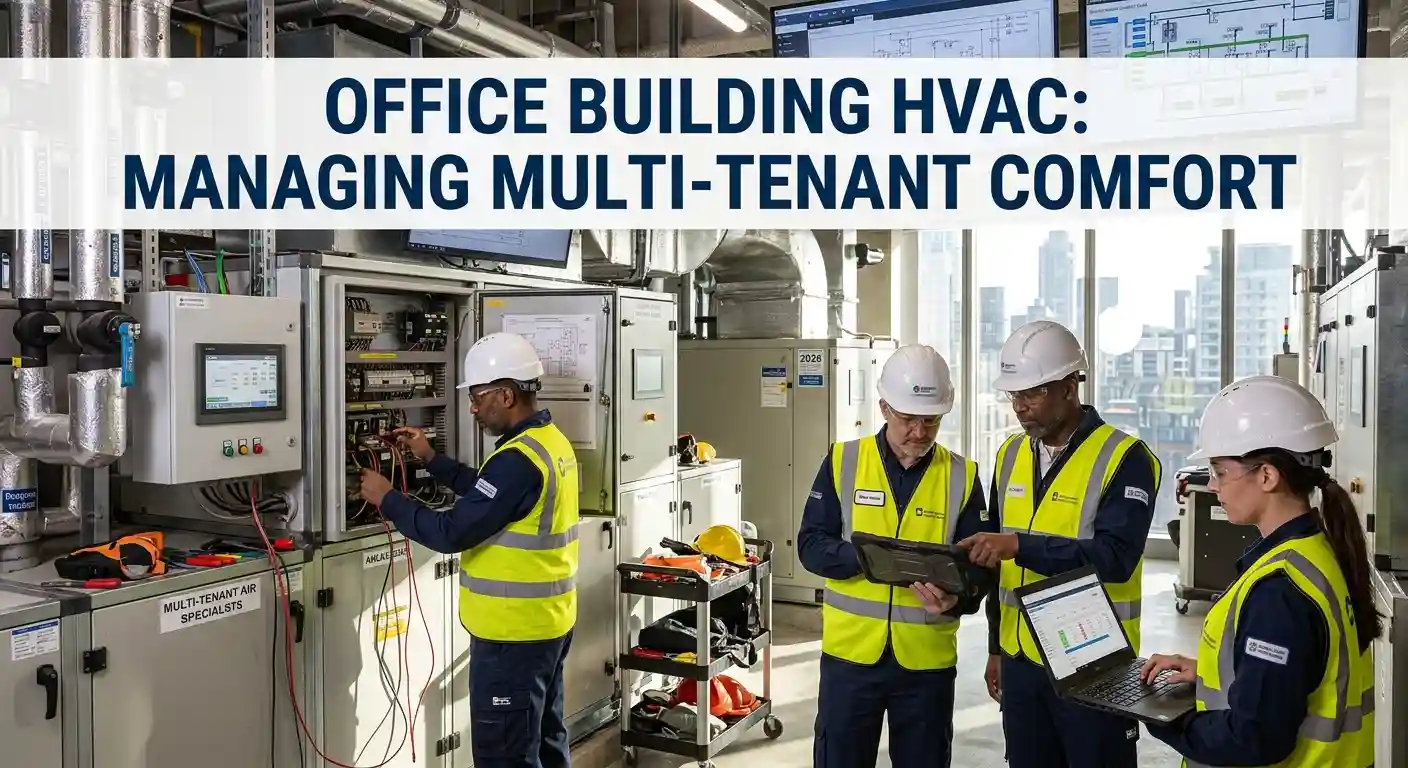
2. Uneven Temperature Distribution Across the Facility Hot spots in specific zones — particularly common in multi-tenant retail spaces, open-plan offices, and healthcare waiting areas — indicate airflow imbalance, damper failure, or duct leakage. Left unaddressed, these comfort complaints escalate to tenant disputes and lease non-renewal risk in commercial properties throughout Broward and Palm Beach counties.
3. Unusual Noise Emanating From Air Handlers or Rooftop Units Rattling, squealing, or grinding sounds from HVAC equipment are mechanical stress indicators. Bearing failure, loose components, and belt degradation all manifest acoustically before they cause catastrophic shutdown. In high-occupancy environments — schools, medical facilities, restaurants — unplanned equipment failure during operating hours is an unacceptable outcome.
4. Visible Moisture or Drainage Issues Near Equipment Water pooling near air handler units or ceiling staining below rooftop equipment indicates condensate drain failure — one of the most preventable causes of commercial property water damage in South Florida. Drain pan overflows during peak humidity months (June–September) can cause ceiling collapse in severe cases.
5. Frequent Thermostat or Controls Cycling Issues Systems that short-cycle, fail to reach setpoint, or exhibit erratic on/off behavior are operating outside design parameters. Controls issues frequently mask underlying refrigerant, airflow, or electrical problems that compound over time.
6. System Age Exceeding 10 Years Without Major Service Commercial HVAC systems operating in South Florida’s demanding environment experience accelerated aging relative to manufacturer expected lifespan. Equipment exceeding 10 years of age without documented comprehensive maintenance is operating on borrowed time. Early-year assessment at this stage is not preventative — it is crisis prevention.
7. No Documented Service History If your facility cannot produce service records for the past 12 months, you have no defensible position for warranty claims, code compliance inquiries, or liability exposure in the event of system failure. Establishing a documented maintenance program now — regardless of season — creates a record baseline for all future risk management purposes.
Partner With South Florida’s Most Established Commercial HVAC Authority
For over four decades, Aspen AC has served as the premier commercial HVAC contractor throughout South Florida, delivering unparalleled expertise to businesses seeking to optimize operational efficiency and reduce overhead expenses. Since 1983, our comprehensive maintenance programmes have helped countless commercial clients eliminate high energy bills whilst ensuring uninterrupted climate control and regulatory compliance. Our technically proficient service teams understand the unique demands of South Florida’s commercial environment and deliver maintenance solutions specifically calibrated to regional conditions.
Contact Aspen AC today to schedule your early-year commercial HVAC maintenance assessment and discover why discriminating business operators throughout the tri-county region have trusted our expertise for more than 40 years. When operational efficiency meets proven performance, extraordinary savings follow.