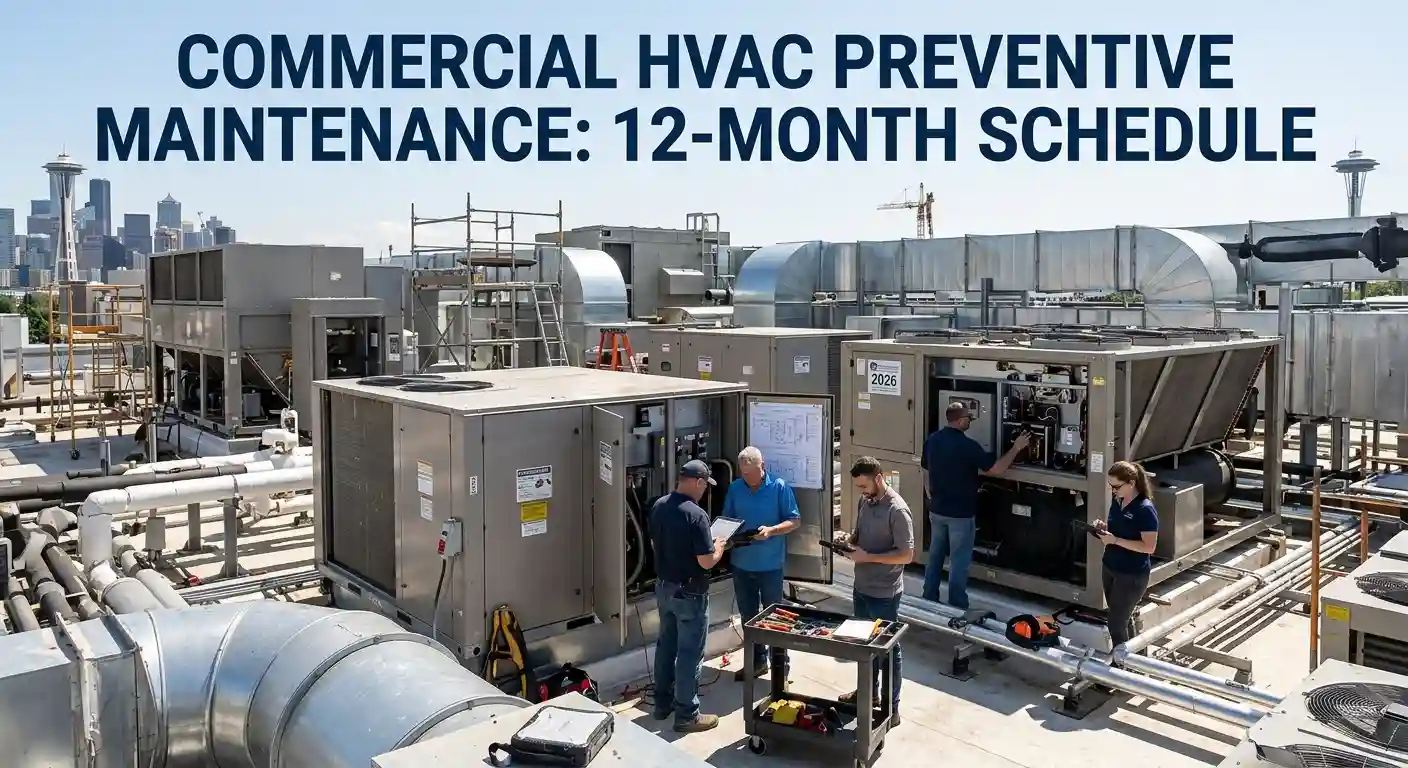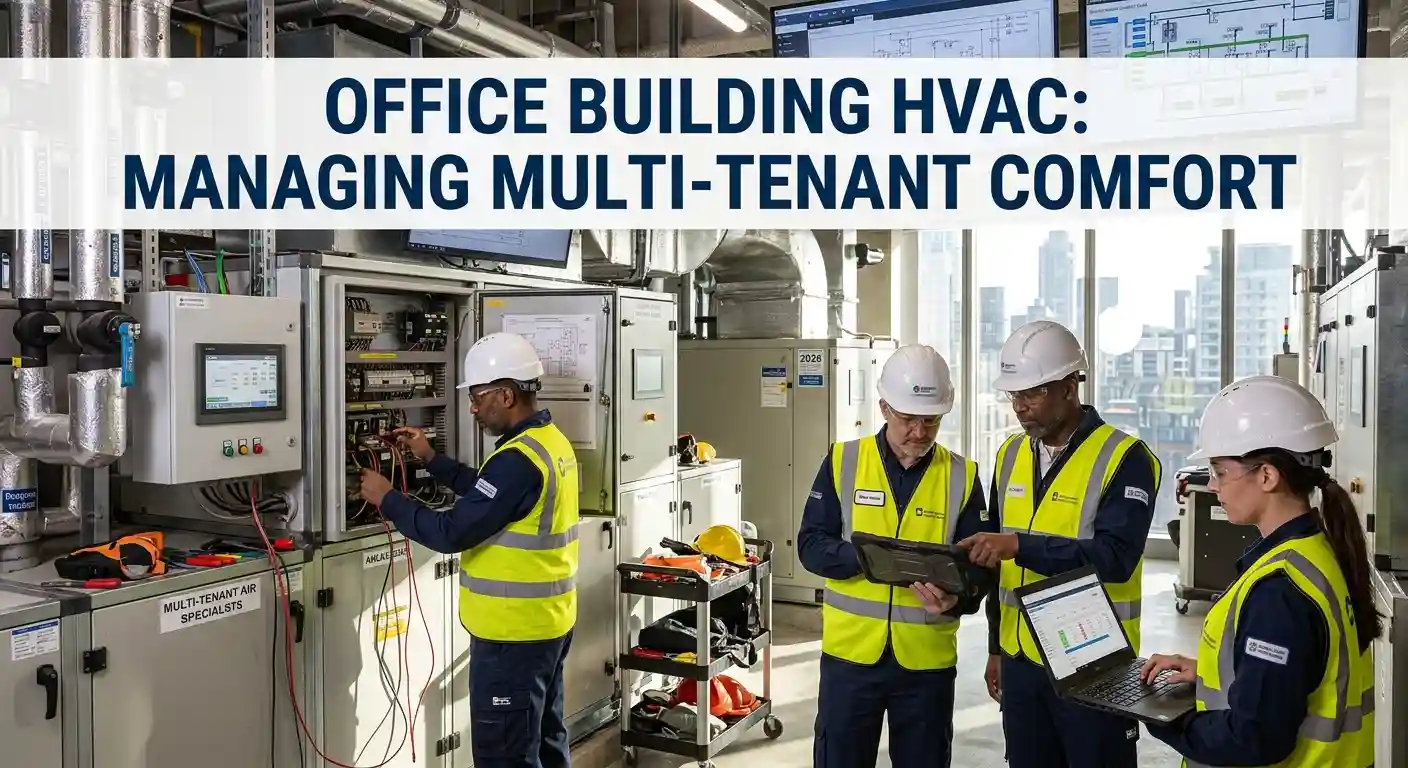

A Florida mechanical contractor is a licensed firm that designs, installs and services the building systems that move air, water and energy through a commercial property — HVAC, plumbing, and often refrigeration and process piping — under a state mechanical contractor license rather than a narrower trade permit.
For property managers, developers and general contractors, choosing the right mechanical contractor decides whether a build stays on schedule and a building performs for decades. This guide covers what mechanical contractors actually do, how their license differs from a standalone HVAC license, and how to evaluate one for a commercial project in South Florida.
What Does a Mechanical Contractor Actually Do?
A mechanical contractor designs and installs the systems that keep a commercial building running: HVAC, ventilation, in many cases plumbing, and process piping for specialized facilities like restaurants, medical buildings and industrial sites.
On new construction, that means working from engineered drawings to install ductwork, equipment, controls and piping to code. On existing buildings, it means everything from routine service to full system replacements and retrofits. The scope is broader than a single-trade HVAC company, which is exactly why larger commercial projects and design-build contracts typically call for a licensed mechanical contractor rather than a narrower specialist.
How Is a Mechanical Contractor License Different From an HVAC License?
Florida’s mechanical contractor license covers a broader scope than the state’s air conditioning contractor license — mechanical work can include process piping, boilers and more complex systems beyond comfort cooling and heating, while an AC contractor license is scoped specifically to air conditioning and refrigeration equipment.
| License type | Typical scope | Best fit for |
|---|---|---|
| Certified Air Conditioning Contractor (CAC) | HVAC installation, service, refrigeration | Commercial and residential AC work, most service contracts |
| Certified Mechanical Contractor (CMC) | HVAC plus broader mechanical systems, process piping | New construction, complex builds, design-build projects |
Both are regulated by the Florida Department of Business and Professional Regulation, and both require passing state exams and carrying required insurance. For most commercial HVAC service and replacement work, a CAC license is the relevant credential; for new construction and full mechanical scopes, CMC licensing matters more. Some firms hold both, which is worth asking about directly if your project could grow beyond its original scope — a phased renovation that starts as HVAC replacement and expands into plumbing or piping work partway through goes more smoothly with a contractor already licensed for both.
When Does a Project Need a Mechanical Contractor Instead of an HVAC Specialist?
Projects that combine HVAC with plumbing, process piping or complex new-construction coordination typically call for a mechanical contractor’s broader license and design capability, while straightforward HVAC service, repair and replacement work fits within a standard AC contractor’s scope.
New construction and major renovations are the clearest case — a mechanical contractor coordinates HVAC with the building’s other systems from the design phase forward, which reduces the coordination gaps that happen when separate trades work from separate drawings. Restaurants, medical facilities and industrial buildings with specialized piping or exhaust requirements also often need the mechanical scope rather than HVAC alone. For routine commercial service, maintenance and equipment replacement, a licensed commercial HVAC contractor covers the work without the broader mechanical scope adding cost or complexity.
What Should You Verify Before Hiring a Mechanical Contractor?
Four checks matter most: an active Florida license verified directly on the DBPR’s public database, insurance and bonding at a level appropriate to the project size, genuine commercial or mechanical project experience rather than primarily residential work, and references from projects similar in scope to yours.
- License verification — search the contractor’s name or license number on the Florida DBPR license portal directly; don’t rely on a certificate the contractor provides
- Insurance and bonding — general liability and workers’ compensation at a level that matches your project’s risk, with a certificate naming your project on request
- Relevant experience — ask specifically about commercial or mechanical-scope projects, not just years in business, since residential-heavy firms often lack the design coordination experience larger projects need
- Checkable references — projects of similar scope and complexity, ideally ones you can call and ask about schedule performance and change orders
What Does Mechanical Contracting Cost Compared to Standard HVAC Work?
Mechanical contracting scopes typically cost more than standalone HVAC work because they cover more systems and more design coordination — the premium reflects genuine additional scope, not just a different license type.
Standard commercial HVAC replacement runs $10,000 to $30,000 and up per unit, roughly $2,000 to $3,500 and up per ton, and typical repairs run $395 to $2,500 and up — figures published on our commercial HVAC pricing page. Full mechanical contracting scopes — new construction, multi-system coordination, process piping — price project by project based on drawings and specifications, since the work varies too much for a standard range to mean anything useful. A legitimate mechanical contracting proposal breaks that project price into its component systems rather than presenting one lump figure, which lets you compare bids on scope rather than just the bottom line.
How Does a Mechanical Contractor Fit Into New Construction?
On new construction, the mechanical contractor typically joins the project during design development, working from architectural and engineering drawings to size equipment, route ductwork and piping, and coordinate with electrical and structural trades before anything is installed.
That early involvement is what separates a mechanical contractor’s new-construction role from a standard HVAC installer’s: catching a ductwork routing conflict on paper costs nothing, while catching it after framing is installed costs real money and schedule time. Our new construction HVAC team works this way on South Florida commercial builds, from design consultation through commissioning.
What Questions Should You Ask a Mechanical Contractor Before Signing?
Beyond licensing and insurance, ask how the contractor handles design coordination with other trades, what their change-order process looks like, and who specifically will be on site managing your project day to day.
A contractor who can answer these clearly — with a named project manager, a documented change-order process, and specifics about how they coordinate with your architect or general contractor — is telling you how the project will actually run. Vague answers to any of these questions tend to predict change-order disputes and schedule slippage once work begins. It is also worth asking directly who carries the mechanical scope on multi-trade projects — general contractors sometimes assume the mechanical contractor covers coordination that was never actually in the contract, and that gap surfaces expensively mid-project rather than during bidding, when it would have cost nothing to clarify.
Which Commercial Properties Typically Need Mechanical Contracting?
Properties with specialized systems beyond standard comfort cooling — commercial kitchens, healthcare facilities, and buildings undergoing major renovation — most often need a mechanical contractor’s broader scope rather than a standard HVAC specialist alone.
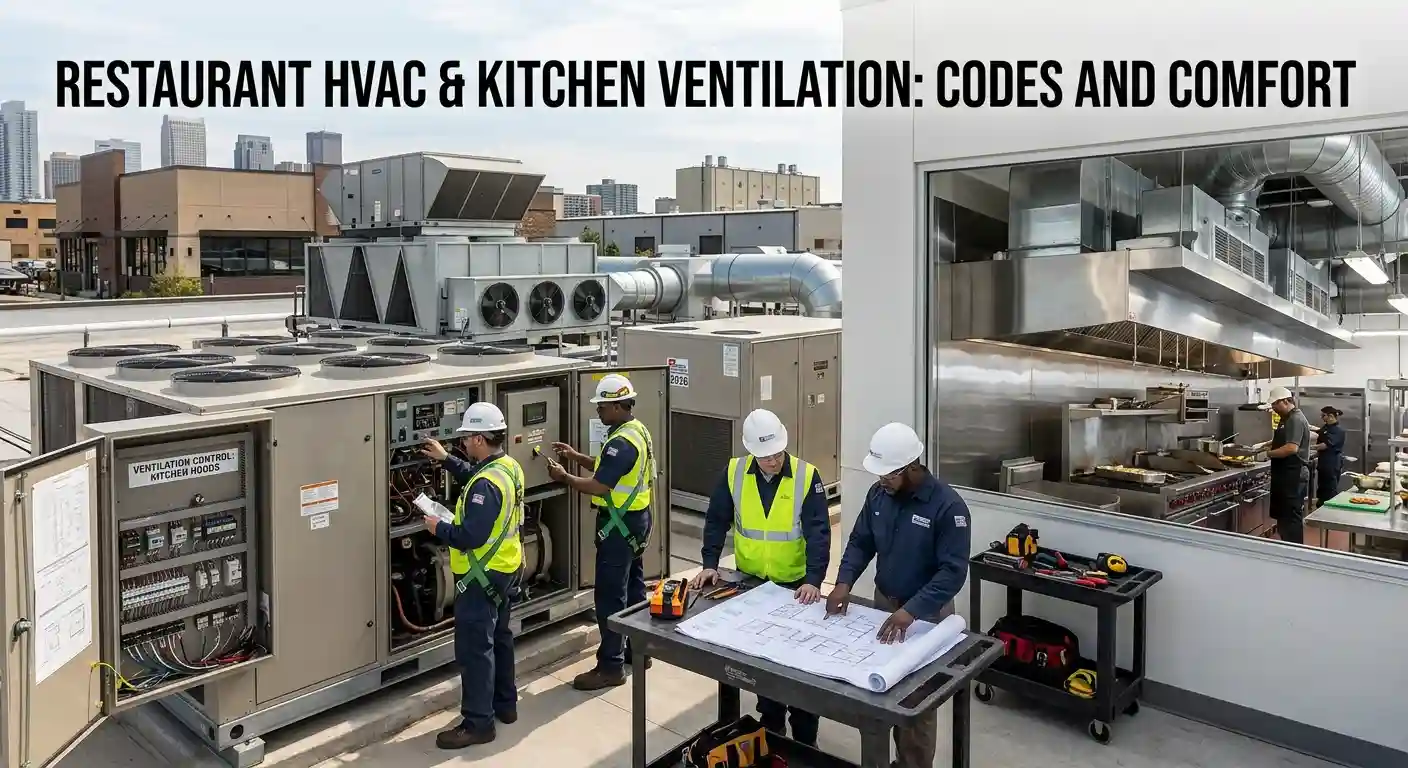
Restaurants and food service properties combine HVAC with kitchen exhaust and makeup-air systems that require mechanical-scope coordination; our restaurant and hospitality HVAC work often crosses into that territory. Healthcare and medical facilities carry ventilation and pressure-relationship requirements that go beyond standard commercial HVAC, covered on our healthcare facility HVAC page. Warehouses and industrial buildings frequently need mechanical contracting for process piping and large-scale ventilation alongside cooling, which our warehouse and industrial HVAC team handles as combined scopes rather than separate trades working past each other.
Frequently Asked Questions
Is a mechanical contractor the same as an HVAC contractor?
Related but broader. Mechanical contractors hold a license covering HVAC plus additional systems like process piping and complex mechanical work, while an HVAC or air conditioning contractor license is scoped specifically to heating and cooling equipment.
Do I need a mechanical contractor for a simple AC replacement?
No — routine commercial HVAC repair, maintenance and equipment replacement fits within a standard licensed AC contractor’s scope. Mechanical contractor licensing matters more for new construction, complex piping, or projects combining HVAC with other building systems.
How do I verify a Florida mechanical contractor’s license?
Search the contractor’s name or license number directly on the Florida DBPR’s public license portal rather than relying on a certificate they provide. Active status, license type and any disciplinary history all show there.
What’s the difference between a CAC and CMC license in Florida?
A Certified Air Conditioning Contractor (CAC) license covers HVAC and refrigeration work. A Certified Mechanical Contractor (CMC) license covers a broader scope including process piping and complex mechanical systems, typically relevant for new construction and larger design-build projects.
Aspen Air Conditioning provides commercial HVAC and mechanical contracting services across Palm Beach and Broward Counties, licensed and insured since 1983. Call 561-464-5010.